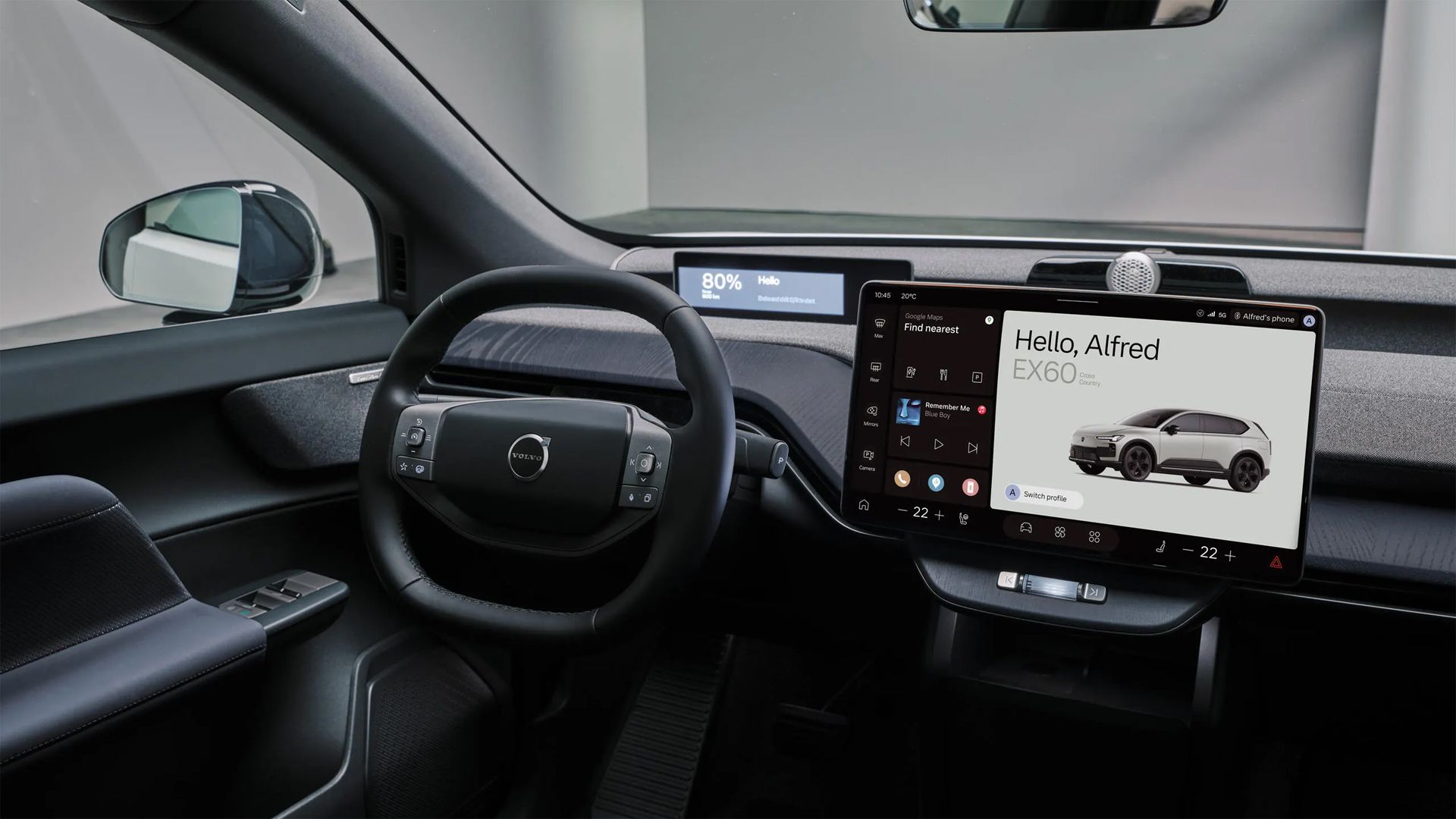
Volvo has confirmed it will continue to offer Apple CarPlay in its new EX60 models while using Android Automotive as the native OS, with Anders Bell stating the company will let customers choose their digital ecosystem. The announcement highlights the broader OEM divide between those ceding in-car UX to Apple/Google and those retaining branded systems, and signals Volvo’s strategy to support third-party services (e.g., Apple Music/Dolby Atmos) for customer retention; the development is strategically relevant for product positioning but is unlikely to move financial markets materially in the near term.
Market structure: The immediate winners are Apple (AAPL) and Google (GOOGL/GOOG) as OEMs that keep CarPlay or Android Automotive preserve user lock‑in and subscription funnels; direct monetization is modest today but strategically amplifies services TAM (low single‑digit billions over 3 years). Losers are OEMs trying to force proprietary UX (select legacy auto OEMs and parts of GM), risking customer churn and slower EV/feature uptake where consumers value familiar phone ecosystems. Cross‑asset impact is muted but expect a 5–20% uptick in implied vol for AAPL/GOOGL options around OEM/antitrust headlines; bond spreads unaffected unless large OEM capex pivots occur.
Risk assessment: Tail risks include antitrust intervention (EU/US) forcing interoperability or banning exclusive in‑car UI deals, and operational recalls from embedded software — both could move share prices 10–30% in adverse scenarios. Time horizons: days — headline noise; 1–6 months — OEM partnership announcements and CES/Auto Show catalysts; 1–3 years — platform monetization and recurring services revenue. Hidden dependencies: handset share shifts, mapping/navigation partnerships, and Dolby/entertainment licensing materially affect subscription uptake.
Trade implications: Tactical trade is to overweight AAPL (2–3% portfolio) and GOOGL (1–2%) for 3–12 month exposure to in‑car services, and underweight/short select OEMs (GM 0.5–1%) where sentiment and execution are weak. Use call spreads (AAPL 3‑month +5%/+20% strikes; GOOGL 6‑month +10%/+35%) to cap premium; target exits on +15% moves or fundamental hits. Rotate 3–5% from cyclical autos into software/media and cloud infrastructure names if OEM announcements confirm platform strategies.
Contrarian angles: Consensus understates Google’s structural edge: providing the embedded OS (Android Automotive) captures recurring cloud and app revenue that OEMs can’t easily monetize; this is underpriced relative to consumer visibility. The reaction may be underdone for GOOGL and overdone for OEMs betting on closed UX—histor parallels include handset OS battles where platform owners captured services economics. An unintended consequence: fragmentation could create a market for independent middleware vendors and aftermarket subscription aggregators — a potential small‑cap hunting ground over 12–36 months.
AI-powered research, real-time alerts, and portfolio analytics for institutional investors.
Request DemoOverall Sentiment
neutral
Sentiment Score
0.15
Ticker Sentiment
