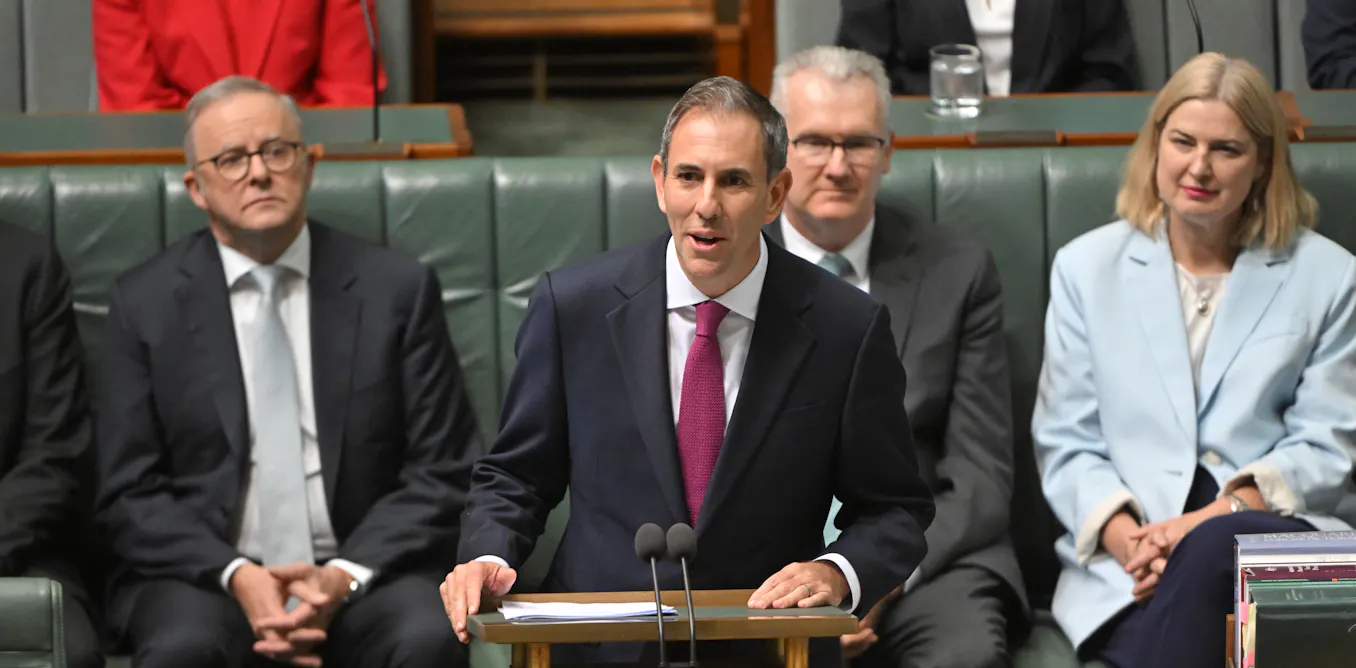
Australia’s budget introduces a gradual tightening of housing tax settings, including winding down negative gearing for new purchases of established properties and replacing the 50% capital gains tax discount with an inflation-based discount. It also adds a new $250 Working Australians Tax Offset, delayed by more than a year, while Treasury warns a severe oil shock could push inflation above 7% and unemployment sharply higher. The measures are politically significant and may affect housing and labor-market expectations, but the immediate market impact is likely limited.
This is less a macro shock than a medium-horizon redistribution of after-tax returns within the housing and small-cap growth ecosystem. The immediate winners are owners of existing leveraged residential property and any listed vehicles exposed to the status quo rental model; the losers are new leveraged investors in established housing, property-facing brokers, and developers whose economics depended on elevated investor demand rather than end-user affordability. The second-order effect is important: by grandfathering existing positions, the policy creates a sharp divide between incumbents and marginal buyers, which can freeze turnover rather than accelerate it, reducing transaction volumes even if headline prices only soften modestly.
The bigger market implication is that the government is trying to suppress speculative demand without solving supply, so the adjustment path is likely to be slower and more uneven than a simple “house prices down” trade suggests. If the measure reduces expected capital gains on established stock, the near-term hit is likely to be felt first in investor loans, auction clearance rates, and discretionary spending tied to refinance/upgrade activity, not in broad CPI. That argues for a lagged impact on bank mortgage growth and local realtor volumes over the next 2-4 quarters, while builders with genuine exposure to new construction should be relatively insulated versus owners of existing inventory.
The CGT change is the more interesting second-order risk for early-stage capital formation. An inflation-indexed discount looks superficially neutral, but it effectively raises the hurdle rate for high-beta assets with uncertain terminal values, which can weigh on VC-backed startups, ASX microcaps, and speculative growth names that rely on capital gains optionality. The government is also implicitly betting that inflation stays contained enough that the new worker offset feels real; if energy or geopolitics lift inflation again, the policy mix could become contractionary at the margin and the tax relief will be politically easy to unwind or offset in the next cycle.
The contrarian view is that this may be too small to matter economically but big enough to damage sentiment. If the housing supply constraint is binding, tighter tax settings may not materially change affordability, yet they can still push investors to wait on the sidelines, amplifying illiquidity and making prices more fragile in marginal suburbs and investor-heavy segments. That sets up a tradeable asymmetry: policy disappointment could quickly morph into a broader “nothing works” narrative by 2028 if housing affordability does not improve, creating political pressure for reversal before the policy fully bites.
AI-powered research, real-time alerts, and portfolio analytics for institutional investors.
Request DemoOverall Sentiment
mildly negative
Sentiment Score
-0.15
