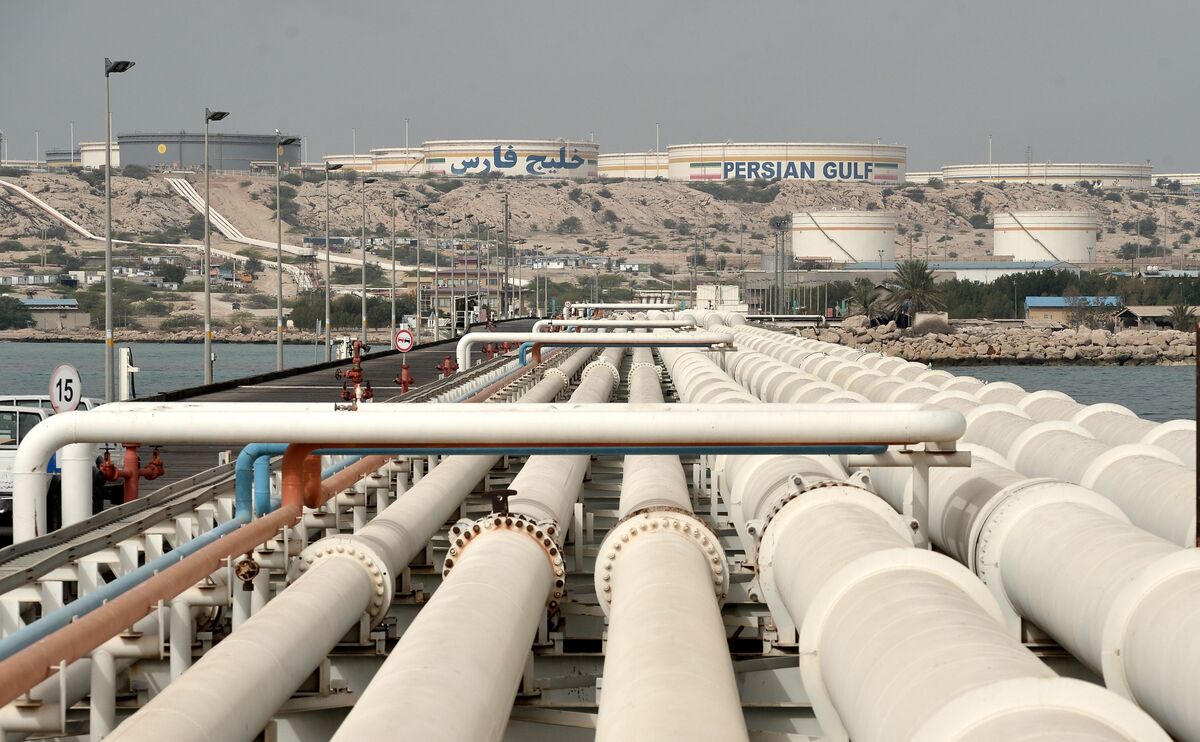
Kharg Island is the loading point for roughly 90% of Iran’s crude exports; targeting it (as referenced with Trump eyeing the hub) could sharply disrupt Iranian shipments and strain flows through the Strait of Hormuz. So far exports have only dipped slightly after US/Israel strikes because Iran has used its own vessels and restricted passage to approved ships, but any attack or closure of Kharg risks a significant supply shock to regional oil markets and shipping routes.
A concentrated export node creates asymmetric geopolitical leverage: Kharg’s outsized role means a single precision disruption would instantaneously reallocate seaborne tanker demand and force fast re-pricing of sour vs light differentials. Expect tanker time-charter equivalent (TCE) rates to spike within days as shipowners and traders shift from long-haul Iran-to-Asia runs to shorter, opportunistic voyages and more ship-to-ship (STS) operations — a liquidity shock that benefits owners of modern VLCCs and Suezmaxes but penalizes smaller owners lacking fuel/insurance capacity.
Second-order margins matter: refiners configured for Iranian heavy/sour crudes will face feedstock scarcity and higher freight-in, compressing gross margins relative to integrated majors that can source Saudi/Russian barrels or draw down crude inventories. Insurance and reinsurance markets will harden quickly; a modest premium rise (order-of-magnitude: low double-digit % on maritime hull/p&i) materially raises break-even freight costs and increases the optionality value of owning tonnage versus trading crude liquidity.
Timing and catalysts are binary and path-dependent. Near-term (days–weeks) upside to Brent/TCE from a targeted strike is large but event-driven; medium-term (1–6 months) outcomes hinge on Saudi/UAE spare capacity responses, SPR releases, or diplomatic de-escalation. A sustained disruption (months) would rewire trading lanes, incentivize longer-term chartering and reflagging, and force refiners to adapt crude slates or pay for swap/logistics premia.
Consensus underestimates convexity: markets have priced Iran’s resilience after prior skirmishes, but Kharg is a single-point failure that amplifies tail risk. That skew argues for buying convex oil exposure and direct play on shipping/insurance rather than linear long-only crude, while protecting against a rapid political détente that would snap back prices and tank TCE-driven rallies.
AI-powered research, real-time alerts, and portfolio analytics for institutional investors.
Request DemoOverall Sentiment
neutral
Sentiment Score
0.00
