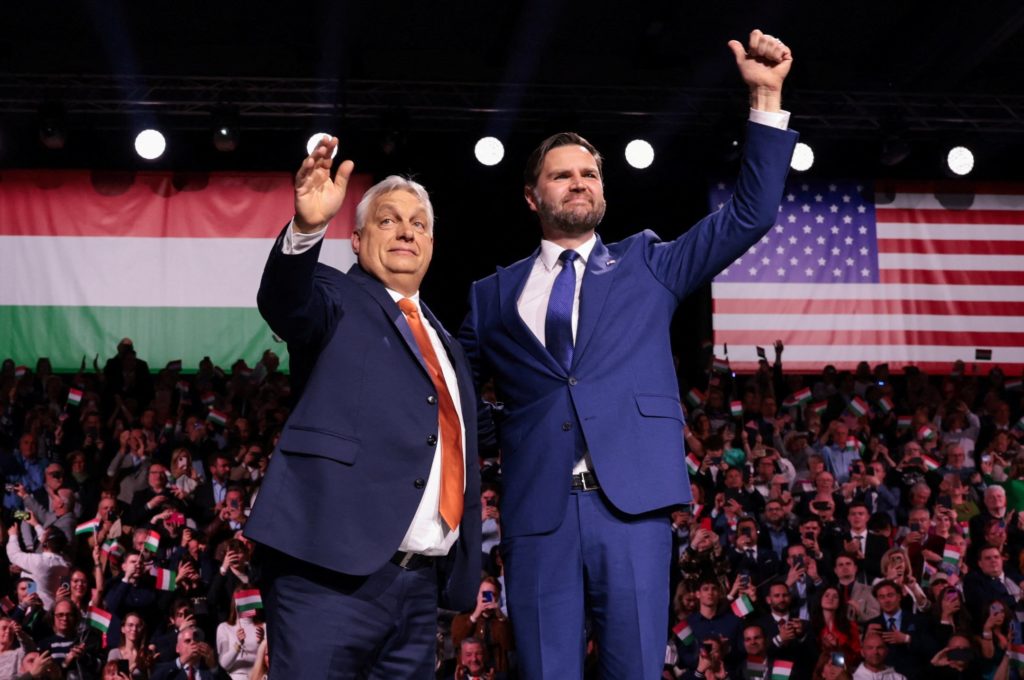
Vice President J.D. Vance traveled to Hungary to publicly back Prime Minister Viktor Orbán ahead of a closely watched election where Orbán is trailing in many polls. U.S. journalist Shelly Kittleson was reportedly released in Iraq; an attack on a building housing the Israeli consulate in Istanbul left one suspect dead and multiple wounded. The U.K. blocked Ye from entry, prompting cancellation of the Wireless festival, and domestic U.S. races include a Georgia special congressional election and a pivotal Wisconsin Supreme Court contest. Markets traded mixed: Dow -85 points, Nasdaq +~20 points, S&P 500 modestly higher.
Cross-border political campaigning and elevated geopolitical friction are functioning like a volatility accelerator for capital flows and live-event revenues. If sustained, this tends to reallocate issuance and secondary-listing demand toward U.S. venues over 6–12 months as issuers seek regulatory stability; that is a structural tailwind for U.S. market operators that capture order flow and listing fees. Conversely, increased headline risk raises short-term trading volumes but also invites regulatory scrutiny (reciprocal listing rules, foreign-messaging restrictions) that can flip the story if enacted within a 3–12 month window.
The live-entertainment supply chain — promoters, primary ticket platforms, payment processors and insurers — is exposed to a higher frequency of headline-driven cancellations and artist vetting costs. That drives near-term refund/chargeback pressure and forces promoters to increase working-capital buffers or buy more expensive event-cancellation cover, compressing margins for two to four quarters and raising take-rates for platforms that can enforce tougher contracts.
Localized asymmetric attacks and militia-linked incidents raise near-term risk premia in regional security spending and private-sector demand for risk-mitigation services. Expect an uptick in procurement cycles for force-protection, cyber-physical surveillance, and insurance premiums that favors diversified defense primes and specialist security vendors over purely commercial aerospace names in the next 3–9 months.
The consensus is leaning toward a ‘safe-haven to U.S. markets’ narrative and therefore long-exchange positioning; that trade is underpriced for a reversal scenario where European regulators respond with tighter cross-listing rules or new content-moderation liabilities. Positioning should therefore be skewed to capture the upside of continued flows while explicitly hedging for regulatory pushback within a 3–12 month horizon.
AI-powered research, real-time alerts, and portfolio analytics for institutional investors.
Request DemoOverall Sentiment
neutral
Sentiment Score
0.00
Ticker Sentiment
