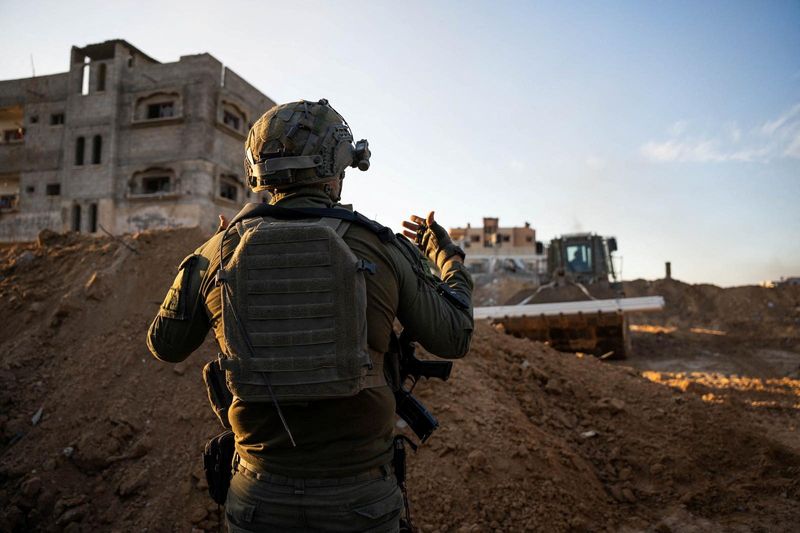
Israel ordered the military to destroy all bridges over Lebanon's Litani River and to accelerate demolition of homes near the northern border, a direct escalation aimed at preventing Hezbollah movement. The orders follow the first Israeli civilian death in the current conflict and two Israeli soldiers killed, increasing the risk of wider hostilities. Expect heightened regional volatility, potential upward pressure on energy prices and safe-haven flows, and relative outperformance for defense and security suppliers while risk assets face downside in the near term.
The immediate market impact will disproportionately favor tactical ISR, counter‑mobility and rapid engineering suppliers rather than broad aerospace primes; small-to-mid cap vendors that sell loitering munitions, airborne sensors and military bridging/earthmoving kits can see order acceleration within 1–6 months, while large systems integrators typically realize revenue 12–36 months out. Destroyed transport nodes and accelerated demolitions raise short‑term demand for heavy equipment, demolition crews and reconstruction financing — this flows to equipment lessors and specialist contractors first, then to steel/cement makers over multiple quarters as reconstruction shifts from emergency work to rebuild contracts.
Macro knock‑ons: investor risk‑off will widen EM credit spreads and push short‑dated oil and freight volatility higher for weeks, but a material oil supply shock requires escalation toward major sea lanes or Iranian direct engagement — low probability in the next 30 days but non‑trivial over 3–6 months. The key catalysts to monitor are (a) any reported strikes on offshore infrastructure or shipping, (b) US diplomatic/military posture changes, and (c) visible orders/award notices to defense suppliers — each can compress uncertainty and rapidly re‑price winners within 2–8 weeks.
Contrarian read: markets often overpay for headline safety plays; large defense primes are likely to rally on headline risk but show muted EPS leverage vs niche tactical vendors because procurement lead times and budget cycles are sticky. Conversely, gold and short‑dated volatility instruments remain the lowest‑friction hedges — if conflict remains localized, defense equities could mean‑revert while gold/volatility keep a persistent premium; position sizing and time‑decay management are therefore critical.
AI-powered research, real-time alerts, and portfolio analytics for institutional investors.
Request DemoOverall Sentiment
strongly negative
Sentiment Score
-0.70
