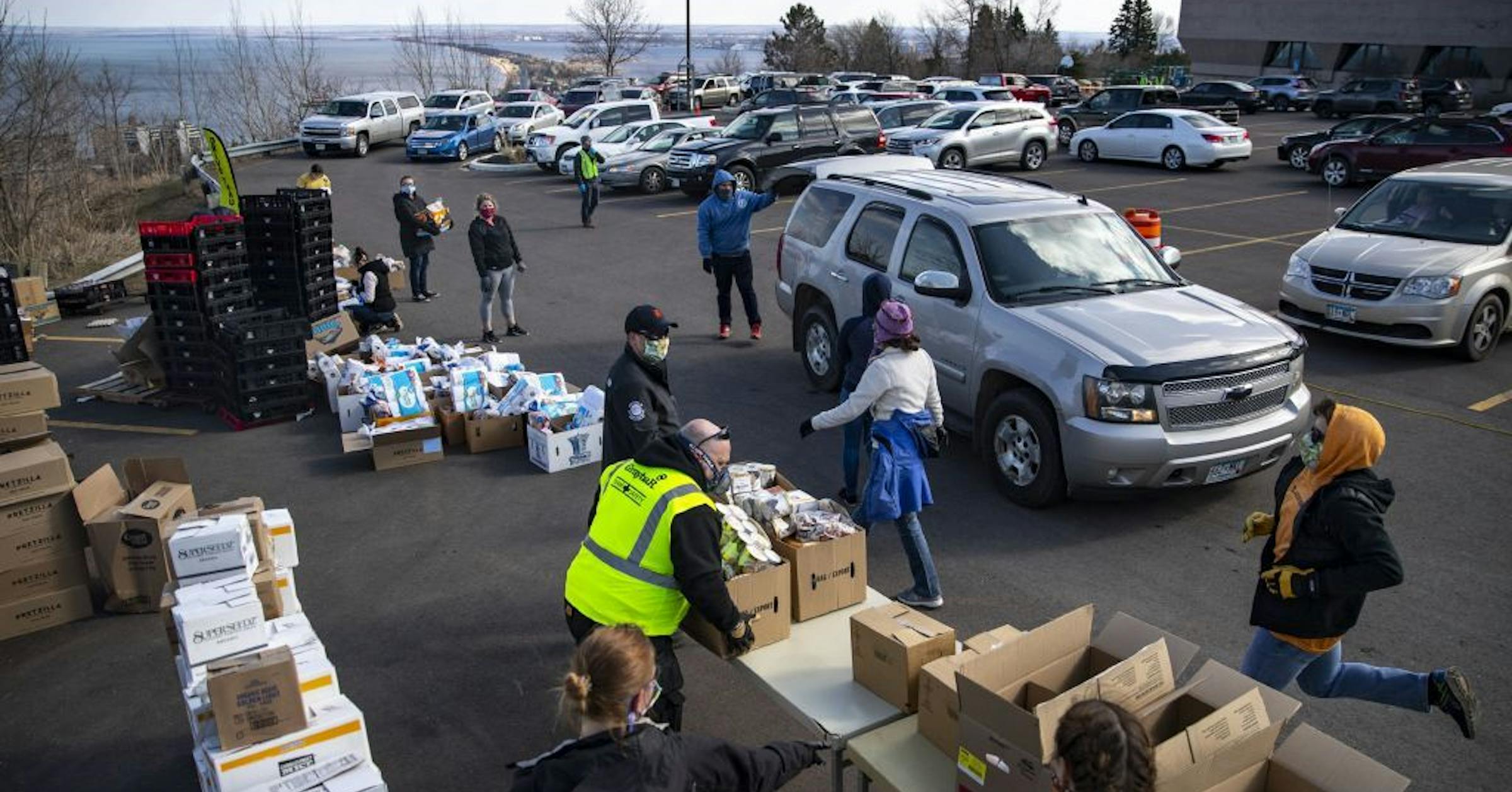
Ruby’s Pantry abruptly ended operations at 85 sites across the Upper Midwest (including 37 locations in Minnesota), a program that served more than 650,000 people and distributed over 21 million pounds of food annually. The sudden closure removes a major supply channel for low-income and rural communities and will likely increase strain on local food shelves already facing rising demand amid higher food and gas prices; tax records indicate the nonprofit had been financially struggling.
The immediate economic mechanism is a negative shock to informal in-kind transfers that low-income households use to lower grocery bills; that gap will mechanically raise marginal monthly grocery spend for a concentrated cohort and accelerate downtrading into dollar channels and shelf-stable brands over the next 1–9 months. Expect a visible short-run uplift in demand for cheap, high-calorie packaged goods and discounted private-label SKUs, which increases sales velocity for discount retailers and food manufacturers focused on shelf-stable categories while compressing basket size and frequency at mid-market grocers.
Second-order logistics effects matter: local food shelves will likely contract commercial distribution services to plug capacity shortfalls, creating transient organic demand for regional carriers and 3PL providers as nonprofits convert fixed-cost volunteer distribution into fee-for-service models. That raises variable distribution costs at the margin and creates a temporary arbitrage for national carriers to monetize last-mile contracts to non-traditional, irregular shippers — a weeks-to-months revenue opportunity, not a structural shift.
Catalysts that could reverse or amplify the trend are predictable and near-term: emergency philanthropic infusions or a state SNAP/top-up program could normalize demand within 1–3 months, while sustained high fuel prices would lengthen and deepen the strain through winter. Tail risks include rapid policy intervention (state appropriation or major foundation backstopping) or, conversely, protracted funding exhaustion among food banks that forces a structural reallocation of household budgets into lower-margin retail channels over years.
AI-powered research, real-time alerts, and portfolio analytics for institutional investors.
Overall Sentiment
moderately negative
Sentiment Score
-0.60
