
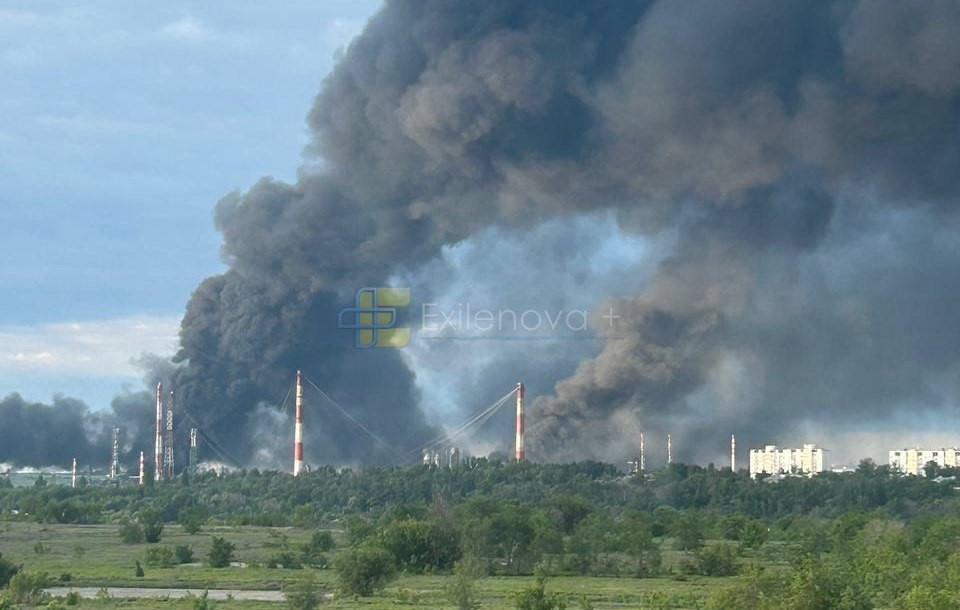
Ukrainian drone strikes reportedly hit Russia's Saratov Oil Refinery and a fuel depot in Rostov overnight on May 31, causing major fires and emergency evacuations. The attack also follows recent damage to fuel and refining infrastructure in Taganrog, Armavir, and Volgograd, highlighting sustained pressure on Russia's energy network. The disruption is negative for regional fuel supply and could have broader implications for Russian refined-product availability and energy infrastructure security.
The market implication is not the headline destruction itself but the rising probability of a persistent bottleneck in Russia’s refined-product distribution. Repeated strikes on storage, blending, and terminal infrastructure tend to impair domestic supply faster than crude output, because they create localized shortages, logistics rerouting, and unplanned maintenance that can last weeks, not days. That matters for global diesel/gasoline balances more than for headline crude, and the first-order beneficiary is not oil majors but refiners and product-linked spreads outside Russia.
The second-order effect is an air-defense allocation problem: each successful deep strike increases the cost of protecting every kilometer of Russia’s energy grid, forcing a tradeoff between front-line systems and rear-area asset defense. If that pattern continues for another 2-6 weeks, the probability of a broader Russian product export restriction or informal prioritization of domestic supply rises, which would tighten Atlantic Basin middle-distillate markets and support crack spreads. The more important catalyst to watch is whether attacks remain tactical or begin to consistently degrade large processing nodes, because repeated outages at these facilities can create compounding repair delays and catalyst/unit restart issues.
Consensus may be underpricing the asymmetric impact on non-Russian refiners and shipping. If Russian product availability tightens, European refiners with complex configurations and U.S. Gulf Coast exporters with diesel exposure should see improving margins, while industrial and transport names face a slower, second-order input-cost squeeze rather than an immediate oil shock. The move in crude could be modest while diesel, jet, and freight-sensitive inputs reprice more aggressively, which is why this is more of a product-spread trade than a directional Brent trade.
AI-powered research, real-time alerts, and portfolio analytics for institutional investors.
Request TrialOverall Sentiment
strongly negative
Sentiment Score
-0.65
Ticker Sentiment
