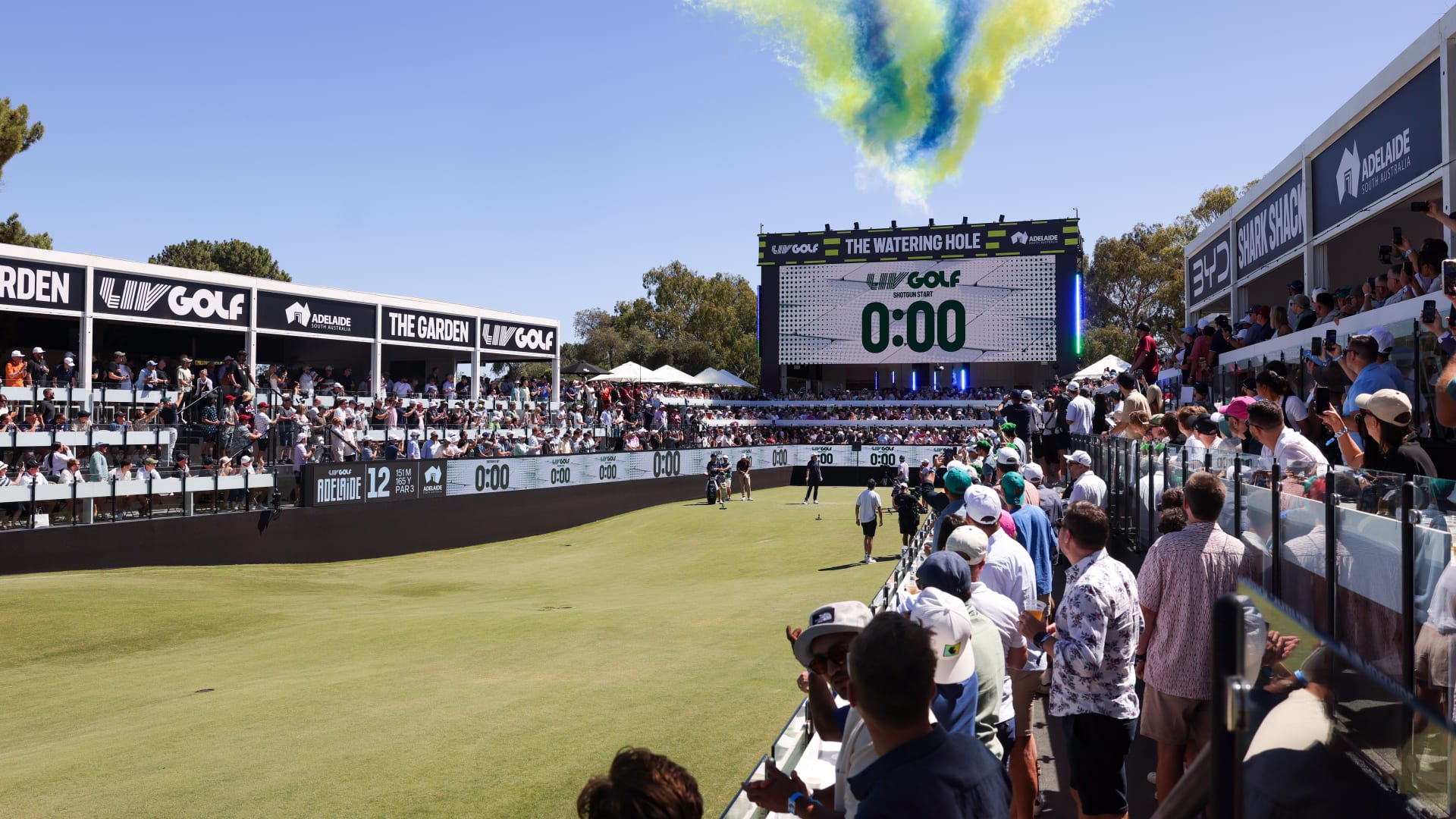
LIV Golf announced new independent board appointments, led by Gene Davis and Jon Zinman, as it seeks long-term financial partners and moves toward a diversified multi-partner investment model. The league said 2026 engagement is record-breaking and revenue is up 100% year over year, supporting its push to formalize structure and attract global investors. The news is strategically positive for LIV Golf but is unlikely to move broader markets.
This reads less like a sports-business headline and more like a capital-structure reset. Bringing in independent board operators with restructuring and M&A backgrounds usually signals that management wants optionality: minority growth capital, a strategic JV, or a staged sale process rather than a clean IPO path. The immediate implication is not valuation uplift so much as a higher probability that the enterprise becomes financeable on institutional terms, which matters because credibility and governance are often the binding constraint in private-market rollups. The second-order effect is on sponsor bargaining power. If the league can show repeatable revenue acceleration, the board move should reduce the discount rate prospective investors demand, but it also creates a decision tree: accept partner capital now at a lower control premium, or wait for another season of proof and risk growth decelerating. That creates a near-term catalyst window over the next 1-2 quarters where management likely tries to compress uncertainty before year-end budgeting cycles, with any delay increasing the chance that terms become more punitive. The broader competitive read is that established golf and adjacent live-sports assets may face a higher bar on event economics if a younger, entertainment-first format can sustain monetization. The real threat is not audience share alone; it is the possibility that this forces rivals to spend more on presentation, player economics, and distribution to defend relevance, which could pressure margins across the ecosystem. The contrarian risk is that governance upgrades can mask a weaker underlying buyer base: if the current growth rate is partly promotional and not repeatable, strategic capital could still wait for proof, leaving the story as a transition narrative rather than a financing solution.
AI-powered research, real-time alerts, and portfolio analytics for institutional investors.
Overall Sentiment
mildly positive
Sentiment Score
0.45
