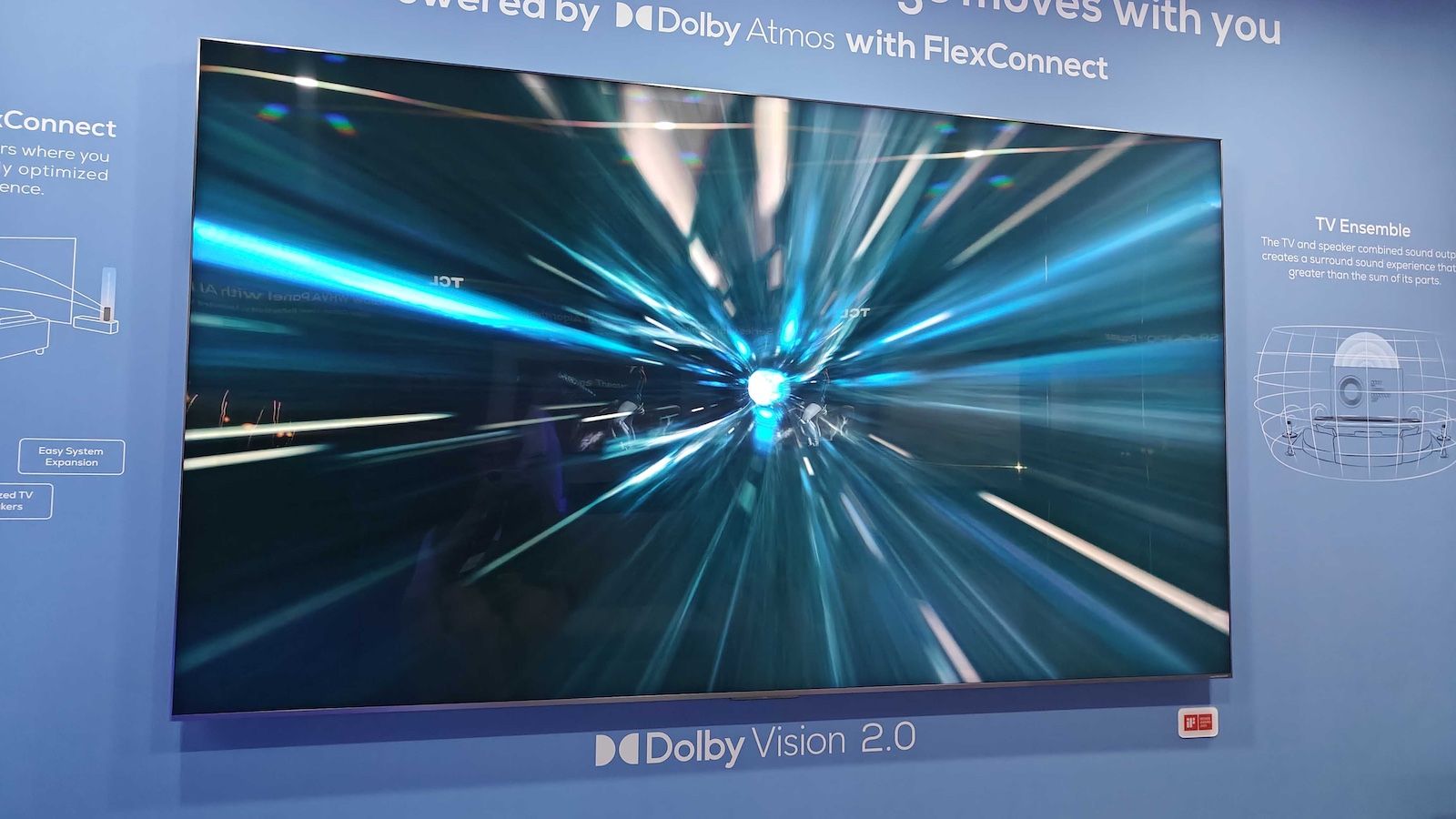
Dolby has confirmed that Hisense, TCL and Philips will support the new Dolby Vision 2 HDR format in 2026, with TCL adding support to its SQD Mini LED X11L and C-series via post‑launch software updates and Philips listing OLED811, OLED911 and OLED951 as compatible. Major manufacturers Sony and Panasonic remain unconfirmed or delayed in announcements, Samsung continues to back HDR10+ and will launch HDR10+ Advanced, while LG has stated it has no plans to support Dolby Vision 2 in 2026. The divergence increases format competition and may influence buyer decisions and OEM positioning in premium TV segments, but is unlikely to have material near-term market-moving effects on broad equities.
Market structure: Dolby (DLB) and mid-tier OEMs that can push firmware updates (TCL 1070.HK, Hisense 000921.SZ, Philips/TP Vision) are tactical winners — they gain differentiation without immediate hardware redesign, potentially boosting ASPs by 3–7% on higher-end SKUs over 6–12 months. Losers are premium incumbents that decline DV2 (LG 066570.KS) or back a rival standard (Samsung 005930.KS) as consumers may trade off format support when choosing TVs, pressuring mix and promotional intensity. Cross-asset: expect modest upside in DLB equity, selective gains for mini‑LED/component suppliers, slight negative sentiment for KRW if Korean OEM margins compress; bond/commodity impacts are minimal but visible in supplier credit spreads if adoption forces capex changes.
Risk assessment: tail risks include a fast, coordinated push by Samsung/HDR10+ Advanced and major streamers to reject DV2 (low-probability, high-impact downside for DLB and partner OEMs) and potential antitrust/licensing disputes that could delay rollouts. Time horizons: immediate (days) — little price action; short-term (weeks–months) — product announcements (Mar–May) and SELLOUTs will reveal consumer uptake; long-term (12–24 months) — streaming platform support and licensing revenue growth determine earnings. Hidden dependencies: streaming/OS support (Netflix/Prime/Apple TV) and chip‑vendor readiness (SoC firmware) are gating factors; absence of those will cap upside.
Trade implications: direct plays — overweight DLB (licensing/software upside) and selective OEMs that announce DV2 (TCL 1070.HK, Hisense 000921.SZ) while underweight LG (066570.KS) into product-cycle risk; target 2–3% portfolio position in DLB with a 12‑month horizon and +25–35% target. Pair trade — long DLB / short LG (066570.KS) to express format arbitrage; expect convergence if LG signals DV2 support or DLB licensing disappoints. Options — buy a 6–9 month DLB call spread (delta ~0.35 long) to cap premium, or buy puts on LG (3–6 month) to hedge product-cycle downside.
Contrarian angles: consensus underestimates the revenue uplift from post‑sale firmware licensing and certification services (could add mid-single-digit EBIT margin to DLB over 12–24 months) — market likely underprices this while waiting for streamer validation. The negative thesis on LG may be overdone if LG secures delayed DV2 firmware or pushes proprietary image pipelines that blunt perceived value; monitor Sony/Panasonic statements in Mar–May as binary catalysts. Historical parallel: earlier HDR wars (Dolby Vision vs HDR10) took ~2 years to crystallize; don’t expect instantaneous winners — trade around product and streaming confirmations, not press releases alone.
AI-powered research, real-time alerts, and portfolio analytics for institutional investors.
Request DemoOverall Sentiment
mixed
Sentiment Score
0.05
Ticker Sentiment
