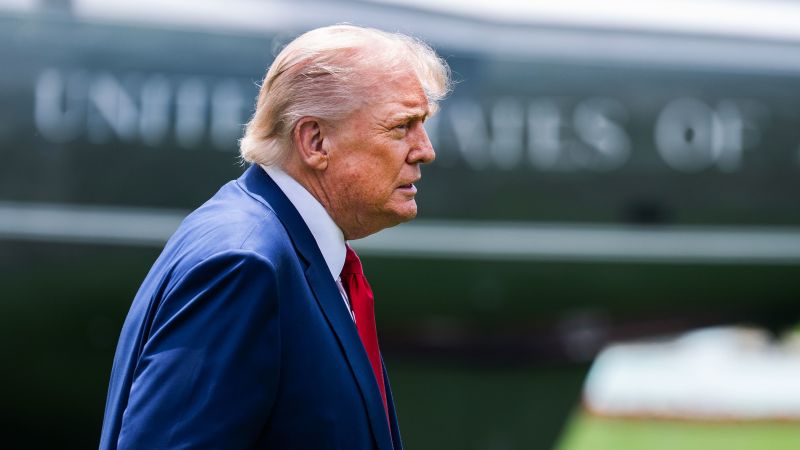
President Trump is facing increasing pressure to intervene in the escalating conflict between Israel and Iran, despite his desire to avoid a new Middle East war and maintain his "America First" platform; internal political divisions and the potential for a wider, protracted conflict are significant deterrents, while the potential for Iran to develop nuclear weapons and attacks on US assets are factors that could draw the US into the conflict, and Trump's foreign policy approach has been challenged by key global leaders, potentially undermining his authority on the international stage.
The current geopolitical landscape is marked by significant tension surrounding potential U.S. involvement in an escalating Iran-Israel conflict, a scenario President Trump is reportedly keen to avoid due to his "America First" foreign policy and the inherent risks of a protracted Middle Eastern war. Despite this reluctance, the article highlights several potent catalysts that could compel U.S. intervention: direct attacks by Iran on U.S. assets or personnel, Iranian actions disrupting global energy supplies via key shipping lanes, and substantial pressure from within the Republican party to neutralize Iran's nuclear program, particularly if Israeli capabilities prove insufficient. The White House's reported rejection of an Israeli plan to target Iran's Supreme Leader underscores the administration's cautious approach. However, the situation is complicated by a domestic political environment where influential voices within Trump's base advocate against further Middle East entanglements, contrasting with hawkish calls for decisive U.S. action. The article critically frames Trump's foreign policy, suggesting his "art of the deal" strategy has faltered, citing strained relations with key global leaders like Putin and Xi, and Netanyahu's independent actions regarding Iran. This perceived weakening of U.S. international authority and the unraveling of foreign policy initiatives, such as failed peacemaking in Gaza and Ukraine, contribute to a "strongly negative" sentiment and a high market impact score of 0.8, indicating an environment of heightened uncertainty and volatility. The potential for Iran to achieve nuclear capability remains a central concern, which could override Trump's non-interventionist preferences, especially given the argument that a nuclear Iran is incompatible with long-term peace.
AI-powered research, real-time alerts, and portfolio analytics for institutional investors.
Request DemoOverall Sentiment
strongly negative
Sentiment Score
-0.70
Ticker Sentiment
