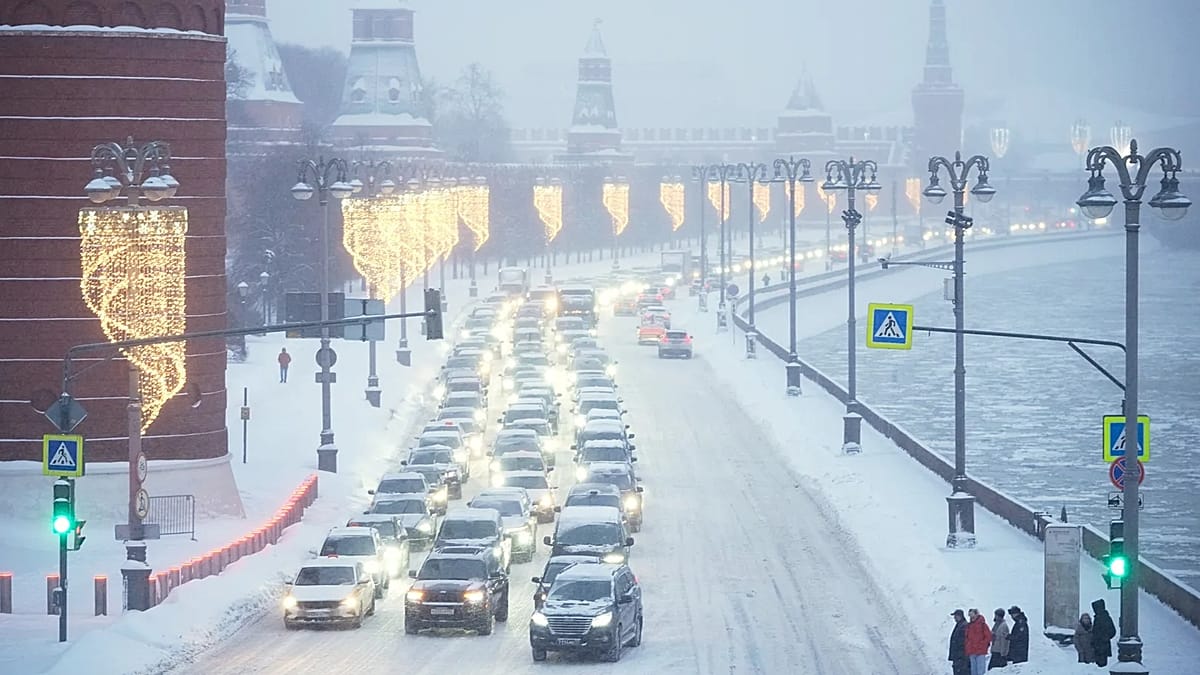
Moscow experienced its heaviest snowfall in over 200 years, with the Moscow State University observatory recording almost 92 mm of precipitation by January 29 and settled snow up to about 60 cm in parts of the city; the observatory attributed the event to deep cyclones and sharp atmospheric fronts. In the Russian Far East, Kamchatka declared an emergency after a massive snowstorm that partially paralysed its main city and buried buildings up to the second storey, causing commuter train delays, severe traffic jams and widespread disruption to urban mobility — a localized operational risk with limited direct market impact but potential short-term effects on logistics and regional economic activity.
Market structure: Extreme snowfall is a short-duration demand shock that benefits heavy-equipment manufacturers, emergency contractors, fuel suppliers and regional utilities while hurting time-sensitive transport (airlines, couriers) and just-in-time retail supply chains. Expect pricing power for emergency rentals and de-icing/logistics premiums to rise 10–30% in affected corridors over 2–8 weeks; incumbent winter-capable rail/trucking firms can capture share from disrupted air freight. Commodity impacts are concentrated in regional gas/heating demand (upward pressure on European/Asian LNG spreads if cold persists) rather than broad oil shocks.
Risk assessment: Tail risks include prolonged transport paralysis causing inventory shortages, regional fiscal strain (Kamchatka-sized municipal budget holes) and insurance loss accumulation that could widen regional spreads by 50–200bp; sanctions amplify liquidity risk for Russia-exposed assets. Immediate window (days) is operational disruption; short-term (weeks/months) sees repair and rental revenue; long-term (quarters) could show capex reordering and higher insurance costs. Hidden dependencies: grid outages would cascade into industrial downtime and rail chokepoints; monitor insurance claims and regional budget transfers as catalysts.
Trade implications: Tactical longs — heavy-equipment OEMs (CAT, DE) and global rental platforms — for a 1–3 month trade to capture rental/capex pickup; short airlines/airfreight (JETS ETF or DAL/UAL) for 2–4 weeks to catch operational underperformance. Buy short-dated European gas call exposure (TTF/NBP, 1-month) if heating-degree-days exceed +15% vs. climatology; avoid increasing direct Russian equity (MOEX/IMOEX.ME) exposure and consider a small sovereign CDS hedge if available.
Contrarian angles: The market may overpay for persistent disruption — most storm-driven demand reverts in 4–12 weeks, so avoid buying long-dated cyclicals at peak; conversely, underowned insurers and regional construction names could be mispriced after an initial sell-off. Historical parallels (2013/2018 European cold snaps) show gas spikes then mean-revert in 6–12 weeks, so favor short-dated options rather than long-dated directional exposure. Monitor ECMWF/GFS 10–30 day anomalies and actual heating-degree-day deviations >+15% as the trigger to scale positions.
AI-powered research, real-time alerts, and portfolio analytics for institutional investors.
Request DemoOverall Sentiment
mildly negative
Sentiment Score
-0.25
