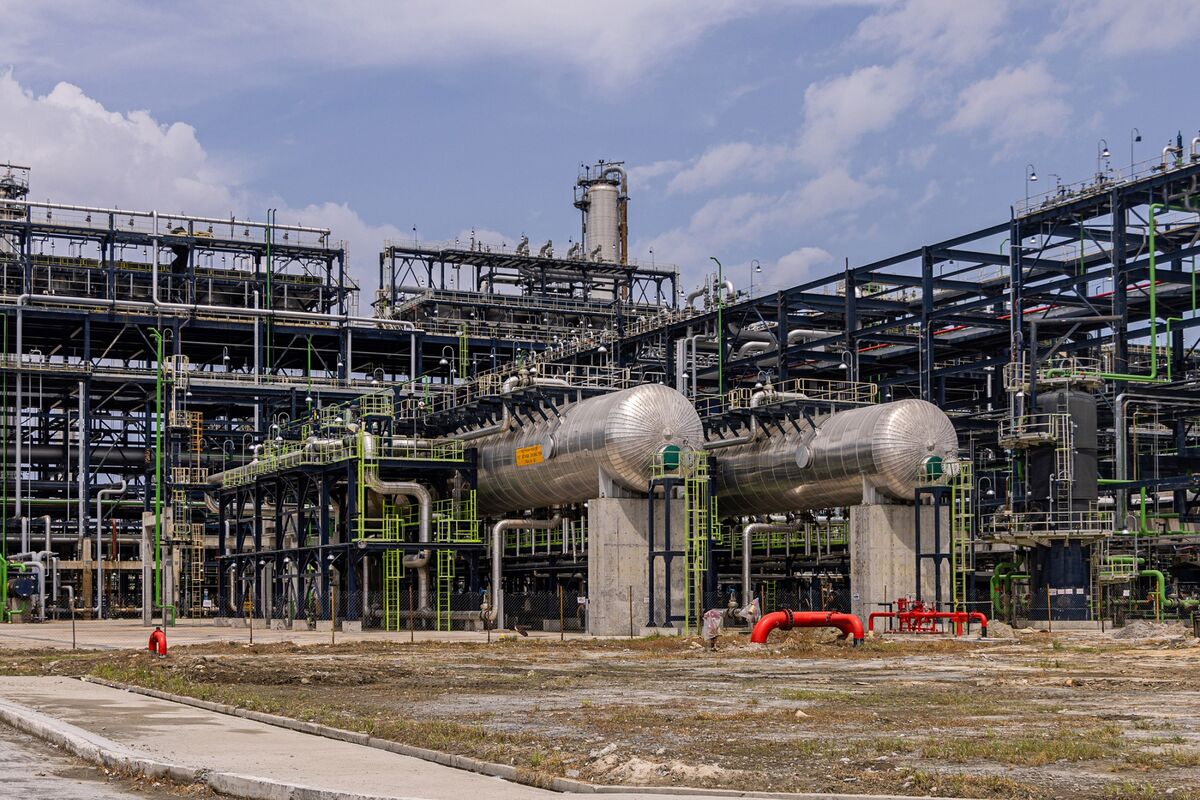
Dangote Petroleum Refinery & Petrochemicals is targeting a valuation of as much as $50 billion in a planned Nigeria listing this year, with a potential 10% stake sale implying up to $5 billion in proceeds. The valuation outlook is being supported by higher oil prices, which improve the refinery arm’s prospects. The company said the amount is in line with its current thinking.
A marquee Nigeria listing at this size is less a one-off IPO story than a signal that upstream African and Middle Eastern capital is trying to reprice itself against sustained refining strength. If priced near the top end, the deal can become a benchmark for private infrastructure-like energy assets, likely tightening financing conditions for regional competitors that need capital to expand capacity or retrofit units. The more important second-order effect is that a visible equity currency can accelerate M&A and JV activity across refinery logistics, storage, and petrochemicals — where scarcity value may re-rate faster than the underlying commodity cycle.
The near-term winner is the domestic ecosystem around the asset: banks, logistics, ports, and contractors with exposure to listing-related capex and working-capital inflows. A successful deal also creates a template for other emerging-market founders to monetize strategic assets at public-market multiples, which could pull capital away from smaller, lower-quality offerings in the same region. Conversely, if the valuation is pushed too aggressively, the IPO could stall, and that failure would likely hit sentiment in Nigeria’s broader equity market more than the refinery business itself.
The key risk is timing: this is a months-long catalyst, not a days-long trade. Higher oil prices help headline economics, but they also raise the probability of political scrutiny, export policy intervention, and margin normalization if product cracks compress later in the year. The market may be overestimating the durability of the valuation multiple if it extrapolates current margins into a full-cycle outcome; the sharper the opening valuation, the bigger the downside if rates, FX, or crude reverse before listing.
The contrarian view is that the best trade may not be the IPO itself, but the volatility around access-to-capital winners and losers that precede it. In this regime, scarcity of large, investable African energy assets may be misread as a permanent premium, when in reality it can be a temporary function of limited supply. A weak book or delayed listing would be a useful signal that public investors are demanding a higher discount rate than sponsors expect, which could cool similar transactions across EM energy and infrastructure.
AI-powered research, real-time alerts, and portfolio analytics for institutional investors.
Request DemoOverall Sentiment
mildly positive
Sentiment Score
0.35
