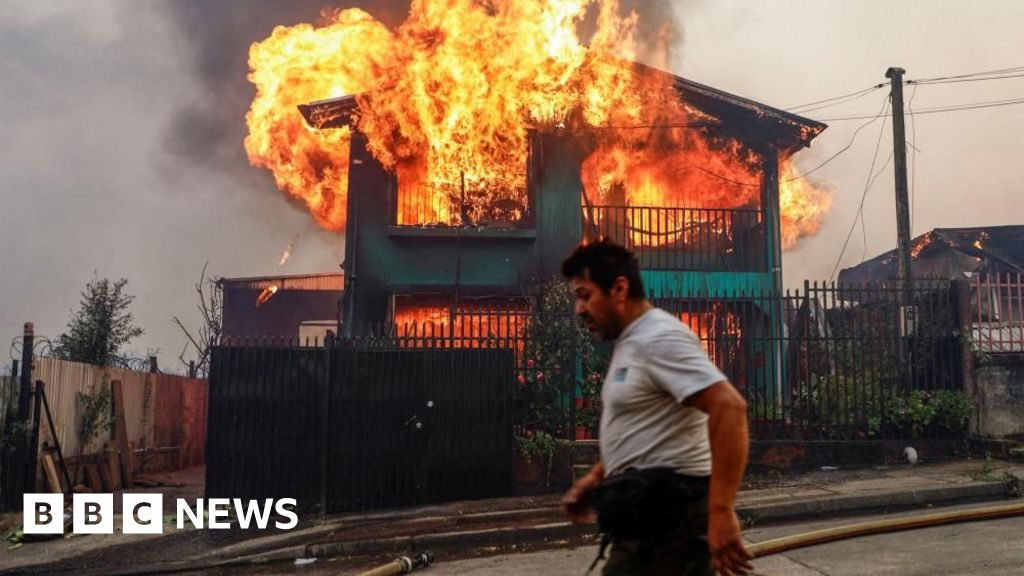
Chilean President Gabriel Boric declared a state of catastrophe in the Ñuble and Biobío regions as at least 16 people have died and roughly 20,000 residents have been evacuated amid 24 active fires nationwide. The most severe blazes have consumed about 20,000 hectares, destroyed ~250 homes and threaten communities around Concepción as strong winds and a heat wave (forecast highs to 38C) complicate suppression efforts; long-term drought has worsened fire risk. The declaration mobilizes national resources and could pressure local insurers, municipal budgets, logistics and reconstruction spending, but is unlikely to be market-moving at a national financial-market level.
Market structure: Immediate winners are construction/materials, salvage forestry and global timber players (reduced Chilean supply lifts pulp/wood price power), select reinsurers if pricing hardens; losers are Chile equity beta, local RE, tourism, and short-term logistics/port operators near Concepción. Expect CLP weakness and a >10–50bp widening in Chile sovereign CDS in the next 1–4 weeks if evacuations/port closures persist; copper risk is asymmetric — a 1–4 week port disruption could push LME copper spot/prices +2–6% on logistics stress.
Risk assessment: Tail risks include a prolonged drought/wind cycle causing persistent layoffs/insurance insolvency and a political/regulatory response (expanded state control of reconstruction or forced insurance rate caps) within 3–12 months. Immediate (days) operational disruption and evacuations; short-term (weeks–months) insurance claim accruals and reconstruction demand spikes; long-term (quarters–years) structural repricing of insurance, higher capex in fire mitigation, and potential migration lowering regional property values.
Trade implications: Tactical moves: short Chile beta and FX volatility, long timber and selective materials; expect a 2–8% reallocation impact across portfolios in next 1–6 months. Options volatility is likely to spike in Chile-focused instruments (ECH) — buy protection or sell premium selectively; monitor copper basis at Chilean ports for entry signals.
Contrarian angles: The market may over-discount Chile exposure; reconstruction should boost domestic cement/steel/plywood demand for 3–12 months, creating a relative winner vs. broad EM sell-off. Historical wildfire cycles show local equities often rebound within 6–12 months once reconstruction and insurance flows are evident, but mispricing can persist if regulatory intervention harms private returns.
AI-powered research, real-time alerts, and portfolio analytics for institutional investors.
Request DemoOverall Sentiment
moderately negative
Sentiment Score
-0.60
