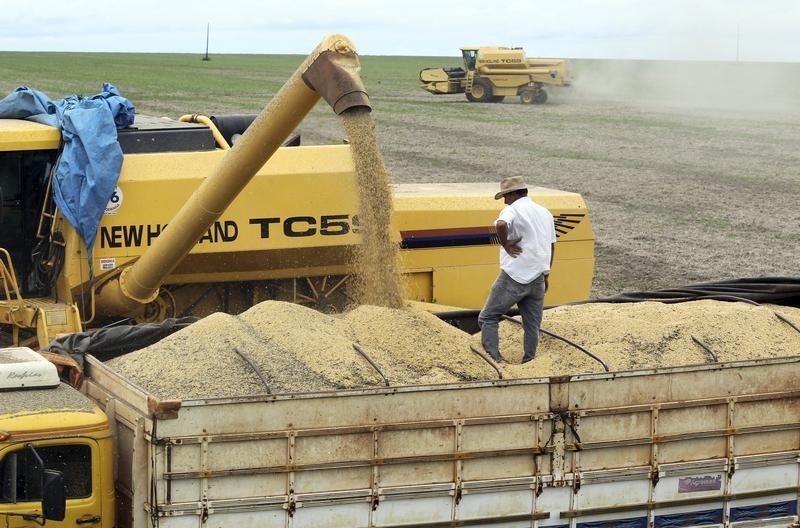
Grain prices are holding steady despite ongoing peace talks between Russia and Ukraine, as the market has largely adjusted to the conflict's impact. Ukrainian grain production has recovered, with exports remaining near pre-war levels, while Russian wheat exports have increased. Capital Economics suggests that factors like weather, input costs, and oil prices will have a greater influence on future grain price trends than the cessation of hostilities alone, noting that lower oil prices could lead to decreased agricultural prices.
Grain prices are exhibiting stability near pre-war levels, largely unaffected by ongoing Russia-Ukraine peace discussions, as markets appear to have already priced in the conflict's impact. The initial price surge in 2022, driven by supply chain disruptions and elevated energy costs following Russia's invasion, has subsided. Ukrainian grain production, despite an anticipated 15% weather-related decrease in corn and wheat output for the 2024/25 season compared to pre-war figures, has seen exports remain broadly consistent with pre-war averages. Concurrently, Russian wheat exports have increased since the conflict began, and the absence of direct sanctions on Russian agricultural products means potential easing of sanctions is unlikely to significantly alter grain markets, especially since most exports go to non-sanctioning countries. Black Sea transshipments have recovered to 63% of pre-war levels, aided by reduced geopolitical tensions and lower insurance costs. Capital Economics projects that a cessation of hostilities would only offer a marginal and gradual boost to Ukrainian agricultural output, with factors such as growing conditions, input costs, and potentially lower oil prices (which could depress agricultural prices) expected to be more dominant drivers of grain price trends in the coming years.
AI-powered research, real-time alerts, and portfolio analytics for institutional investors.
Overall Sentiment
mildly positive
Sentiment Score
0.30
Ticker Sentiment
