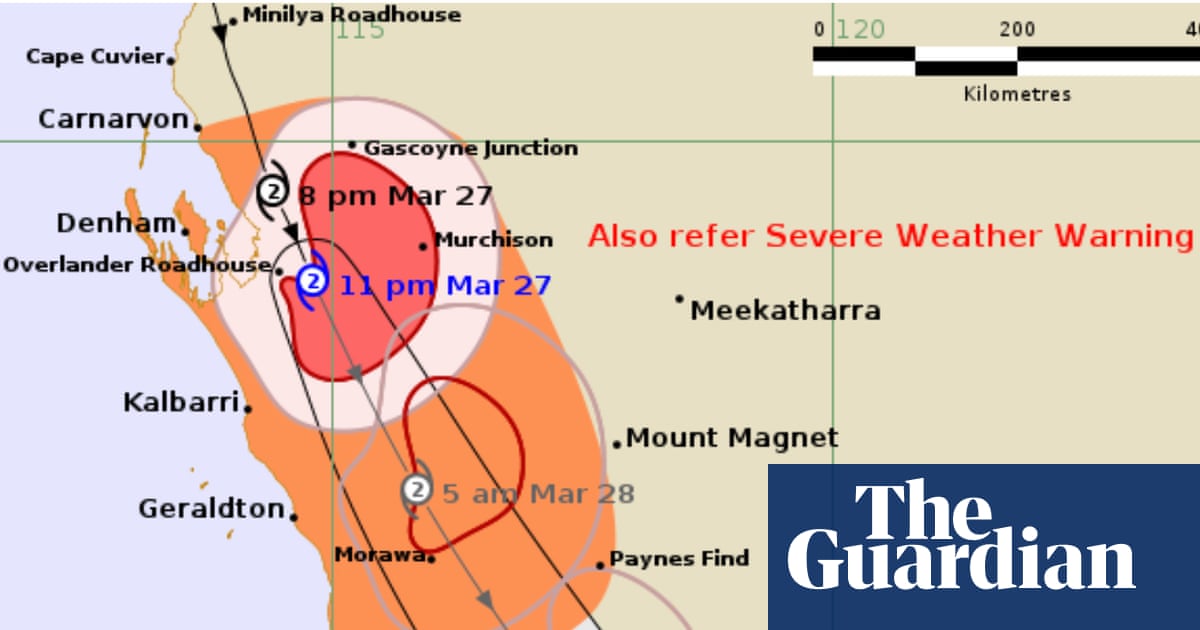
Tropical Cyclone Narelle made landfall in Western Australia and was downgraded to a Category 2 system after destroying roofs and producing gusts up to 250 km/h; Perth recorded localized rainfall >30 mm and the southwest is forecast to receive 50–100 mm over Friday–Saturday. More than 600 Carnarvon properties lost power, 50+ schools closed, multiple road closures and damaged evacuation centres were reported, indicating near-term strain on regional utilities, emergency services and potential insured losses. Federal and WA authorities have pre-deployed generators and stood ready to assist; flooding and cleanup operations are expected to continue into next week.
The immediate market lever is logistics chokepoints: port and rail interruptions in the northwest create a concentrated, short-duration supply shock for bulk commodity exports and industrial inputs. Expect 1–3 week shipment squeezes that can produce outsized price moves in spot freight and seaborne commodity spreads even if monthly export volumes remain intact once terminals reopen.
Insurance and government reconstruction dynamics diverge on different horizons. Contractors and materials suppliers see a concentrated revenue spike over weeks-to-months from emergency repairs and roof replacements, while insurers and reinsurers absorb elevated claim frequency and severity over quarters; that tends to depress insurer equities near-term but catalyze higher reinsurance pricing into the next renewal cycle (6–12 months).
Energy and logistics inputs will also reprice locally: diesel and rental-generator demand spike with outages, raising short-term delivered-fuel and rental-equipment margins. Recurrent extreme-weather events — now more likely with warmer oceans — increase the economic case for accelerated grid hardening capex from utilities, a multi-quarter to multi-year tailwind for infrastructure engineering and equipment vendors.
Key market signal to watch in the next 72 hours: port throughput notifications and utility restoration cadence. If ports remain closed beyond 5–7 days, expect knock-on commodity price vol and a clearer directional move for miners, freight operators and fuel spreads.
AI-powered research, real-time alerts, and portfolio analytics for institutional investors.
Request DemoOverall Sentiment
strongly negative
Sentiment Score
-0.60
