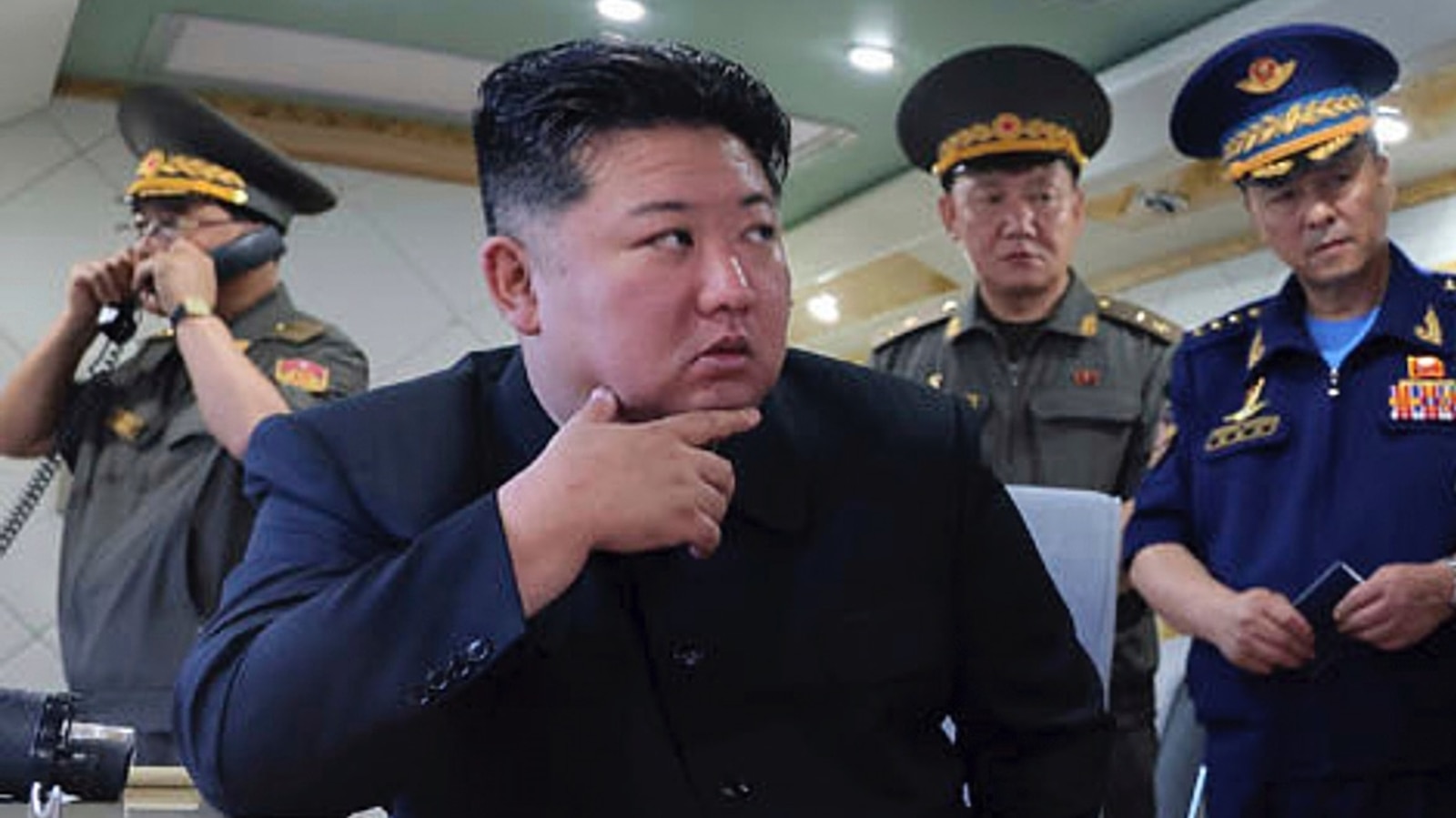
North Korea test-fired two newly developed types of missiles, designed to target aerial threats, amid ongoing annual U.S.-South Korea joint military drills. Pyongyang characterized these drills as destabilizing, with leader Kim Jong Un previously stating they could 'ignite a war' and advocating for a 'rapid expansion of nuclearization.' This development highlights persistent geopolitical tensions and North Korea's continued military advancements in the region.
North Korea's test-firing of two new anti-aircraft missiles constitutes a direct and calculated response to the ongoing U.S.-South Korea 'Ulchi Freedom Shield 25' military exercises. The act, personally overseen by leader Kim Jong Un, signals not only continued progress in North Korea's military technology, specifically targeting aerial threats like drones and cruise missiles, but also a significant escalation in geopolitical rhetoric. Pyongyang's characterization of the allied drills as 'reckless' and a move toward 'extreme tension' is amplified by Kim's recent call for a 'rapid expansion of nuclearization,' explicitly linking the drills to a potential war. This development heightens regional instability and underscores the fragility of the security situation on the Korean Peninsula. The high market impact score of 0.8 reflects the market's sensitivity to such overt military posturing and the tangible risk of miscalculation in a heavily militarized region.
AI-powered research, real-time alerts, and portfolio analytics for institutional investors.
Request DemoOverall Sentiment
strongly negative
Sentiment Score
-0.75
