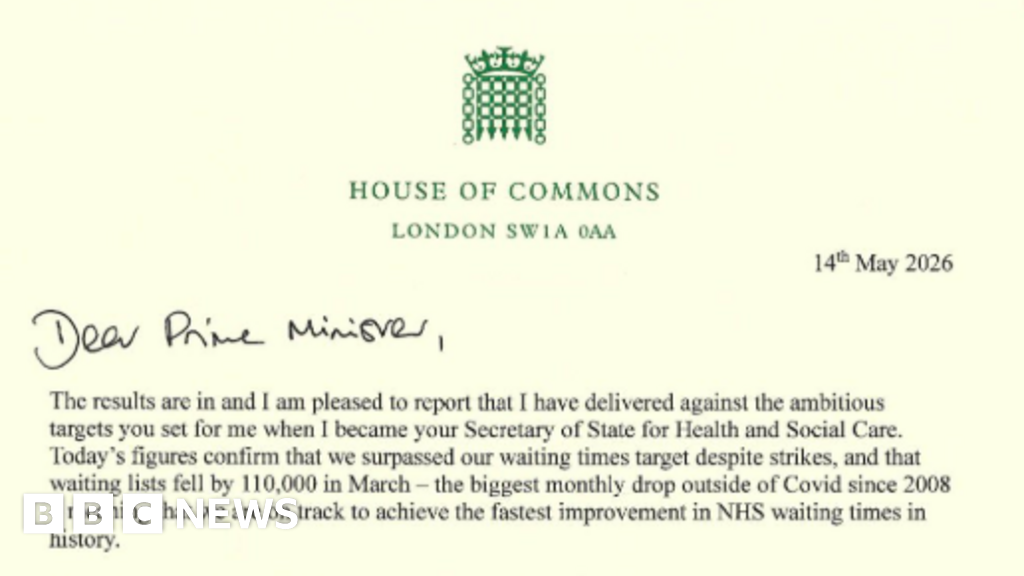
Wes Streeting resigned as UK health secretary, citing loss of confidence in the prime minister and saying Labour will not be led into the next general election by the current leadership. The letter highlights progress in NHS waiting lists, GP recruitment, and productivity, but frames the broader political backdrop as one of worsening government credibility and electoral defeat. The direct market impact is limited, though the news adds to UK political uncertainty.
This is less a healthcare print than a regime-change signal for UK political risk. A cabinet resignation framed around leadership collapse raises the probability of an accelerated succession fight, which historically widens fiscal slippage risk and pushes the gilt term premium higher before the policy path is even known. The market should care less about the emotional headline than about the implied reduction in cabinet cohesion at exactly the moment the government needs to keep spending restraint credible. The second-order effect is sector-specific: healthcare-adjacent UK equities are likely to become more headline-sensitive, but the bigger move is in domestic cyclicals exposed to consumer confidence and public procurement. If Labour’s internal disputes intensify, the policy mix could drift toward either looser spending or more populist signaling, both of which are marginally inflationary and negative for duration-sensitive assets. That creates a near-term asymmetry in favor of shorts on UK rates rather than outright equity index shorts. The contrarian view is that the market may already be pricing a high degree of political dysfunction, so the first-order downside in FTSE-linked assets may be limited unless this resignation triggers wider ministerial exits. The cleaner expression is volatility: leadership uncertainty increases the probability of policy surprises over the next 1-3 months, while a quick replacement or disciplined reset would deflate the trade fast. In other words, this is a catalyst for dispersion, not necessarily a broad macro crash.
AI-powered research, real-time alerts, and portfolio analytics for institutional investors.
Request DemoOverall Sentiment
mildly negative
Sentiment Score
-0.15
