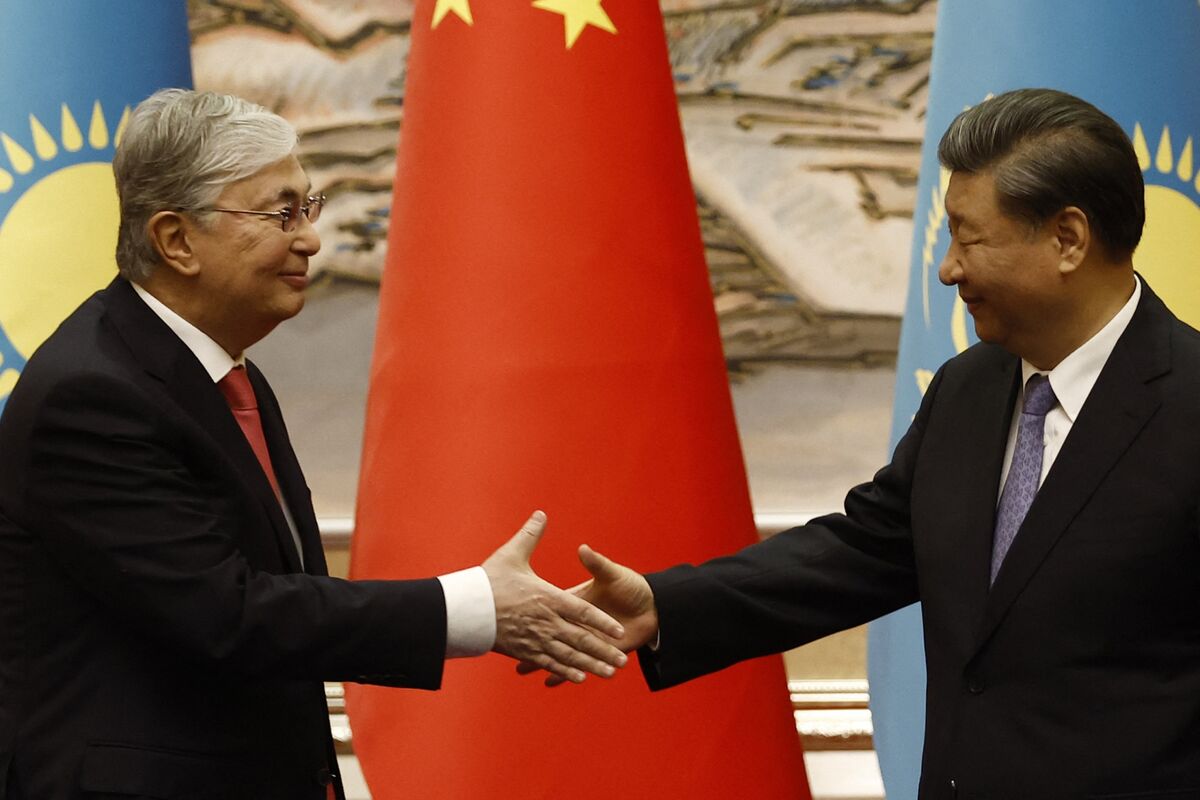
President Xi Jinping is visiting Kazakhstan to meet with Central Asian leaders, marking his third overseas trip this year. The visit aims to strengthen China's influence in the region, which is strategically important and faces competing interests from global powers, offering a counterpoint to the recent G7 summit.
Chinese President Xi Jinping's visit to Kazakhstan for discussions with Central Asian leaders, including Kazakh President Kassym-Jomart Tokayev and a subsequent summit with leaders from Kazakhstan, Kyrgyzstan, Tajikistan, Turkmenistan, and Uzbekistan, signifies a continued strategic push by Beijing to expand its influence in a geopolitically vital region. This engagement, marking Xi's third overseas trip this year, is positioned as a counter-narrative to the Group of Seven (G7) summit, underscoring the intensifying competition for global sway between major powers like China and the United States. Central Asia's strategic location at the nexus of competing interests makes it a focal point for initiatives related to trade, infrastructure, and resource diplomacy, aligning with the identified themes of 'Geopolitics & War,' 'Emerging Markets,' and 'Trade Policy & Supply Chain.' While the immediate market impact score of 0.1 and neutral sentiment suggest this specific diplomatic event is not perceived as a major short-term market catalyst, it contributes to the broader understanding of evolving global power dynamics and China's long-term strategic objectives in emerging markets.
AI-powered research, real-time alerts, and portfolio analytics for institutional investors.
Request DemoOverall Sentiment
neutral
Sentiment Score
0.00
