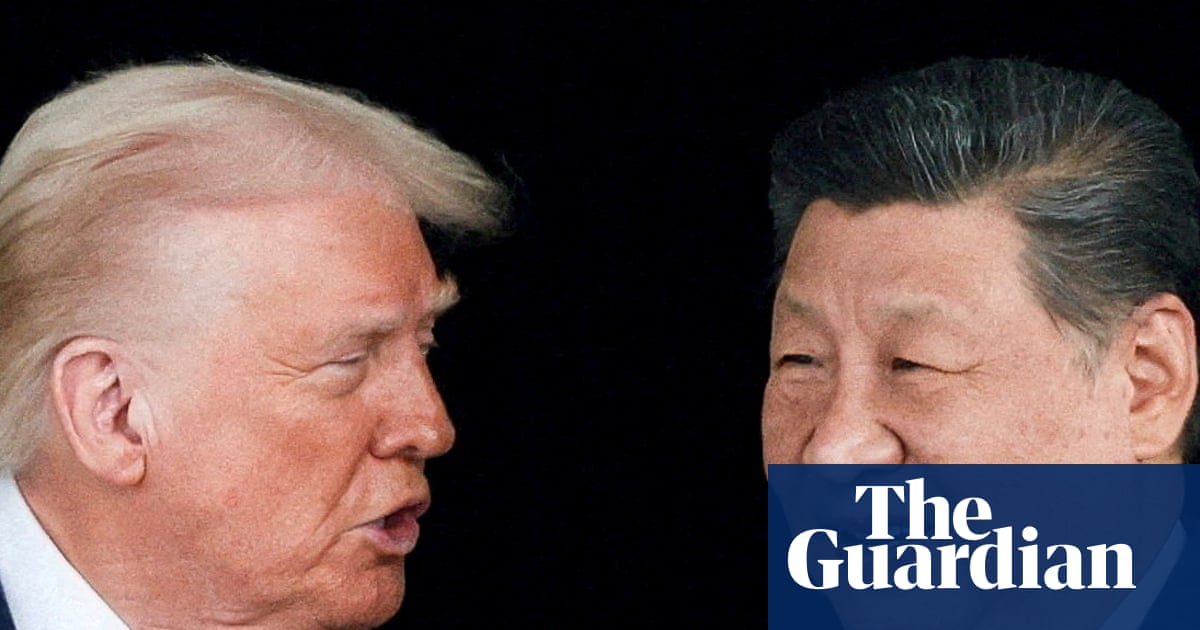
President Trump will visit Beijing on 14-15 May — the first US presidential trip to China since 2017 — with a reciprocal Xi visit to Washington planned later in 2026. The trip was postponed due to the Iran war and follows a February US supreme court ruling that curtailed the president's tariff powers, removing a key negotiating lever; China imported about 12m barrels/day in Jan–Feb 2026. Talks will likely cover trade (agriculture, aircraft parts) and high-tension issues such as Taiwan and US arms sales, creating uncertainty but potentially moving energy and defense-related sectors; the White House estimated combat operations could wind down in roughly 4–6 weeks.
A resumption of high-level engagement between Washington and Beijing shifts the negotiation toolkit away from unilateral tariffs toward targeted commercial carve-outs and bilateral commercial deals. That means short-term demand boosts for cyclical exporters (aerospace OEMs and agricultural processors) can materialize quickly via quota or purchase-side pledges, while structural technology controls and supply-chain decoupling are unlikely to be resolved in a single political gesture.
Geopolitical tail risks remain the dominant destabilizer: any material escalation around Taiwan or spillover from Middle East conflict would flip market leadership from cyclical exporters to defense and energy suppliers within days, not months. Market moves should therefore be viewed through two horizons — a near-term repricing around announcements (days–weeks) and a longer, policy-driven rotation that plays out across quarters as export controls, subsidy programs, and content rules are legislated or enforced.
Second-order winners and losers will be defined by enforceability: companies with fungible, low-tech export lines (grain, standard aircraft components, non-sensitive industrial goods) are first-order beneficiaries; firms dependent on sensitive semiconductor, AI, or telecom supply chains will see limited relief and may accelerate relocation spend. That bifurcation creates clean relative-value opportunities between cyclical commercial exporters and defense/advanced-tech names depending on the next credible catalyst.
AI-powered research, real-time alerts, and portfolio analytics for institutional investors.
Request DemoOverall Sentiment
neutral
Sentiment Score
0.00
