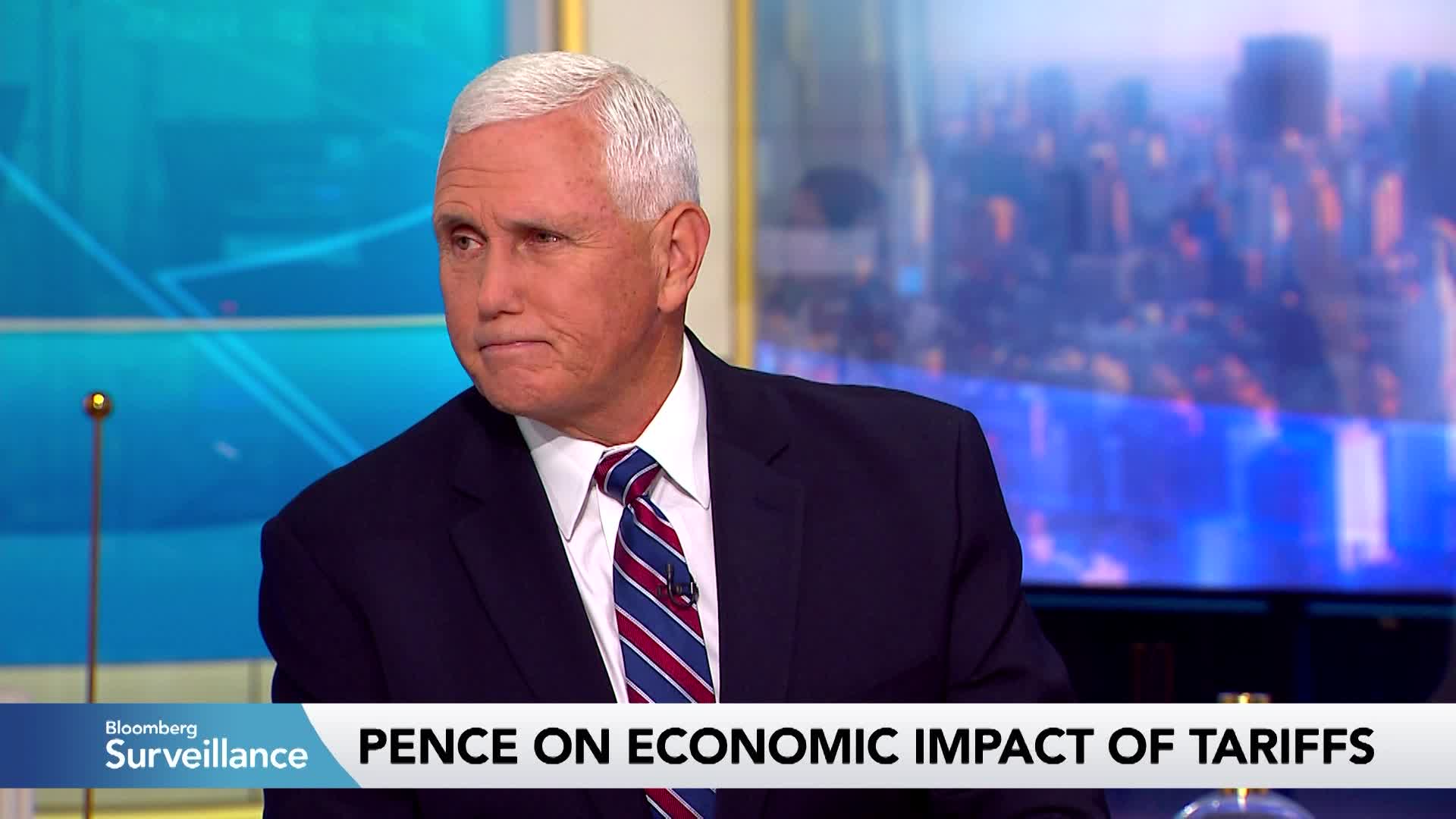
Former US Vice President Mike Pence stated on Bloomberg Surveillance that the Federal Reserve's dual mandate "confuses the issue," while also asserting President Trump's right to voice opinions on the central bank. This commentary highlights ongoing political scrutiny and differing perspectives on the Fed's policy objectives and independence.
Former US Vice President Mike Pence's statement that the Federal Reserve's dual mandate "confuses the issue" introduces a notable political risk into the outlook for U.S. monetary policy. By publicly questioning the foundational goals of achieving both price stability and maximum employment, Pence's critique signals a potential ideological shift that could gain traction, particularly within certain political circles. His concurrent defense of President Trump's right to comment on the Fed's actions further highlights a trend of diminishing the central bank's traditional operational independence from political pressure. While the comments from a former official carry a low immediate market impact, as indicated by the score of 0.1, they contribute to a long-term narrative that could destabilize policy expectations. This intersection of monetary policy and domestic politics suggests that the Fed's mandate itself could become a contentious issue in future political cycles, creating uncertainty for long-term interest rate and inflation forecasts.
AI-powered research, real-time alerts, and portfolio analytics for institutional investors.
Request DemoOverall Sentiment
mildly negative
Sentiment Score
-0.20
