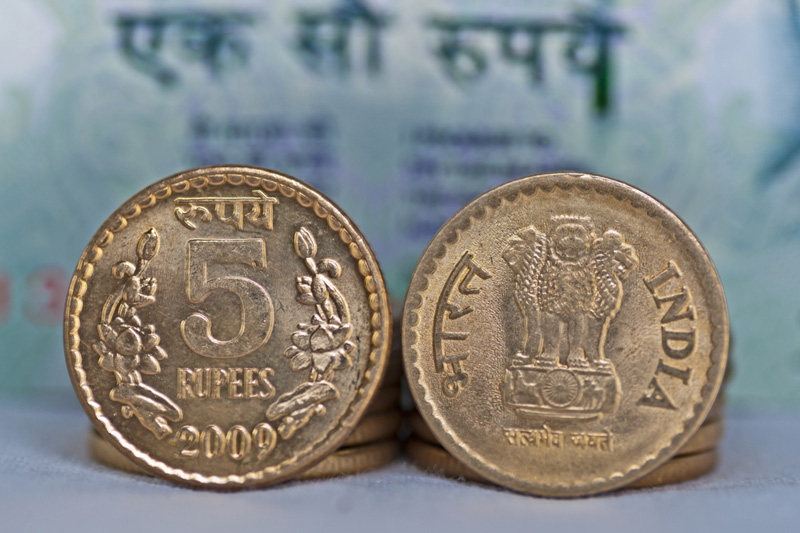
The Indian rupee has fallen to all-time lows against the US dollar following new 25% tariffs on Indian exports, pushing the total effective tariff rate to an estimated 32% and prompting Goldman Sachs to project downside risks to India's export and current account forecasts. This has coincided with substantial equity outflows of approximately $5.5 billion over July and August, alongside a potential reduction in India's weighting within the GBI EM Global Diversified Index. While the Reserve Bank of India is expected to intervene to limit foreign exchange volatility, its sizable short USD/INR forward book complicates efforts, leading Goldman Sachs to anticipate continued rupee underperformance against other carry trade candidates and North Asian peers.
The Indian rupee has depreciated to an all-time low against the US dollar, driven by the implementation of an additional 25% US tariff on Indian exports. According to analysis from Goldman Sachs, this brings the total effective tariff rate to approximately 32%, creating significant downside risks for India's export and current account forecasts. The currency pressure is compounded by substantial capital flight, with equity outflows reaching approximately $5.5 billion over July and August. Further headwinds are anticipated from a potential reduction in India's weighting in the GBI EM Global Diversified Index, from a 10% cap to 8.5%, with a decision expected in September. While the Reserve Bank of India (RBI) is expected to intervene to limit volatility, its effectiveness may be constrained by its sizable short USD/INR forward book, which stands at around $60 billion and necessitates the purchase of US dollars to settle maturing positions. Consequently, Goldman Sachs projects the rupee will continue to underperform its North Asian peers and other carry trade candidates in the near term.
AI-powered research, real-time alerts, and portfolio analytics for institutional investors.
Overall Sentiment
strongly negative
Sentiment Score
-0.65
Ticker Sentiment
