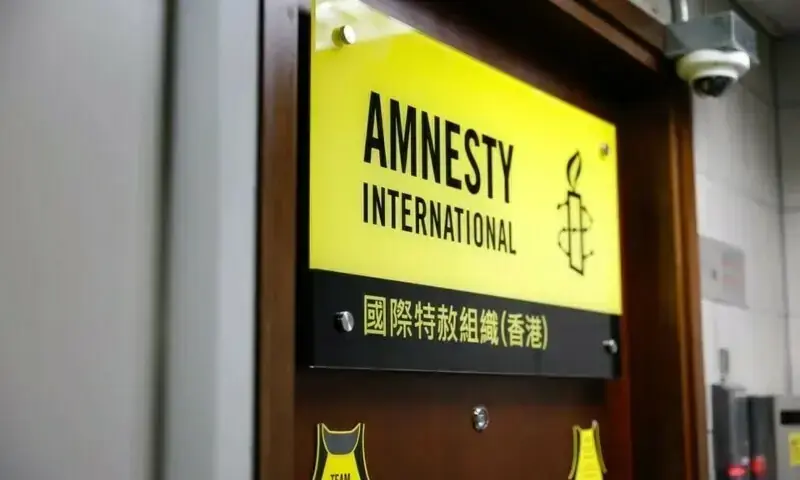
Amnesty International said the world is facing its "most challenging moment," citing a broad assault on civil liberties across 144 countries and escalating repression through surveillance, online censorship, and AI-enabled control. In Pakistan, it highlighted cybercrime and anti-terror laws used against journalists, activists, and opposition figures, plus over 100 PTI convictions tied to May 9, 2023 protests and restrictions on media advertising. The report also flagged war crimes allegations in Gaza, crackdowns in India, and widening authoritarian practices in the U.K. and U.S.
The immediate investable read-through is not broad market beta but a higher political-risk premium on any asset whose cash flows depend on state discretion: local media, telecoms, internet platforms, and firms exposed to licensing, content moderation, or procurement in jurisdictions with tightening speech controls. The second-order effect is that repression often looks “cheap” for incumbents in the short run because it suppresses criticism, but it raises medium-term operating friction: higher legal overhead, more ad/brand pullback, slower permit cycles, and a larger discount rate for minority shareholders. That tends to favor state-linked incumbents over competitive challengers until a catalyst forces regime change or capital flight. The AI angle is more actionable than the human-rights framing. Governments will increasingly buy surveillance, monitoring, and compliance tooling under cybersecurity and anti-terror justifications, creating a non-obvious tailwind for vendors that sit at the intersection of identity, content moderation, metadata analysis, and network inspection. The catch is that these contracts are politically fragile and headline-sensitive, so investors should prefer diversified, enterprise-heavy cyber names over pure-play “lawful intercept” suppliers, which face sanctions, reputational overhang, and abrupt contract reversals. In other words: the market underprices the revenue opportunity but also underprices the ESG and export-control risk. The contrarian miss is that crackdowns can be bullish for regime stability in the near term, which supports banks, sovereign bonds, and state-owned telecoms until the protest cycle broadens or external financing tightens. But once repression spills into judiciary independence and media advertising, capital allocators start demanding higher country risk spreads; that usually shows up first in FX forwards and dollar debt, then in equities with a 3-6 month lag. The cleanest trade is therefore not to short “human rights” abstractly, but to short the funding channels that become less reliable once rule-of-law uncertainty rises. The main catalyst window is 1-6 months: court rulings, new cybercrime amendments, licensing decisions, and any further internet shutdowns that trigger brand exits or multilateral pressure. A tail-risk event would be a larger civil-military confrontation or cross-border escalation, which would abruptly widen sovereign spreads and hit domestic financials. Absent that, the gradual grind higher in governance risk is more likely than an immediate repricing, which argues for disciplined, options-based positioning rather than outright large directional bets.
AI-powered research, real-time alerts, and portfolio analytics for institutional investors.
Request DemoOverall Sentiment
strongly negative
Sentiment Score
-0.82
