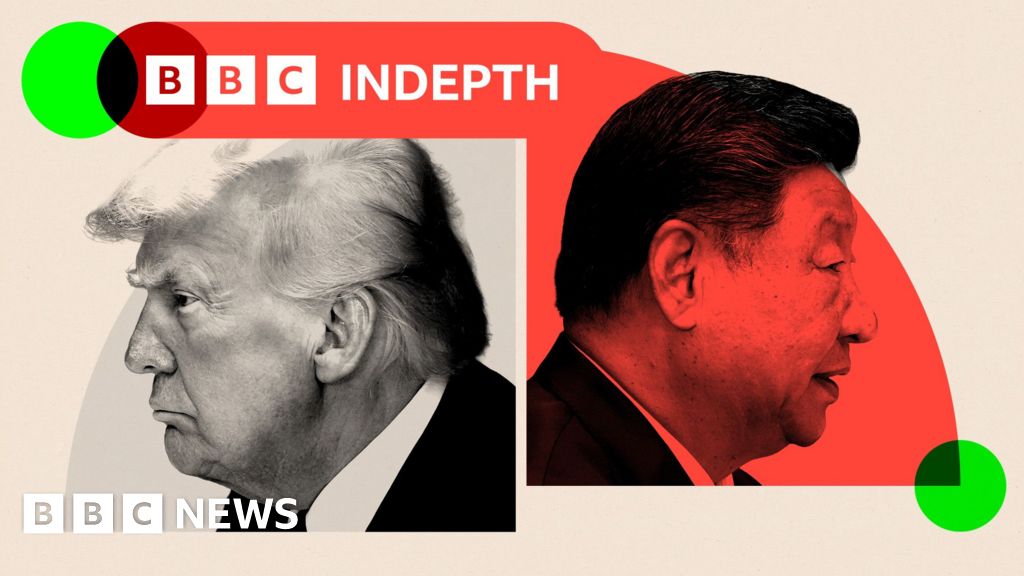
Trump's Beijing summit with Xi could shape US-China relations for years, with the agenda centered on Taiwan, Iran, tariffs, rare earths and advanced technology. The article highlights potential bargaining chips on both sides: US agricultural purchases and tariff relief versus Chinese leverage in rare earth minerals and pressure on high-end chips and AI-related controls. While no specific deal is announced, the encounter carries broad market significance given the risks to trade, tech supply chains and geopolitical stability.
The key market signal is not a breakthrough deal but a temporary détente that lowers near-term tail risk while preserving strategic optionality on both sides. That matters most for semis and platform tech: any easing in chip controls or export restrictions would disproportionately re-rate the most China-exposed AI names, but the asymmetry is that Beijing can extract concessions without committing to durable reciprocity. In other words, the market should price a sequence of small, reversible headlines rather than a structural reset.
The more interesting second-order effect is supply-chain bargaining power. China’s leverage is strongest where substitution is slow and certification is painful: rare earths, processed battery materials, and precision manufacturing inputs. That gives Beijing a credible “selective squeeze” toolkit that can pressure US industrials and defense supply chains without triggering an all-out trade rupture; the result is likely margin volatility rather than outright volume destruction over the next 1-2 quarters.
For NVDA and AAPL, the setup is bullish tactically but fragile strategically. A small thaw could unlock pent-up demand, inventory normalization, and improved sentiment into the next earnings cycle, yet any language around Taiwan or AI controls can reverse the move quickly because these stocks are now traded as geopolitical duration assets. META is the weakest relative beneficiary: it has less direct China upside, more regulatory sensitivity, and higher risk that an AI talent/control narrative tightens global competition rather than expands monetization.
Contrarian view: consensus is probably overestimating the probability of a broad tariff rollback and underestimating the chance of a calibrated trade truce that leaves export controls intact. That means cyclicals tied to China reopening may disappoint, while the real trade is dispersion inside tech—own the companies with direct chip leverage and avoid those whose China exposure is more headline than cash flow.
AI-powered research, real-time alerts, and portfolio analytics for institutional investors.
Request DemoOverall Sentiment
neutral
Sentiment Score
-0.05
Ticker Sentiment
