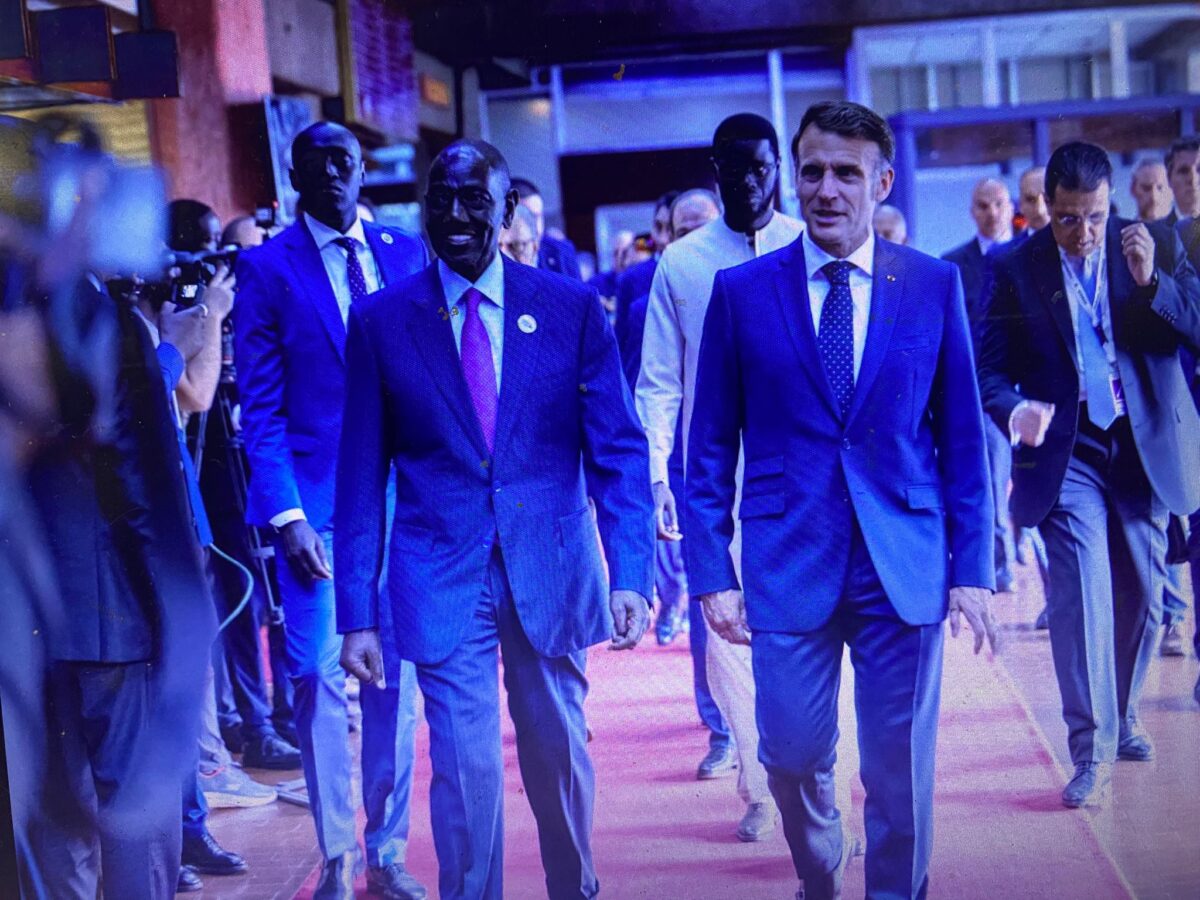
France announced a €23bn investment package for Africa, with €14bn from French public and private sources and €9bn from African investors, targeting energy transition, digital and AI, maritime economy and agriculture. The projects are expected to create 250,000 direct jobs across France and Africa. Separately, Kenya and France ratified a new defence cooperation agreement, expanding France’s military footprint in Africa amid a broader diplomatic pivot toward Anglophone Africa.
The investability of this announcement is less about the headline capital number and more about the signal: Europe is trying to reprice African growth from a donor-market framework to an industrial-policy framework. That matters because the first-order beneficiaries are not just local utilities and digital platforms, but European equipment makers, EPCs, grid software vendors, and defense contractors that can now bid under a diplomatic umbrella. The second-order effect is that capital may start flowing toward projects with bankable off-take and sovereign support, which tends to compress financing spreads for a subset of EM infrastructure while leaving smaller, politically exposed developers behind.
The defense pact is the more underappreciated market implication. France is rebuilding a foothold in a region where its prior model failed, so the likely winners are primes with interoperable command, surveillance, and base-support capabilities rather than heavy kinetic platforms. In Kenya specifically, any escalation in foreign troop sensitivity raises headline and legal risk, but that also increases demand for domestic security, border tech, and dual-use ISR assets over a 6-18 month horizon as governments try to balance sovereignty optics with security cooperation.
The contrarian view is that this is still mostly political theater unless project-level execution improves. African sovereign funding constraints, FX volatility, and permitting friction can delay deployment by 12-24 months, which means the near-term revenue impact is likely modest even if the strategic narrative is strong. If European budget pressure rises or if another Sahel-style backlash intensifies, the enthusiasm could fade quickly and reintroduce discount-rate pressure on the entire “ethical partnership” trade.
The cleanest setup is to own the enablers of the capital cycle, not the headline countries. The risk/reward is better in names with recurring service revenue and export exposure than in long-duration project developers that need flawless execution. This is a medium-horizon theme with tactical volatility around any sovereignty controversy, but it has enough policy depth to matter for selective positioning rather than broad EM beta.
AI-powered research, real-time alerts, and portfolio analytics for institutional investors.
Request DemoOverall Sentiment
mildly positive
Sentiment Score
0.25
