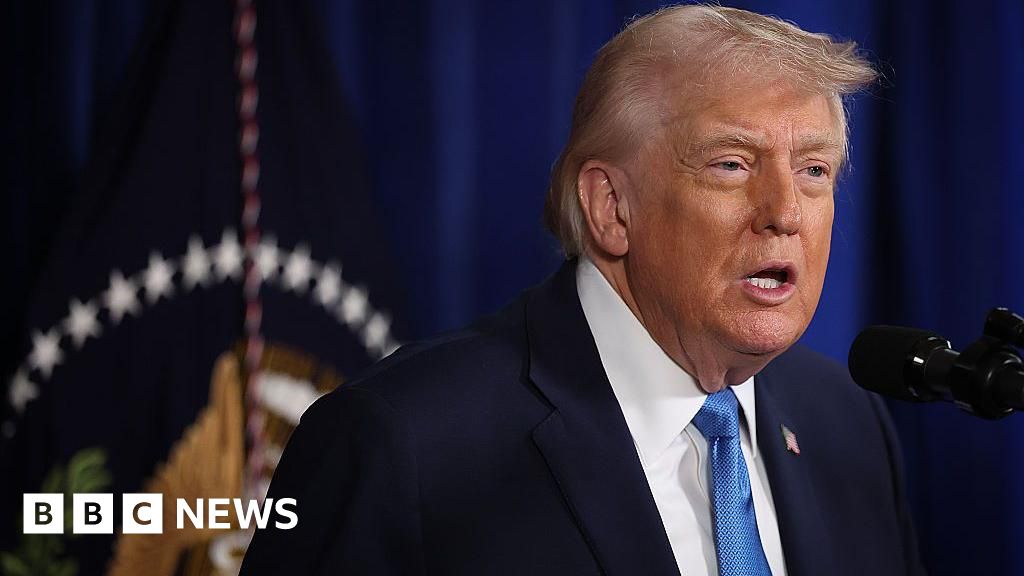
President Trump asserted US oil companies could be 'up and running' in Venezuela within 18 months after Maduro was removed, saying firms would invest large sums and be reimbursed via US support or future revenue. Analysts and industry sources warn restoration could cost tens of billions and take years — Venezuelan fields hold an estimated 303 billion barrels but production has declined for decades and the crude is heavy and costly to refine; only Chevron currently operates there. Legal legacies (a $8.7bn World Bank award to ConocoPhillips remains unpaid) and the need for political stability mean investment and production gains are uncertain and likely slow to materialize, posing a conditional and high-risk opportunity for energy investors.
Market structure: Short-term headline risk benefits integrated majors (Chevron CVX) and oilfield services suppliers that can mobilize capex and crews; refiners with heavy-crude coker capacity also gain pricing power for discounted Venezuelan heavy barrels. Downside: high-cost short-cycle producers see limited reprieve because Venezuelan re-entry is unlikely to deliver material incremental supply (<1.0–1.5 m bpd) inside 3 years without ~$20–50bn capex and sanctions/legal clearance. Cross-asset: expect muted downward pressure on front-month Brent/WTI (–$1–3/bbl near outlook), slight tightening of Venezuelan CDS and local FX volatility on political signals; US Treasuries and corporate credit should be largely insulated absent a broader EM shock.
Risk assessment: Tail risks include re-nationalization, renewed sanctions, sabotage or insurgency that could wipe out invested capex (low probability, high impact), and protracted legal fights over compensation (Conoco COP $8.7bn award). Timeline split: immediate (days) — headline-driven oil/FX vol; short-term (3–12 months) — policy, sanction waivers and arbitration enforcement clarity; long-term (2–7 years) — physical rebuild and ramp. Hidden dependencies: Gulf Coast coking/refinery capacity, marine logistics, insurance/war-risk availability, and ability to repatriate revenues under US policy.
Trade implications: Favor selective exposure to CVX (operational foothold) and COP (legal claim asymmetry) with tight risk controls, avoid pure-play Venezuelan heavy crude midcaps. Use calendar spreads in crude futures (long 12m vs short front-month) to express belief that supply additions will be slow; buy 12–18 month call spreads on CVX/COP rather than outright long to cap premium. Rotate into oilfield services (large-cap E&P services) on pullbacks and underweight EM sovereign high-yield and PDVSA paper.
Contrarian angles: Consensus underestimates timeline and capex — 18 months is politically aspirational; markets may be underpricing COP’s enforceable claim recovery and overpricing immediate supply upside. Historical parallels (Iraq/Libya rebuild) show 3–7 year ramps despite political changes; unintended consequences include capex-driven inflation in service costs and a sustained heavy-crude discount if refinery adaptation lags. If US policy ties reimbursements to strict governance metrics, cashflows to investors could be delayed for years.
AI-powered research, real-time alerts, and portfolio analytics for institutional investors.
Request DemoOverall Sentiment
mixed
Sentiment Score
0.03
Ticker Sentiment
