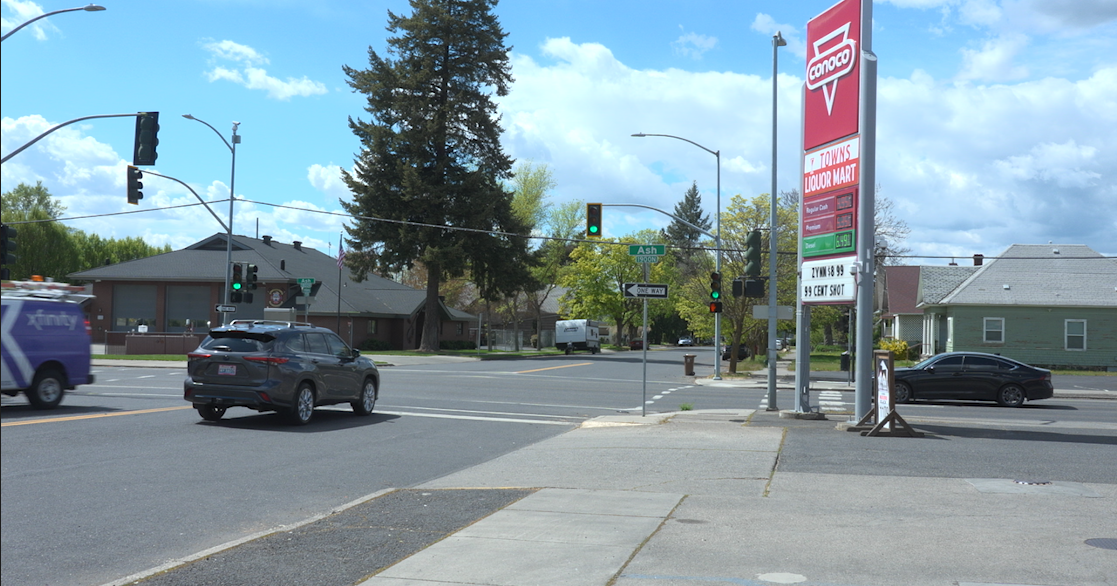
U.S. gas prices have jumped to a national average of $4.30 per gallon, up nearly 30 cents in one week, with Idaho at $4.41 and Washington at a record $5.57 per gallon. The article highlights fuel-saving steps such as slower highway speeds, cruise control, and vehicle maintenance, while noting that switching to public transit can save an average of $1,100 per month. The piece signals a consumer cost squeeze rather than a direct market-moving event.
The immediate winners are not energy producers so much as any business model with discretionary vehicle miles avoided: transit operators, rail-linked logistics, and EV adoption proxies. Sustained pump-price pain tends to show up first in lower-income consumer cohorts, which means the marginal dollar gets pulled out of restaurants, apparel, and big-box discretionary before it meaningfully hits aggregate CPI prints. That creates a lagged squeeze on consumer-facing retailers with weak pricing power, while essential retailers and value-oriented grocers can gain share as households reallocate spend. The more important second-order effect is on behavior, not just spending. A price shock this sharp can accelerate route compression, rideshare pooling, work-from-home requests, and micro-optimization of driving patterns within weeks; those changes are sticky enough to reduce miles driven even if prices later ease. That is bearish for fuel retailers and convenience-store traffic, but also a subtle headwind for aftermarket auto services and a modest tailwind for transit utilization, especially where bus coverage is dense enough to be a credible substitute. From a macro perspective, this is a near-term inflation impulse with a messy growth offset. If energy stays elevated for 1-2 months, expect headline CPI pressure and some reopening of the consumer confidence gap, but if prices cool quickly the market will likely fade the signal as a transitory gasoline spike. The contrarian angle is that a lot of the “save at the pump” adjustment is already happening in real time; the bigger equity repricing may come from the consumption drag that is not visible in headline gasoline demand data until 1-2 quarters later.
AI-powered research, real-time alerts, and portfolio analytics for institutional investors.
Request DemoOverall Sentiment
mildly negative
Sentiment Score
-0.30
