New research identifies a significant reduction in endogenous brain lithium (Li) as an early event in Alzheimer's disease (AD) pathogenesis, partly due to amyloid sequestration. Experimental Li deficiency in mouse models accelerated amyloid-beta deposition, tau phosphorylation, neuroinflammation, and cognitive decline, mediated partly by GSK3β activation. Crucially, low-dose lithium orotate (LiO), an amyloid-evading Li salt, effectively prevented and reversed these pathologies and memory loss in AD models and aging wild-type mice without detectable toxicity. These findings suggest that disruption of Li homeostasis is a key factor in AD and position LiO as a promising, low-risk therapeutic or preventative strategy, opening new avenues for pharmaceutical and biotech development in the neurodegenerative space.
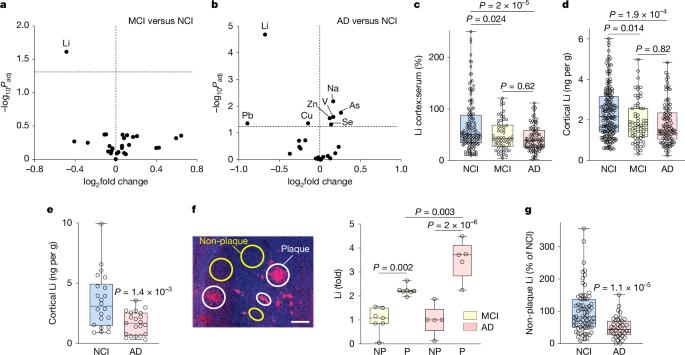
This research presents a potentially paradigm-shifting development in Alzheimer's disease (AD) therapeutics by identifying endogenous lithium deficiency as a critical, early pathogenic event. Metallomic analysis of human brain tissue revealed that of 27 metals, only lithium was significantly reduced in individuals with both mild cognitive impairment (MCI) and AD, a reduction exacerbated by amyloid plaque sequestration. The study powerfully demonstrates causality in mouse models, where a diet-induced reduction in cortical lithium accelerated the full spectrum of AD pathology, including amyloid-β deposition, tau phosphorylation, and cognitive decline, mediated partly through the kinase GSK3β. The most significant finding for investors is the preclinical validation of low-dose lithium orotate (LiO), a salt with reduced amyloid binding. Unlike the clinical standard lithium carbonate, low-dose LiO not only prevented but also reversed advanced AD pathology and memory loss in mouse models without evidence of the toxicity that has historically limited lithium's use. These findings suggest a novel, low-risk therapeutic and preventative strategy that could disrupt the current AD market, which is heavily focused on high-cost anti-amyloid biologics.
AI-powered research, real-time alerts, and portfolio analytics for institutional investors.
Request DemoOverall Sentiment
strongly positive
Sentiment Score
0.85
Ticker Sentiment
