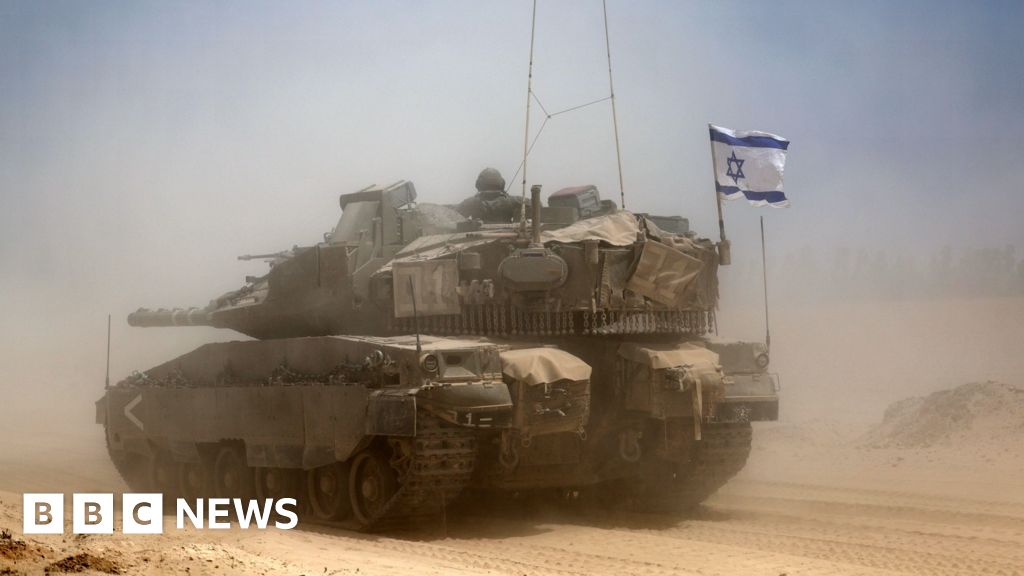
Germany will resume arms exports to Israel from Nov. 24 after suspending deliveries in August of equipment that could be used in Gaza; the government said the ceasefire that came into force on Oct. 10 has “stabilised” and that future exports will be decided on a case-by-case basis. The pause followed international concern and German condemnation of Israel’s planned ground offensive to seize Gaza City amid heavy civilian casualties, and Chancellor Friedrich Merz previously expressed deep concern about suffering in the Strip. The resumption matters because Germany is Israel’s second-largest arms supplier—accounting for about 33% of Israeli military imports from 2020–24, chiefly warships and torpedoes and parts for Merkava tank engines—so the move restores a key element of Israel’s external military supply chain while tying further shipments to adherence to the ceasefire and humanitarian commitments.
Germany will resume exporting military equipment to Israel from 24 November after suspending sales in August of weapons that could be used in the Gaza Strip; the suspension followed Israel's approval of a ground offensive to take over Gaza City and was lifted because the government judged the ceasefire that came into force on 10 October to have "stabilised." The government said future export decisions will be made on a case-by-case basis and explicitly tied to adherence to the ceasefire, large-scale humanitarian aid and continuation of the agreed process.
Germany is Israel's second-largest arms supplier after the US, accounting for 33% of Israeli military imports from 2020–24, with the bulk consisting of warships, torpedoes and parts for Merkava tank engines, so resumption restores a significant element of Israel's external supply chain. The conditional, politicised nature of approvals means shipments can be paused again if agreements falter.
Market signals attached to the report are mildly positive but cautious (sentiment score 0.25, market impact score 0.3), indicating limited immediate market disruption but persistent event risk; the article's casualty and hostage figures—about 1,200 Israelis killed on 7 October, 251 hostages taken, roughly 69,483 Palestinian deaths per the Hamas-run health ministry, and recent hostage/prisoner exchanges—underscore the fragility of the ceasefire as a market-moving variable.
AI-powered research, real-time alerts, and portfolio analytics for institutional investors.
Request DemoOverall Sentiment
mildly positive
Sentiment Score
0.25
