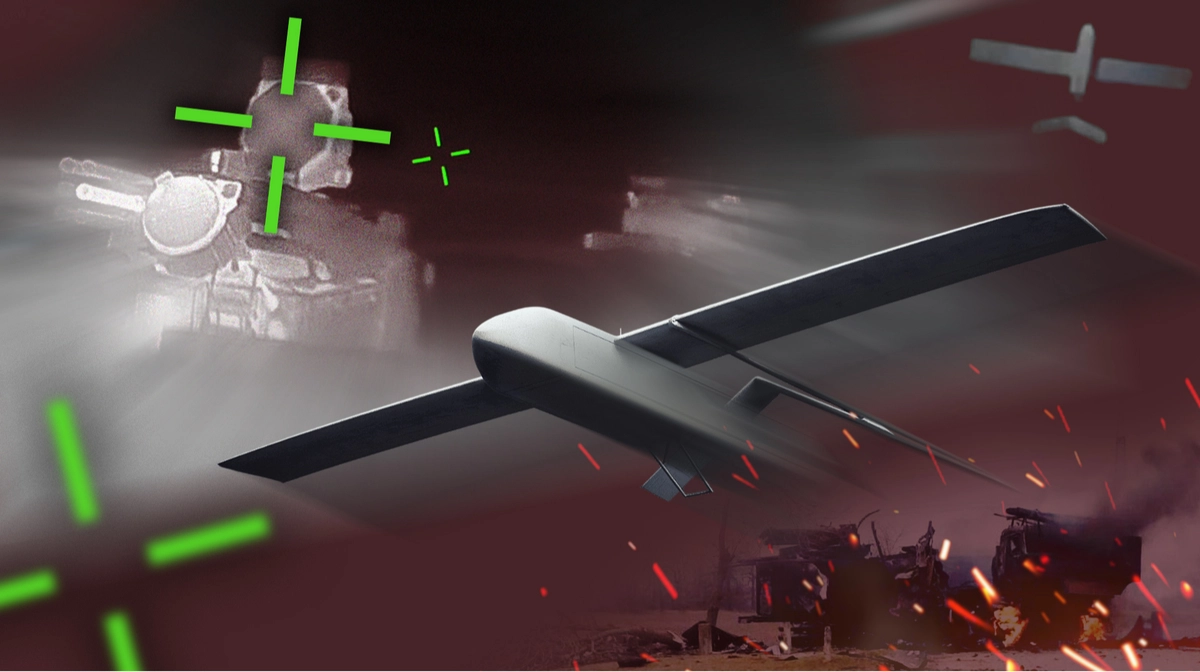
365 Ukrainian mid-range kamikaze drone strikes were recorded between 19 Mar 2025 and 9 Mar 2026, with more than one-third (>33%) occurring in the final three months and publicly reported strike frequency roughly doubling from ~20/month to ~40+/month after Nov 2025. Nearly half of strikes targeted Russian air-defence radars and launchers; FP-2 and Rubaka dominate usage (FP-2 has recently executed more strikes and carries up to a 100 kg warhead, operating to ~250 km). Effect: persistent degradation of Russian rear-area air defences forcing redeployments, increasing vulnerability of energy and military-industrial sites, and implying sustained sector-level implications for defense production and regional risk premia.
The accelerating proliferation of low-cost, mid-range kamikaze systems shifts the battlefield economics: marginal cost-per-effect of a guided drone is now an order of magnitude lower than legacy SRBM/MLRS strikes, forcing adversaries to trade expensive, centralized air-defence layers for distributed, mobile and expendable solutions. That structural change increases demand not only for interceptors and radars but for a different supply chain — rapid prototyping, MEMS inertial sensors, COTS GNSS modules, small warhead integration and high-rate composite airframes — suppliers that can scale low-unit-cost, iterative production will capture outsized orders.
Operationally, the biggest second-order effect is on logistics and force posture: persistent penetration risk incentivizes dispersion, hardened concealment, and redundant logistics hubs, which raises per-unit operating cost for ground forces and reduces throughput of sustainment lines. That means contractors providing camouflage, decoy systems, modular shelters, and rapid field-repair services see durable demand growth even if headline procurement focuses on interceptors.
Risk pathways that could reverse the trend are clear and relatively short-dated: a rapid fielding of affordable hard-kill short-range interceptors, scalable directed-energy prototypes, or significantly improved EW that degrades low-cost GNSS/comm links would raise attrition rates for these drones and compress their economic advantage within months. Conversely, a sustained ramp in production efficiency and falling unit costs for the attacker side can lock in the advantage over multiple years by making rear-area postures untenable without large-scale, expensive mitigation.
Strategically, expect a bifurcation in defense procurement: large primes will get big-ticket counter-UAV and radar contracts, while a broader cohort of mid-cap and specialized suppliers will win high-volume, rapid-turn buys for components and kits. For investors, this argues for paired exposure — incumbents for contract durability and select smaller innovators for asymmetric upside from volume-driven revenue growth.
AI-powered research, real-time alerts, and portfolio analytics for institutional investors.
Request DemoOverall Sentiment
mildly positive
Sentiment Score
0.20
