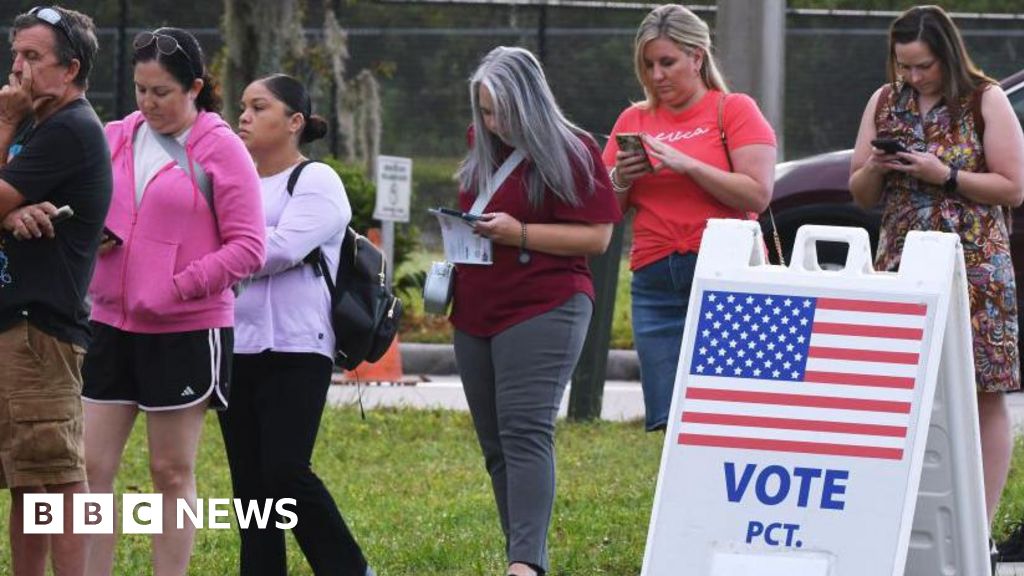
The House passed the SAVE America Act in a 218-213 vote, forcing voters to prove citizenship (valid US passport or birth certificate) at registration and present a photo ID to vote, and imposing criminal penalties on election officials who register voters without required documentation. Advocacy groups warn roughly 21 million Americans lack readily available citizenship documents and 2.6 million lack government photo ID; despite President Trump and many House Republicans backing the bill, Senate passage is unlikely because it lacks the 60 votes needed and key senators including Lisa Murkowski oppose it.
Market structure: The SAVE Act is a demand shock for identity-proofing and election-compliance services rather than a broad macro event; beneficiaries would be identity-verification and fraud-detection vendors (Equifax EFX, TransUnion TRU, Okta OKTA, Visa V/Mastercard MA for authentication rails) and legal/compliance advisors. Costs shift to state election offices (municipal budgets, potential passthrough revenue opportunities for private contractors) and advocacy groups; expect incremental contract wins of $50–200m annually for large ID vendors if even a handful of populous states accelerate procurement.
Risk assessment: Near-term (days–weeks) political noise dominates: Senate probability of passage is low (<10% today) but would jump if 40+ GOP Senate cosponsors emerge or filibuster rules change, driving vendor RFP velocity. Tail risks include federal injunctions, large-scale litigation, or protests that temporarily disrupt implementation and damage vendor reputations; municipal bond spreads in high-cost states could widen 10–30bp if implementation forces reallocation of local budgets.
Trade implications: Favor selective exposure to identity/authentication names: establish 1–2% long positions in EFX and TRU and a 0.5–1% tactical position in OKTA for 3–12 months; use 3-month call spreads (buy ATM, sell +15% strike) into any Senate procedural vote to cap cost. Hedge political volatility with 1–2% long in XLU or TLT if Senate brings the bill to floor and newsflow spikes volatility >VIX+5. Avoid broad consumer retail shorts tied to turnout until empirical evidence of sustained turnout decline emerges.
Contrarian angles: Consensus underestimates multi-year contracting: if a single large state reissues 5–10m IDs, vendors win recurring credentialing revenue and cross-sell opportunities (estimated $0.50–$3 per credential). Reaction is likely underdone on procurement exposure but overdone on immediate revenue; regulator and privacy backlash is a real second-order risk that could compress multiples by 5–15% if vendors mishandle data.
AI-powered research, real-time alerts, and portfolio analytics for institutional investors.
Request DemoOverall Sentiment
neutral
Sentiment Score
0.00
