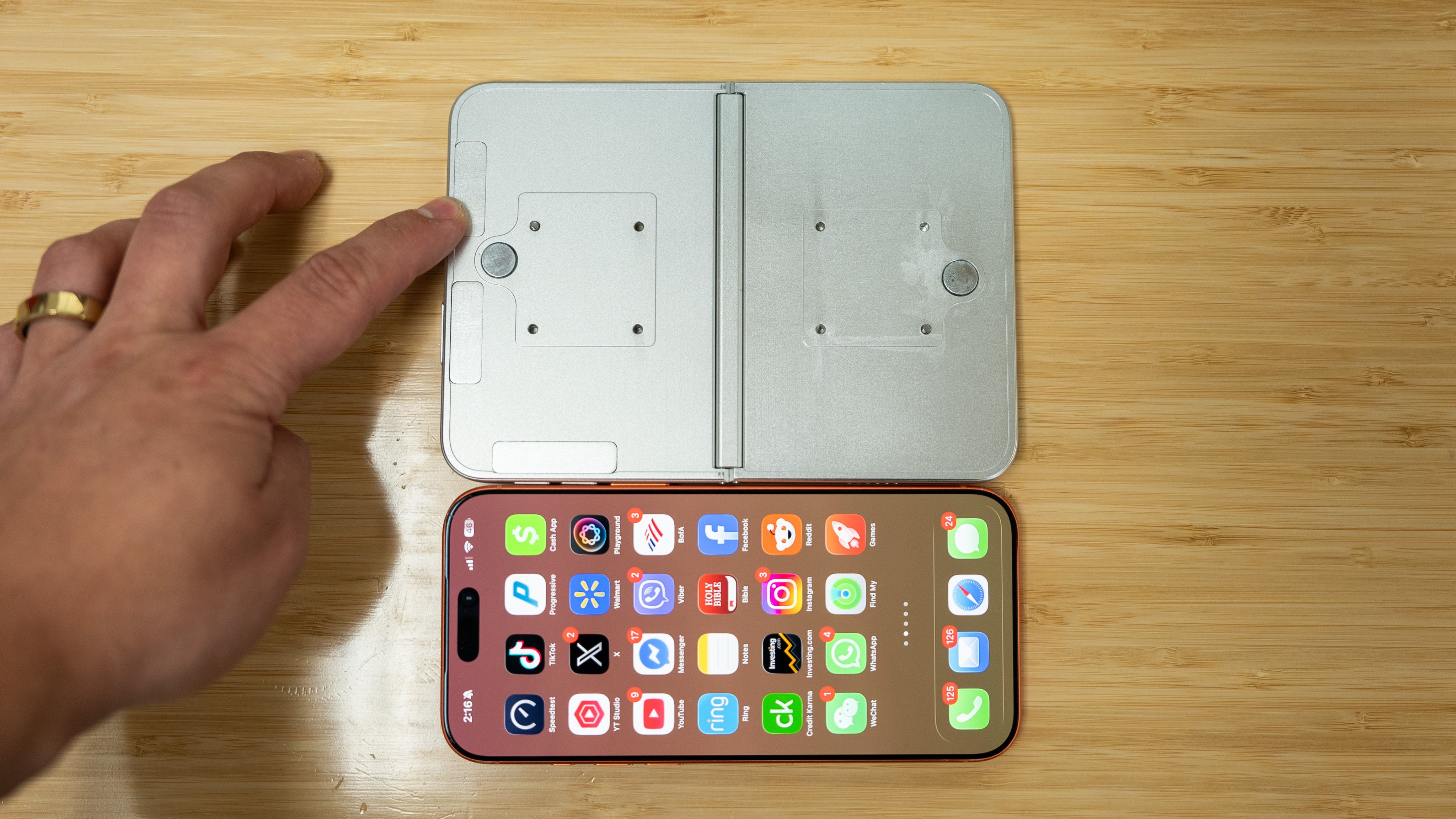
Apple’s rumored foldable iPhone is expected to launch in September, with a book-style design, 5.5-inch outer display, and 7.8-inch inner display, positioning it as an iPad mini-like device when opened. The article highlights key hardware details including a Touch ID power button, Camera Control button, two-lens rear camera system, and a likely 9mm-11mm closed thickness. The report is speculative but constructive for Apple’s product pipeline and could support sentiment around the company’s next major device launch.
The key market implication is not the foldable itself, but the shift in Apple’s product ladder: this creates a new premium tier that can expand ASPs without needing unit-share gains. If Apple can position the device as an iPad-mini-in-pocket use case, it turns what is usually a novelty category into a usage-based upgrade decision, which is much more monetizable than spec-sheet differentiation. That favors Apple’s services attach and accessories ecosystem more than handset volume, while the incremental hardware margin will likely depend on whether yield and hinge costs normalize fast enough to avoid a launch-year gross margin drag.
Second-order winners are the component suppliers that are already bottlenecked by foldable complexity: ultra-thin glass, hinge subassemblies, flexible OLED, and advanced camera modules. The risk is that Apple’s entry compresses the entire foldable supply chain into a single launch window, creating temporary shortages and pricing power for a small set of vendors, but also raising the bar for quality; any crease, durability issue, or battery-life disappointment will quickly shift the narrative from category-expansion to “expensive niche.” That makes the first 1-2 quarters post-launch more important for suppliers than for Apple’s consolidated P&L.
The contrarian angle is that the market may be overestimating how much this matters for iPhone unit growth in year one. A smaller cover display and thicker folded profile suggest the device is still compromising heavily on ergonomics, which means adoption may skew to Apple loyalists and status buyers rather than broad mainstream replacement demand. The bigger upside catalyst is not September launch headlines but the second-cycle software story: if developers optimize video, gaming, and multitasking for the 4:3 inner canvas, the product could become an ecosystem unlock over 12-24 months rather than a one-quarter hardware event.
AI-powered research, real-time alerts, and portfolio analytics for institutional investors.
Request TrialOverall Sentiment
mildly positive
Sentiment Score
0.18
Ticker Sentiment
