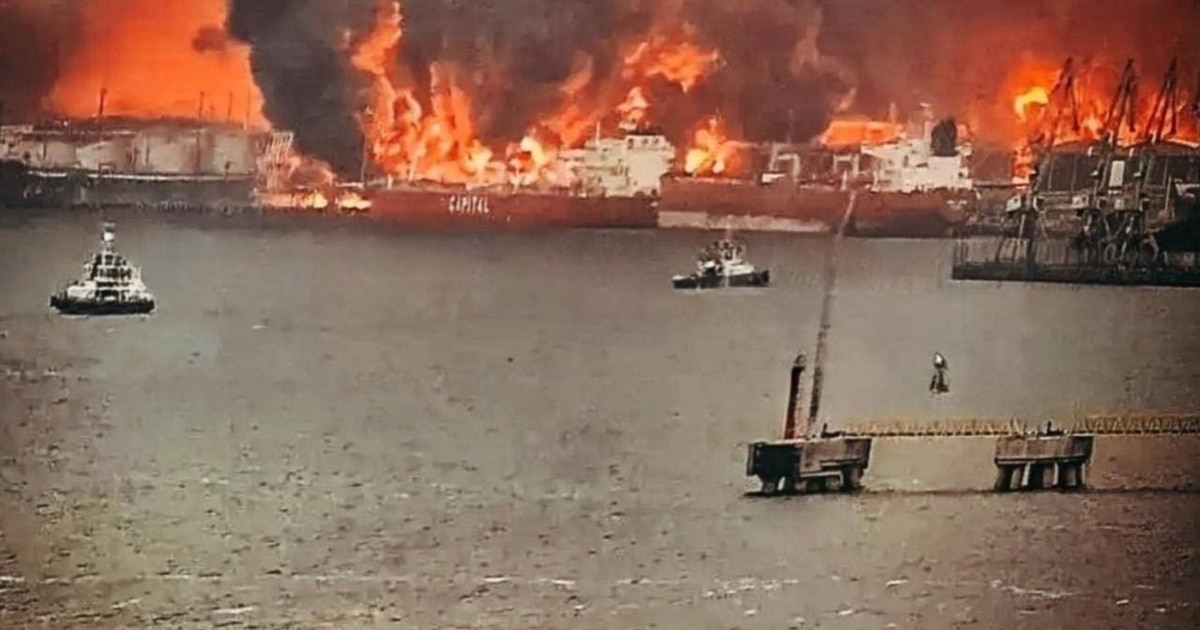
An estimated 40-50% of Russia's oil export capacity has been halted after Ukrainian drone strikes on Primorsk (Mar 23), Ust-Luga (Mar 25) and the Kirishi refinery (Mar 26). CREA reports Primorsk, Ust-Luga and Novorossiisk stopped loading for five days and repeated strikes have extended recovery timelines; Russia's spare capacity is limited (~300,000 b/d), constraining rerouting to China. Despite a ~20% rise in daily Russian oil revenues in the 24 days after the US‑Israeli–Iran conflict began (roughly a $5bn/month windfall), analysts warn the gains are insufficient against a reported $40bn fiscal deficit and that the attacks constitute a market‑wide supply shock likely to keep energy markets volatile and disrupt seaborne logistics.
A sustained impairment of a major supplier’s seaborne logistics will force crude/product flows onto longer, more expensive routes and create persistent dislocations in Atlantic basin arbitrage dynamics. Expect the Brent–WTI complex to oscillate as short-term floating storage and tanker idling cap extreme spot spikes, then unwind into sharper physical premiums for gasoil/diesel during Northern Hemisphere demand windows; forecast a 2–6 week period of elevated freight premium volatility (20–60% swings in TC rates) as owners re-price risk and redeploy tonnage.
Repeated strike-and-repair cycles make outages lumpy rather than a single tapering shock—each re-hit during restart materially lengthens downtime and turns routine maintenance into multi-week outages, compressing effective spare global seaborne capacity into a thinner, more fragile band. This favors asset owners that control flexible, short-haul product distribution (MR/Handy tankers, US Gulf barges) and refiners with non-seaborne feedstock diversity; it also accelerates higher insurance/reinsurance pricing which will be a slow-moving transfer from commodity producers to financial intermediaries.
Catalysts that would quickly reverse the premium: coordinated legal/ naval action that neutralizes shadow storage and a decisive insurance-market normalization that restores pre-event voyage risk premia—both could normalize flows within 2–8 weeks. Tail risks include escalation into choke points or broader targeting of export infrastructure (months), which would force structural re-rating of shipping equities, refiners with Atlantic exposure, and short-tenor Brent term structure into stronger backwardation; the market currently under-weights delivery logistics and insurance repricing as persistent drivers of energy P&L.
AI-powered research, real-time alerts, and portfolio analytics for institutional investors.
Request DemoOverall Sentiment
strongly negative
Sentiment Score
-0.65
