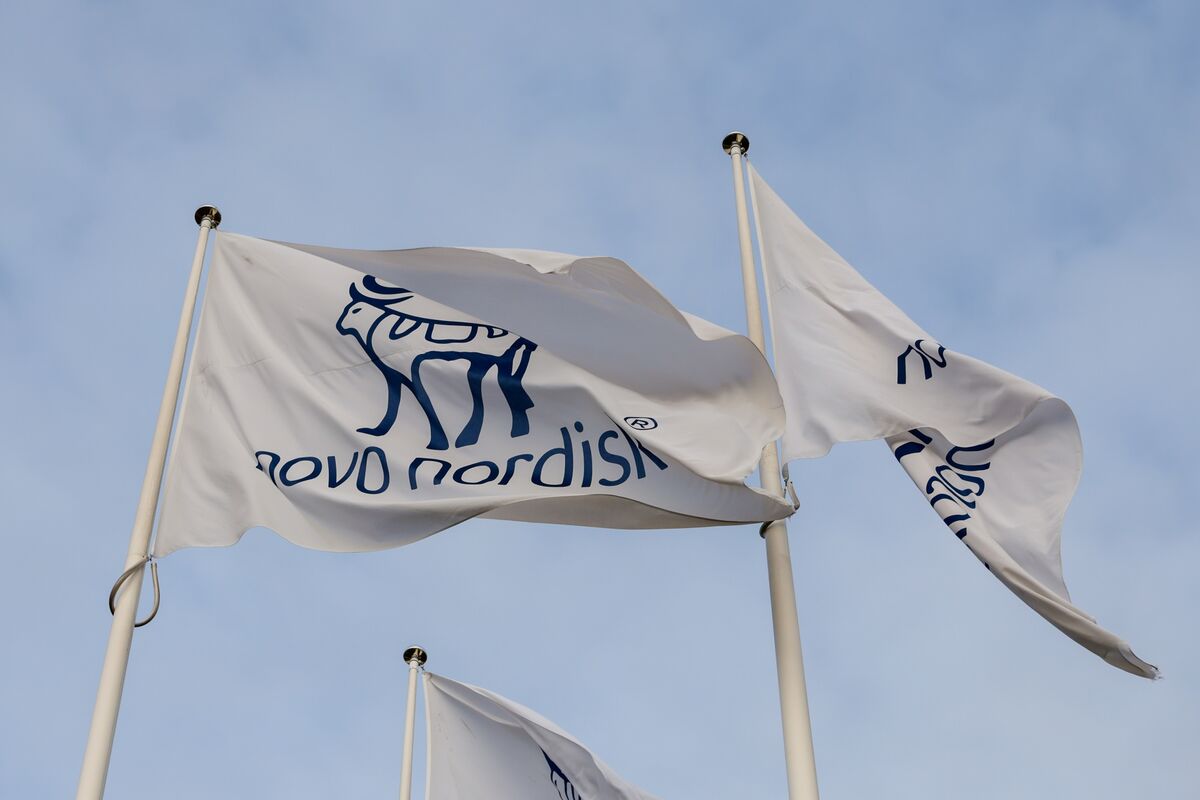
Denmark’s economy ministry raised GDP growth forecasts to 2.6% for 2025 (up from a 1.4% estimate in August) and to 2.2% for 2026 (from 2.1%), citing the ability of pharmaceutical giant Novo Nordisk to support the Nordic economy despite mounting pressures on the company. The upward revisions signal stronger near‑term domestic demand and company-driven tailwinds for Denmark’s economic outlook, with potential positive implications for Danish equities and sectors tied to the pharmaceutical industry.
Market structure: Novo Nordisk (NVO) is the clear winner—its GLP‑1 franchise is propping Danish GDP upgrades and likely increasing pricing power and market share in diabetes/obesity over 12–36 months. Direct beneficiaries include Danish equity market and suppliers/CMOs; losers are price‑sensitive insulin/competing diabetes franchises and any payers facing rising reimbursement costs. Cross‑asset: stronger Danish growth should modestly steepen Nordic sovereign curves (higher yields over 3–12 months), support risk assets vs. core bonds, and reduce FX downside for DKK/EUR‑pegged FX; commodity impact is negligible.
Risk assessment: Tail risks include an EU/US regulatory push on GLP‑1 pricing or reimbursement cuts within 6–24 months, manufacturing disruption for multi‑kg biologics in the next 0–6 months, or a disruptive entrant (e.g., oral agents) over 24–36 months. Short‑term effects (days–weeks) are primarily sentiment/analyst revisions, medium (3–12 months) are sales/reimbursement outcomes, long (12+ months) are structural pricing/policy shifts. Hidden dependency: Denmark’s macro now has concentration risk; adverse policy toward NVO could transmit to national growth and markets.
Trade implications: Tactical long bias to NVO is warranted but must be hedged for regulatory tail risk; implied volatility for NVO options should compress after positive headlines—use defined‑risk spreads over 3–9 months. Rotate modest weight from Danish sovereign duration into Danish equities/healthcare exposure over next 1–3 months, while trimming pure play short‑cycle consumer names that lose from higher healthcare spend. Entry window: 0–4 weeks; trim at +15–25% or on negative regulatory headlines.
Contrarian angles: Consensus underestimates fiscal/political backlash from outsized corporate concentration—expect periodic volatility around reimbursement hearings (next 90–270 days). The market may be underpricing a 20–30% downside tail if EU price controls or compulsory licensing appear; that argues for asymmetric option structures rather than undiversified outright longs. Historical parallels: pharma concentration boom→policy reversion (UK/Norway pricing actions) suggest hedged exposure is superior to naked long.
AI-powered research, real-time alerts, and portfolio analytics for institutional investors.
Request DemoOverall Sentiment
mildly positive
Sentiment Score
0.30
Ticker Sentiment
