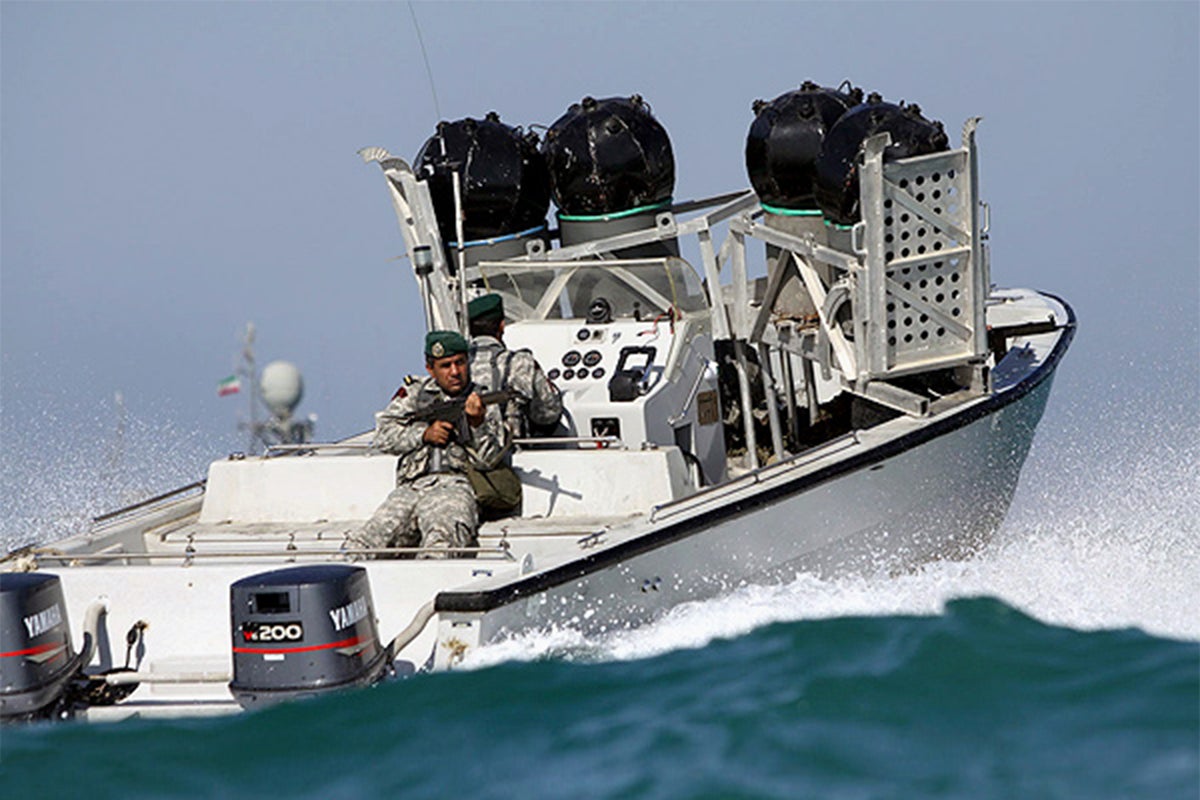
U.S. intelligence assesses Iranian forces have deployed a small number of sea mines in the Strait of Hormuz, threatening a critical shipping choke point and risking disruption to oil and goods flows. The U.S. Navy has decommissioned its minesweeping vessels in the Persian Gulf but retains other ships, aircraft and uncrewed systems; mine-hunting relies on wide-area side-scan sonar and a detect-classify-identify pipeline. Advanced detection increasingly uses machine learning and deep learning on sonar imagery, but effectiveness is constrained by the high cost and scarcity of labeled high-resolution sonar training data, implying clearance will be slow, resource-intensive and could materially affect shipping and energy supply chains.
A small, localized deployment of undersea ordnance can produce outsized, transitory shocks to trade flows because the practical margin for safe transit through choke points is tiny — a handful of hours of delay can cascade into multi-day schedule gaps and surge spot freight rates. For tankers, a conservative model: a 7–14 day reroute or wait can add $1–3m per VLCC voyage in fuel/charter cost and knock on to refinery feedstock logistics within 2–6 weeks; container chains see inventory and roll-cost effects that raise spot rates and demurrage on the order of 20–60% for impacted strings.
The defense-tech winners are likely to be those that convert quickly from prototype to fleet-scale production of unmanned sweep systems, towed sonar arrays, and shore-based processing pipelines that can operate with small labeled datasets. Expect procurement windows measured in weeks for urgent purchases (rapid buys) and 3–12 months for larger platform contracts; firms with established supply chains and government IDIQs win the near-term revenue spike, while software/AI specialists that can operationalize transfer learning with limited sonar examples capture durable IP value.
Tail risks center on escalation and data scarcity. If mines become a sustained campaign, insurers and charter markets could reprice for months, pushing structural re-routing and fleet redeployment that benefits owners of flexible-tonnage. Conversely, if a rapid, concentrated clearance (2–6 weeks) yields usable labeled sonar datasets, the long-term market undervalues the acceleration in machine-learning moat for mine-hunting tech — a binary catalyst that would rerate small-cap AI/sonar specialists within 6–18 months.
AI-powered research, real-time alerts, and portfolio analytics for institutional investors.
Request DemoOverall Sentiment
neutral
Sentiment Score
0.00
