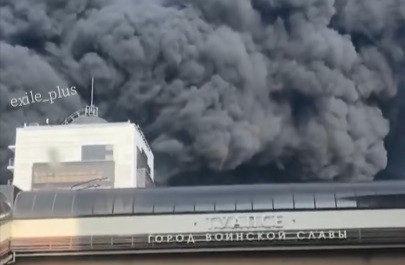
Rosneft-linked Tuapse refinery has halted operations after repeated drone strikes, with a 12 million metric tons/year facility and Black Sea export terminal suffering fire and port-infrastructure damage. Novokuibyshevsk refinery processing has also been paused since April 18 after another attack. The disruptions underscore escalating Ukrainian strikes on Russian energy infrastructure, threatening export volumes and adding to global oil-market volatility.
The market’s first-order reaction should be to treat this as another localized outage, but the second-order effect is tighter product balances in the Black Sea/Mediterranean gasoil and naphtha complex. When export-oriented refining is disrupted rather than crude production, the pain propagates into regional product arbitrage, not just headline crude, which tends to support middle distillate cracks faster than Brent. The longer the outage lasts, the more Russia has to reroute crude into a system already constrained by logistics, increasing the chance of domestic bottlenecks and discounted exports.
The more important signal is sequencing: repeated strikes on the same nodes imply Ukraine is moving from symbolic damage to sustained degradation of throughput and dispatchability. That raises the odds of a compounding effect over the next 2-6 weeks, where even partial restarts are uneconomic because storage, port access, and utilities remain intermittently impaired. In that scenario, the marginal loser is not only Rosneft but also any tanker, terminal, and rail capacity that depends on stable Russian coastal flows.
The contrarian angle is that this may be less bullish for broad oil than the market expects. If outages persist, Russia can be forced to preserve crude output by cutting runs, which limits global crude supply disruption while still removing refined product from the export pool; that is supportive for diesel/naphtha spreads more than outright Brent. The real tail risk is policy response: if energy prices spike further, Western sanctions enforcement can soften at the margin or political pressure on Ukraine can rise, which would cap the trade after a short-duration squeeze rather than create a durable crude rally.
AI-powered research, real-time alerts, and portfolio analytics for institutional investors.
Overall Sentiment
strongly negative
Sentiment Score
-0.70
Ticker Sentiment
