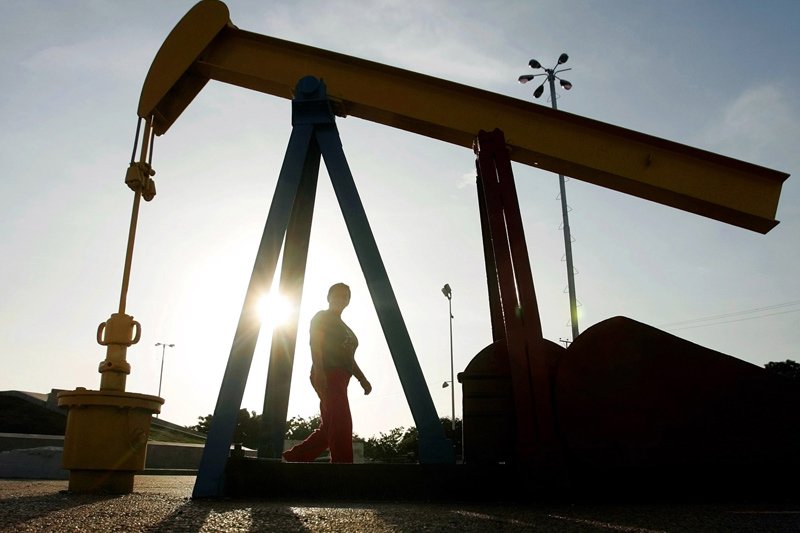
OPEC+ plans to continue monthly oil quota increases through September, with remaining production cuts from the 2023 cutback to be restored in three additional stages. However, actual supply hikes are constrained by the Iran war and blocked Persian Gulf exports, leaving global markets with a supply gap exceeding 1 billion barrels and keeping fuel prices elevated. The UAE's exit from OPEC also removes about 144,000 barrels per day from the original 1.65 million barrel per day cut.
The key market implication is not the headline supply restoration, but the widening gap between paper quotas and physical deliverability. If Gulf exports remain constrained, crude prices can stay elevated even as OPEC+ officially leans dovish, which is the worst combination for risk assets: sustained input-cost pressure without the usual supply-side release valve. That setup tends to compress margins first in transport, chemicals, and discretionary retail before it shows up in headline inflation prints. For energy equities, the second-order effect is more nuanced than simply "higher oil = bullish." If physical barrels are actually unavailable, upstream names with low lifting costs benefit, but integrateds with heavier downstream exposure can underperform because refinery feedstock and product cracks may get distorted in opposite directions. The real winners are likely the firms with export optionality and low geopolitical discount on volumes; the losers are refiners and import-dependent Asian consumers that cannot pass through higher feedstock costs quickly. NVDA is only tangentially affected, and the direction is slightly positive if the geopolitical backdrop keeps scarce power, shipping, and industrial capacity prioritized away from AI capex. But the more important NVDA angle is that oil-driven recession fears can cap multiple expansion even if the company’s demand story remains intact. In other words, the article is mildly negative for broad semis beta but not a direct earnings risk for NVDA itself. The contrarian view is that the market may be overpricing the permanence of the supply shock. Once conflict risk recedes, the market is set up for a fast mean reversion because the announced barrels can hit the market quickly relative to demand destruction, and inventories are already tight enough that any détente could trigger a violent downside move in crude within weeks. That makes this a good environment for owning upside convexity in energy, but only with explicit exit levels.
AI-powered research, real-time alerts, and portfolio analytics for institutional investors.
Request DemoOverall Sentiment
mildly negative
Sentiment Score
-0.15
Ticker Sentiment
