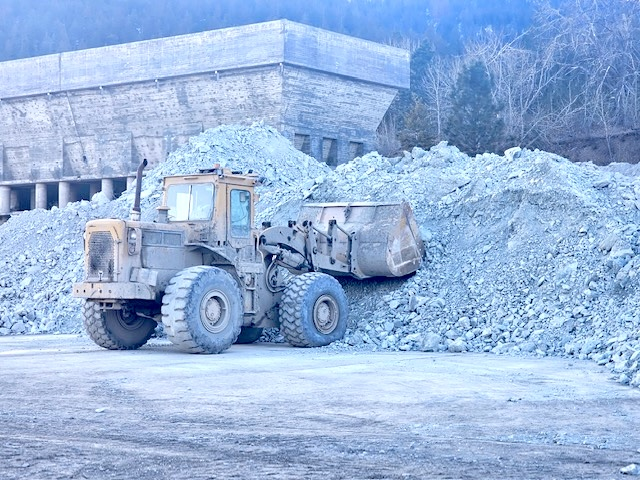
Blue Lagoon Resources received a second advance payment of approximately CAD $1.4 million from milling partner Nicola Mining for 1,000 tonnes of Dome Mountain mineralized material, with roughly 3,700 tonnes delivered to date and processing now underway following mill maintenance. The advances provide near-term working capital to support underground development and production as the company moves toward consistent operational cash flow, while final reconciled grades and recoveries (and associated risks from progressing without a feasibility study) will be reported after milling concludes.
Market structure: The immediate winners are Blue Lagoon (OTCQB: BLAGF) and its milling partner Nicola Mining — the CAD $1.4M advance for 1,000 t (second of two) improves near-term liquidity and de-risks capex needs. Broader market impact on gold/silver prices is immaterial (<0.1% of global supply), but among junior producers this transaction raises relative pricing power for operators with permitted assets and tolling agreements, likely compressing financing premia for similarly positioned peers over months.
Risk assessment: Key tail risks are reconciliation shortfalls (grades/recoveries materially below management guidance), milling counterparty failure, or regulatory reversal of the 2025 permit; any of these could wipe out early cash flow and trigger >50% downside. Time horizons: immediate (days) — limited share reaction; short-term (30–90 days) — reconciliation and reported recoveries will drive volatility; long-term (6–18 months) — internal reinvestment into exploration and sustained cashflow hinge on H2 2026 reinvestment plan. Hidden dependency: heavy reliance on one third-party mill concentrates operational counterparty risk and cashflow timing mismatches.
Trade implications: Direct long exposure to BLAGF is a high-risk, asymmetric trade if reconciled grades exceed thresholds (see decisions). Use size limits and option call-spreads to cap downside; pair trades (long BLAGF, short GDXJ) isolate idiosyncratic execution risk. Catalysts: final reconciled head grade and recovery report (next 30–60 days), H2 2026 cashflow statements, and any milling disruption announcements.
Contrarian angles: Consensus optimism underprices reconciliation risk and concentration on one mill; the market may be underestimating how advance payments can mask poor grades until settlement. Historical parallels: junior miners with tolling deals often rerate down 30–60% post-reconciliation when recoveries disappoint. Unintended consequence: aggressive reinvestment into exploration from modest cashflow can re-lever balance sheet if grades disappoint.
AI-powered research, real-time alerts, and portfolio analytics for institutional investors.
Request DemoOverall Sentiment
mildly positive
Sentiment Score
0.35
Ticker Sentiment
