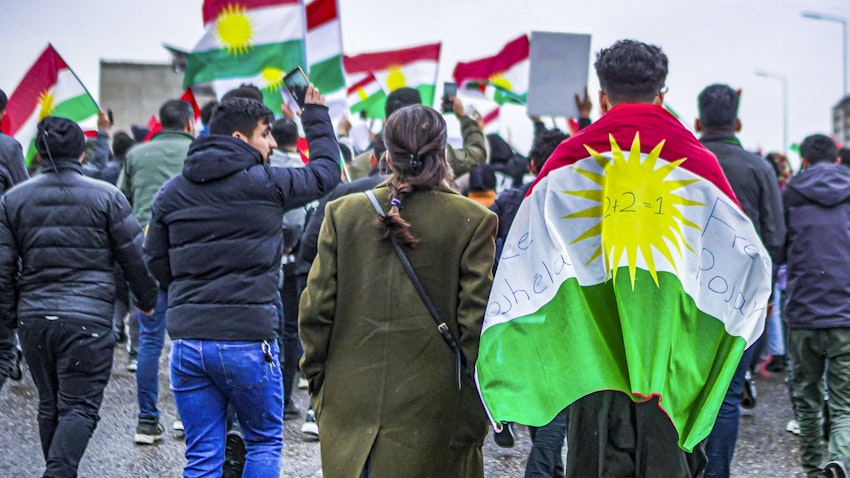
Iraqi Kurdistan is increasingly exposed as tensions escalate between the US and Iran, leaving the autonomous region geopolitically vulnerable and raising the risk of disruptions to oil output, exports and supply routes. Heightened security concerns and potential spillovers from sanctions or military action are likely to suppress investment appetite and elevate regional risk premia, with knock-on effects for oil markets and emerging-market asset flows.
Market structure: Energy producers (XOM, CVX, majors via XLE), oilfield services (SLB, HAL) and defense contractors (LMT, RTX) are the primary near-term beneficiaries as a regional Iran–US flare-up raises marginal spare‑capacity value; losers include Kurdistan/Iraq sovereign credit, Turkish banks with regional exposure, and airlines (DAL, AAL, UAL) facing higher jet fuel. Competitive dynamics favor integrated majors with storage/backwardation ability to capture windfall margins; smaller regional exporters lose price negotiation leverage and face physical-export bottlenecks. Supply/demand: there is a 0.3–1.0 mbpd tail risk to exports from pipeline/terminal disruption which would mechanically lift Brent $5–20/bbl in weeks; sustained >$100/bbl risks demand destruction over quarters. Cross-asset: expect USD and gold (GLD) bid, US Treasuries rally (TLT), EM credit widening (EMB), and a persistent jump in oil implied volatility (OVX).
Risk assessment: Tail risks include a direct strike on export infrastructure causing >1.0 mbpd outage (high‑impact, low‑probability) and secondary sanctions that freeze payment channels for Kurdish oil; those could push spreads wider by +150–300bps for EMB/IKS equivalents. Time horizons: immediate (days) = volatility spikes and safe‑haven flows; short term (weeks–months) = crude repricing and EM spread widening; long term (quarters–years) = capex reallocation to upstream and higher insurance/shipping costs. Hidden dependencies: Turkish political stance, routing via Ceyhan, and insurer willingness to cover tanker routes are nonlinear amplifiers. Catalysts to watch: any confirmed strike on export nodes, OPEC statements, weekly inventory surprises, and official US/Turkish diplomatic moves.
Trade implications: Tactical longs in energy ETFs/majors and gold as hedges are justified for a 1–3 month window, funded by reducing EM credit and travel exposure; use options to express asymmetric upside while capping downside. Recommend 90‑day 25‑delta calls on majors (XOM/CVX) or call spreads on XLE to limit premium decay; buy short‑dated puts on EMB or initiate small EMB shorts to hedge EM credit. Pair trades: long SLB vs short airline names or JETS ETF captures structural service strength vs cyclical travel risk. Entry/exit: size modest (0.5–3% per idea), add on confirmed Brent >$85, unwind if Brent reverts below $75 or EMB spreads tighten by >25bps.
Contrarian angles: The market may overprice permanence of disruption—historically MENA flare‑ups re‑rate and fade within 3–6 months as flows reroute and shale reacts; this creates opportunities to sell short‑dated call spreads post‑spike. Mispricings: insurance and tanker rate spikes can reverse quickly, compressing risk premia in energy equities; consider selling premium after a 20–30% rally in XLE. Unintended consequences: higher oil incentivizes rapid US shale restart and efficiency measures which would cap long‑run upside, so favor tactical exposures and avoid levering multi‑year duration on pure commodity beta.
AI-powered research, real-time alerts, and portfolio analytics for institutional investors.
Request DemoOverall Sentiment
moderately negative
Sentiment Score
-0.45
