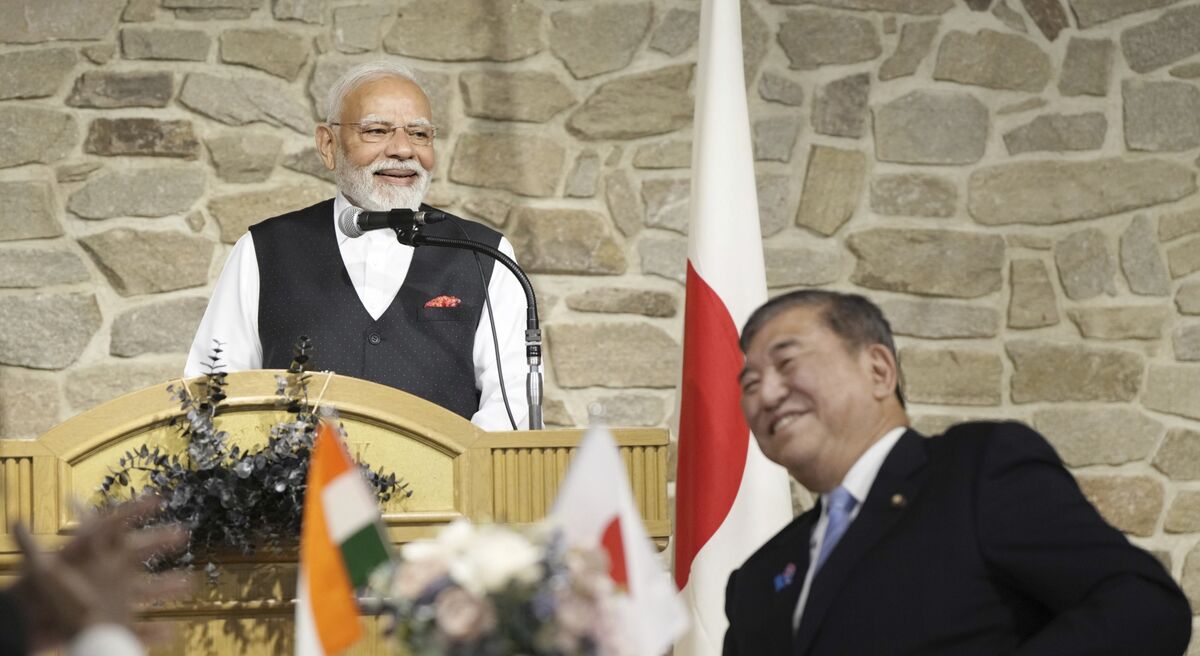
Indian Prime Minister Narendra Modi's recent tour of a Japanese chip factory alongside his counterpart Shigeru Ishiba signifies a strategic deepening of India-Japan economic ties, particularly in the critical semiconductor sector. This collaboration, occurring amidst global economic pressures from US tariffs, aims to strengthen the semiconductor supply chain and enhance economic security, signaling a joint effort to build resilience in vital technology manufacturing.
The joint tour of a Japanese chip factory by Indian Prime Minister Modi and Japanese Prime Minister Ishiba marks a significant step in formalizing a strategic partnership aimed at bolstering the semiconductor supply chain. This move is explicitly contextualized by the need for enhanced economic security amidst global disruptions caused by US tariffs. The stated intention to "strengthen the semiconductor supply chain" points to a proactive, government-backed initiative to build resilience and reduce dependency on other manufacturing hubs. While no specific corporate entities were named, this high-level engagement signals strong political will to foster collaboration between the two nations in a critical technology sector. The event's moderately positive sentiment and market impact score suggest that investors view this geopolitical alignment as a favorable development for creating a more diversified and stable global technology ecosystem.
AI-powered research, real-time alerts, and portfolio analytics for institutional investors.
Request DemoOverall Sentiment
moderately positive
Sentiment Score
0.55
