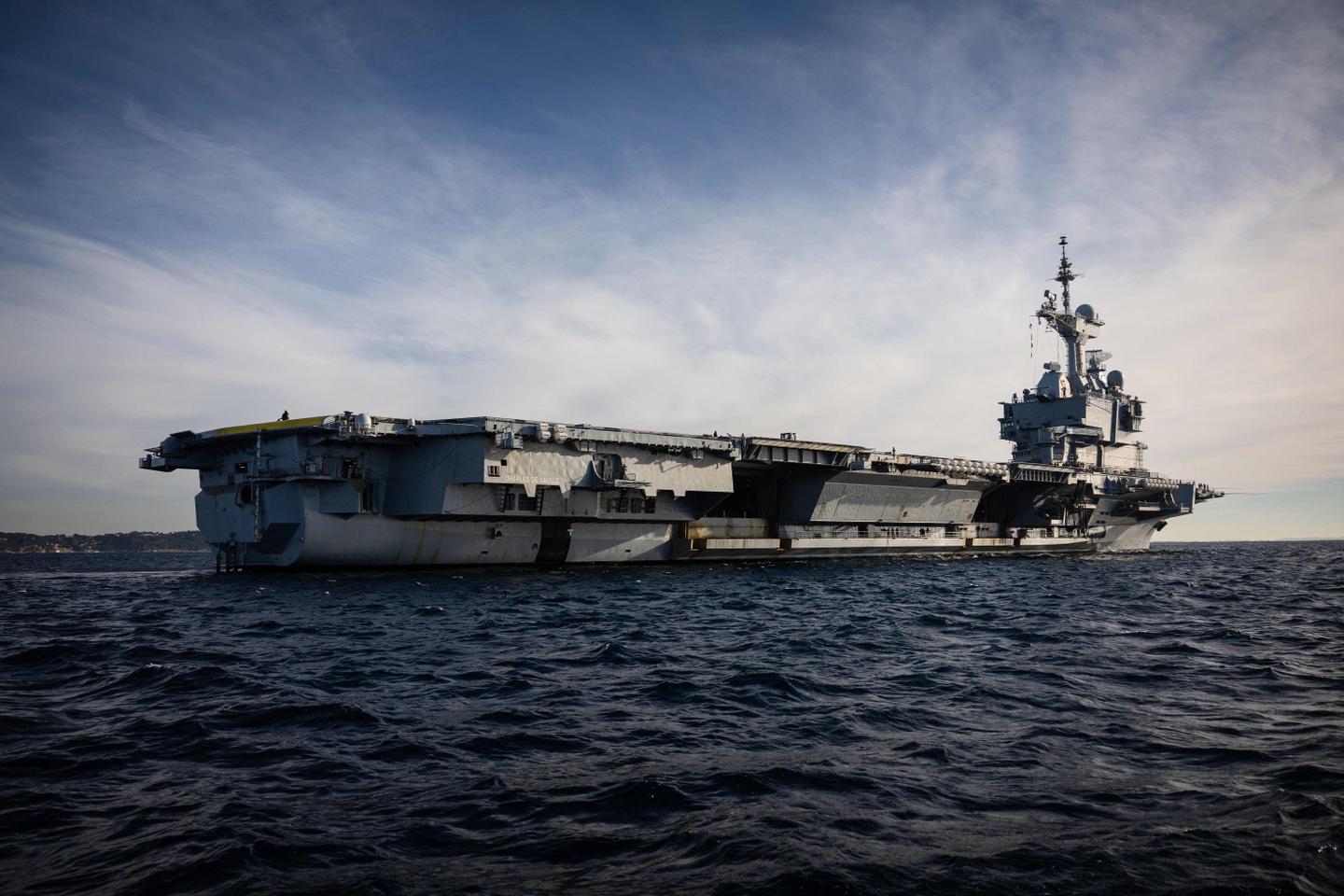
France will build a new-generation nuclear-powered aircraft carrier (PANG) to succeed the Charles-de-Gaulle, with service entry planned for 2038 and an estimated cost of €10.2 billion; the vessel will displace ~80,000 tonnes, measure ~310 m, carry 30 fighter jets and a crew of 2,000. Construction—approved in the 2025 budget—builds on a 2018 programme and will be split between a Naval Group / Chantiers de l'Atlantique joint venture (hull excluding nuclear boiler rooms) and TechnicAtome (nuclear boiler rooms), a development relevant for French shipbuilders and defence supply chains.
Market structure: The PANG program explicitly funnels €10.2bn (plus multi-year follow-on budgets) into naval, nuclear and aerospace supply chains, favoring French defense primes and specialized nuclear engineering firms over commoditized global shipbuilders. Expect modest pricing power for niche suppliers (reactor cores, naval aviation support) and increased tender activity from 2025–2030 as design/long-lead procurement kicks in; shipyard steel/aluminium demand will rise but is unlikely to move global commodity prices materially (<1–2% incremental demand annually).
Risk assessment: Key tails are political funding reversals (change in coalition or fiscal shock) and large cost overruns or a nuclear-propulsion incident that could trigger program suspension; probability medium-low but impact high (write-offs >€1bn for contractors). Immediate market reaction should be muted (days); meaningful re-ratings are possible within 6–24 months when subcontracts are awarded and in 2026–2030 during construction milestones. Hidden dependencies include domestic content rules that could re-route subcontracts to non-listed SMEs and strike/labor risk in French yards.
Trade implications: Favor listed French/European defense and nuclear suppliers over general industrials: selectively long Thales (HO.PA) and Safran (SAF.PA) on 12–24 month horizons, add Orano (ORA.PA) for nuclear-cycle exposure. Use relative-value pair trades (long defense/short large-cap construction like Vinci DG.PA) to isolate defense premium; consider 9–18 month calls (Jan 2026) 20–30% OTM on HO.PA/SAF.PA or cash-secured short-dated puts to collect premium if willing to accumulate on pullbacks. Reduce French OAT duration by ~0.25–0.5 yrs to hedge incremental fiscal issuance risk over 12–36 months.
Contrarian angles: The market may underweight the 13-year delivery timeline — revenues flow late so immediate winners are bidders/subsystem suppliers, not headline primes; conversely, announcement risk is likely already priced, so early movers into niche suppliers will outperform. Beware cost-inflation and sovereign budget stress that can compress contractor margins via renegotiation; historical parallel: UK carrier programs (HMS Queen Elizabeth) showing multi-year supplier churn and overruns. Unintended consequence: stronger domestic-content clauses could open opportunities in small-cap French industrials (non-public) and reduce returns for global subcontractors.
AI-powered research, real-time alerts, and portfolio analytics for institutional investors.
Request DemoOverall Sentiment
mildly positive
Sentiment Score
0.25
