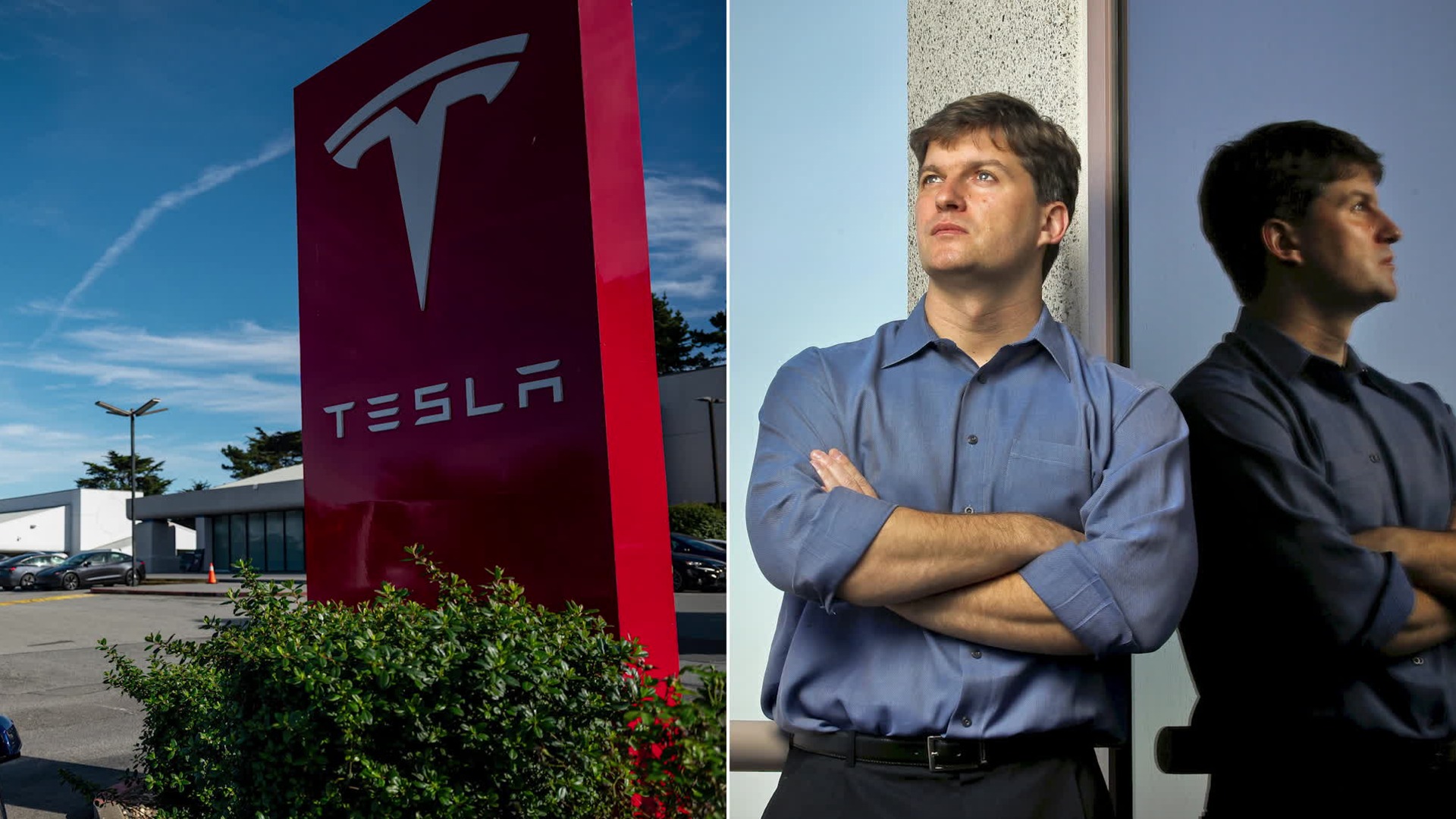
RBC analyst Tom Ryan says U.S. auto demand remains stronger-than-expected following the pandemic, citing an estimated 6–7 million vehicles never purchased and revising 2025 SAAR expectations from ~15m to roughly 16–16.3m, with strength concentrated in pickups and large SUVs benefiting legacy OEMs. Despite pressure in the EV segment, Ryan retains an outperform on Tesla driven not by autos but by optionality in robotaxi and humanoid robotics (he models modest penetration, e.g., ~5% for humanoids), while acknowledging long time horizons and uncertainty; this stance contrasts with Michael Burry’s view that Tesla is “ridiculously overvalued.” Tariff adjustments, low unemployment and potential rate cuts are cited as supportive macro factors for near-term auto demand.
Market structure: The near-term winner set is legacy US OEMs (GM, F, STLA) that sell pickups/SUVs — a 16–16.3M SAAR in 2025 vs prior 15M forecast implies ~7% incremental volume upside versus conservative consensus, favoring share gains and pricing power in ICE/hybrid trucks through 2026. EV pure-play demand and upstream battery metals will face downward pressure if the US consumer rotates back to larger ICE vehicles; expect 3–6% lower lithium/nickel pricing sensitivity vs a baseline if EV penetration growth slows this year.
Risk assessment: Tail risks include a regulatory/autopilot safety clampdown or a high-profile humanoid failure that collapses Tesla’s narrative (low-probability, high-impact within 12–36 months). Short-term (days–months) volatility will hinge on sales/inventory prints and tariff headlines (expect discrete moves on any USMCA tariff resolution news through 2026); long-term (5–15 years) outcomes depend on robotaxi/humanoid penetration (RBC assumes only ~5% humanoid share for Tesla but that still implies large optionality).
Trade implications: Tactical trades should separate auto-demand exposure from technology optionality. Favor physical/stock exposure to GM and F for 3–9 months on expected ICE outperformance, while using capped-cost option structures to express limited long-term convexity in TSLA’s robotics (18–24 month LEAPs funded by nearer-term call sales). Rotate capital out of pure battery-material long positions and into cyclical steel/oil-exposed suppliers if SAAR prints stay >16M.
Contrarian angles: Consensus misses that TSLA is a two-business firm — auto earnings vs long-dated robotics optionality — so pure equity positions are binary and mispriced for asymmetric outcomes. The market may be underweight a scenario where Tesla’s robotics works (value >$200B of optionality over a decade) while simultaneously overpricing near-term EV unit growth; structure positions to capture that skew rather than one-way bets.
AI-powered research, real-time alerts, and portfolio analytics for institutional investors.
Request DemoOverall Sentiment
mixed
Sentiment Score
0.05
Ticker Sentiment
