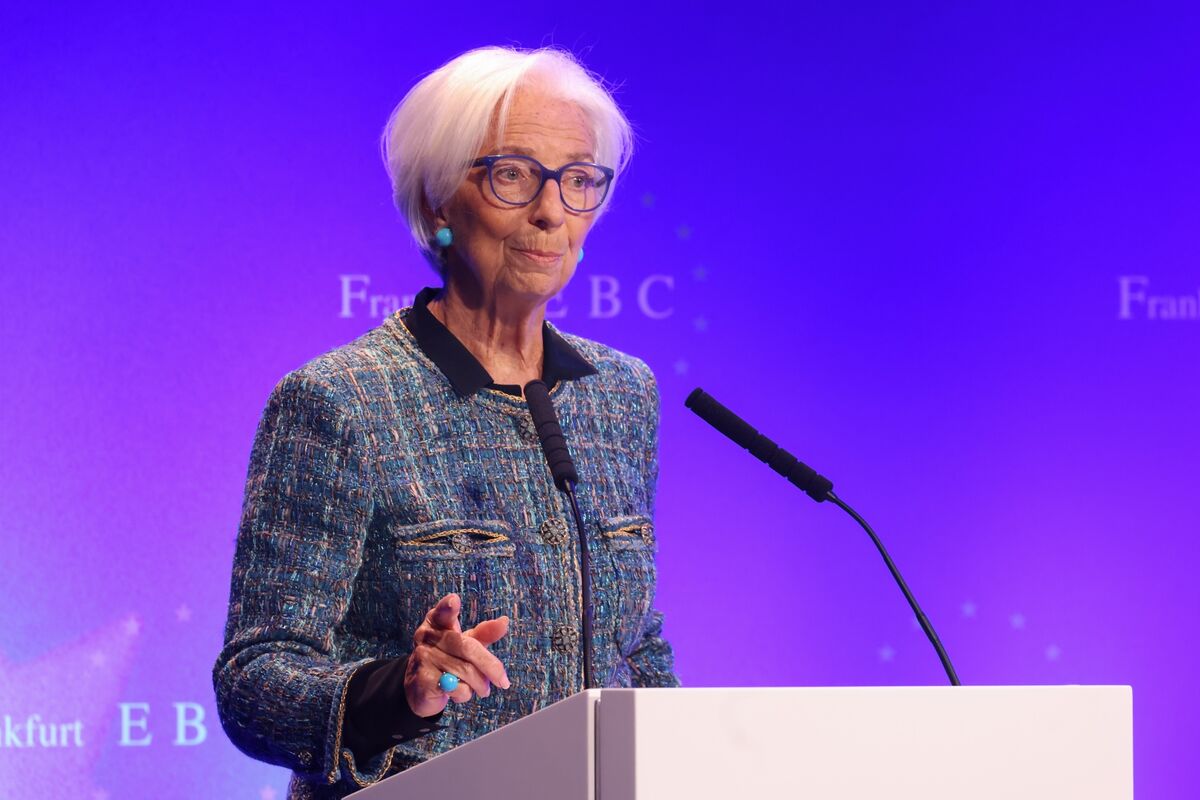
ECB President Christine Lagarde said borrowing costs are currently set at the correct level and that the bank is well positioned given the inflation cycle, which the ECB has managed to get under control. Her comments, made on Slovak TV JOJ24, signal satisfaction with the current policy stance and imply a lower near-term probability of further tightening, a stance that could weigh on expectations for additional rate hikes and influence bond market positioning.
Market structure: A declared ECB pause at “correct” rates favors euro-area financials and short-duration credit while keeping pressure on rate-sensitive sectors (real estate, utilities). Expect bank NIM tailwind of +10–30bp over 3–6 months as deposit re-pricing lags, benefiting large-cap names with diversified fee income (BNP.PA, SAN.MC, INGA.AS). Corporate capex and high-duration equities face constrained funding; private credit demand may remain elevated, keeping spreads on BBB corporates ~20–50bp wider than pre-2022 norms.
Risk assessment: Tail risks include a renewed inflation shock forcing extra ECB hikes (+50–100bp) or a growth shock triggering emergency easing (−50–100bp) within 6–12 months; both would reprice bonds violently. Near-term (days–weeks) market reaction likely muted; key catalysts are monthly HICP prints, ECB meeting minutes, and U.S. CPI/Fed signals. Hidden dependencies: bank profitability depends on deposit stickiness and wholesale funding rollover; sovereign-peripheral spread widening is a second-order contagion risk if growth stalls.
trade implications: Tactical overweight European banks (3–5% portfolio tilt) vs underweight Eurozone REITs/utilities; short 10Y Bund futures (Eurex FGBL) targeting +30–50bp in yields over 1–3 months, stop if yields fall >20bp. Use options to cap risk: buy puts on 10Y Bund futures (3–6 month expiry) sized to limit drawdown to target. FX: establish modest short EUR/USD (1–2% notional) targeting 1.02–1.05 within 3 months, stop-loss at 1.12.
contrarian: Consensus underestimates ECB’s tolerance for sticky prices—if HICP surprises low for two months, market may rapidly re-price cuts; that would hurt banks and flip the trade. Conversely, inflation surprise >+0.4% m/m would force hikes and amplify bank outperformance; position sizes should be explicit and time-boxed to 3–6 months to avoid policy regime shifts.
AI-powered research, real-time alerts, and portfolio analytics for institutional investors.
Request DemoOverall Sentiment
neutral
Sentiment Score
0.10
