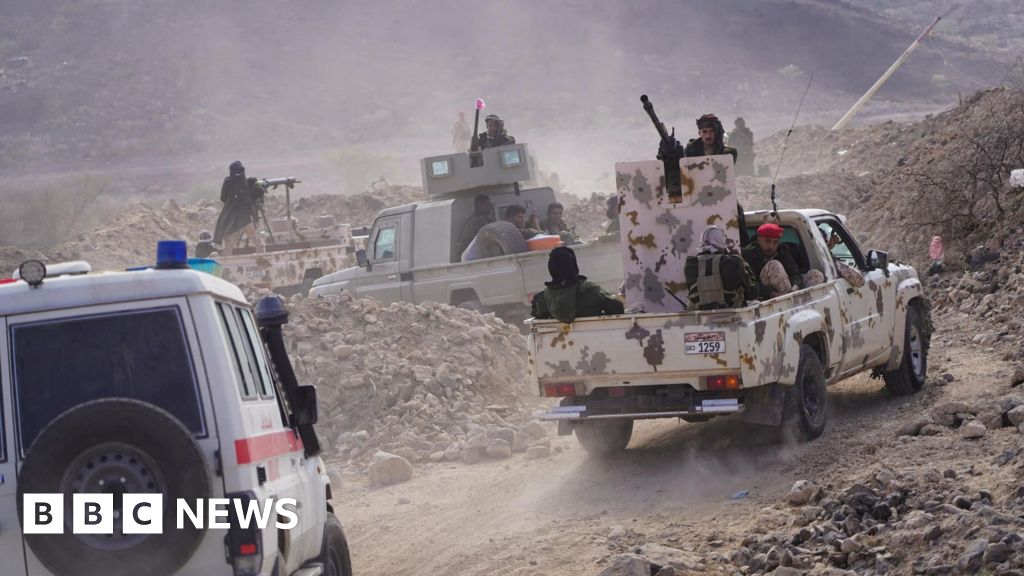
UAE-backed Southern Transitional Council launched a large-scale offensive on 2 December, rapidly seizing territory in eastern Yemen including oil-rich Hadramawt and provoking direct confrontations with Saudi-backed forces and Saudi air strikes that an STC official said killed seven. Riyadh cancelled a joint defence pact with the UAE and ordered Emirati forces to leave (the UAE agreed), but analysts warn the STC’s proxy network will continue operations, raising risks of southern secession, border insecurity for Saudi Arabia and potential disruption to southern ports, shipping lanes and regional energy logistics amid an acute humanitarian crisis.
Market structure: Immediate winners are defence/aerospace contractors (ITA constituents: LMT, NOC, RTX) and marine insurance/reinsurers (e.g., RNR, MMC) from higher defence budgets and war-risk premia; losers are Yemeni-focused logistics, southern Gulf port operators and small-cap E&P exposure (XOP) that face export disruption. Hadramawt friction raises the probability of localized oil export disruption of 100k–500k b/d; a 2–5% move in Brent in days is credible and will re-rate energy infrastructure and tanker freight (BDI) volatility.
Risk assessment: Tail risks include a Gulf-wide Saudi–UAE proxy escalation, closure/interdiction of Bab al-Mandeb, or Iranian-backed widening that could produce a 300–700k b/d supply shock and a >10% oil spike; probability low-medium but impact high. Immediate (0–7 days) effects: oil volatility, shipping insurance spikes, EM credit widening; short-term (1–3 months): defence capex newsflow and energy capex reallocation; long-term (>3–12 months): altered regional alliances, persistent premium on shipping routes and higher capex for resilient supply chains.
Trade implications: Prefer tactical 6–12 week trades: long XLE/USO call spreads (buy 3-month 10–15% OTM calls, financed by 5% OTM calls) and buy 3–6 month ITA up to 1–2% portfolio; hedge with 0.5–1% long GLD for tail-risk. Short tactical exposure to XOP (small E&P ETF) vs long XOM/CVX for balance-sheet resilience; buy protection via EMB puts or reduce EM sovereign bond duration.
Contrarian angles: Consensus fixes on immediate oil shock may be overdone if UAE’s proxy support continues sans direct troops; structural outcome may be persistent regional political fragmentation rather than large sustained oil outages. Mispricing: large integrated majors (XOM, CVX) may be cheap relative to small cap E&P (XOP) — prefer quality energy and defence names with visible free cash flow and buy defence on dips if Brent > +5% in 7 days.
AI-powered research, real-time alerts, and portfolio analytics for institutional investors.
Request DemoOverall Sentiment
strongly negative
Sentiment Score
-0.60
