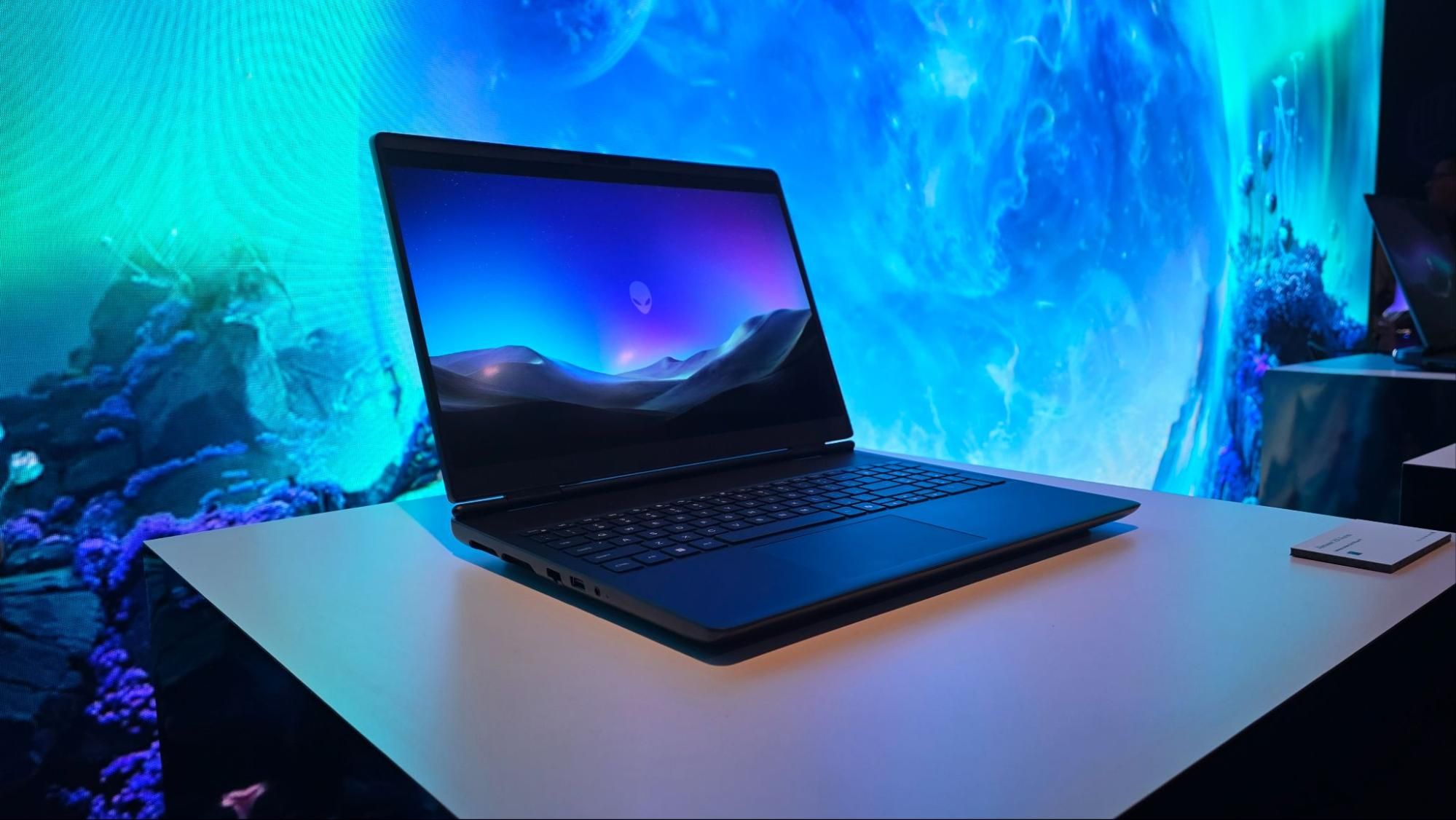
Alienware is rolling OLED panels into its 16-inch gaming laptops (Alienware 16 Area-51 and 16X Aurora) featuring 2560×1600 anti‑glare displays at 240Hz, 0.2ms response, 620‑nit peak HDR, 120% DCI‑P3 and VESA certifications; the 18‑inch Area‑51 retains a 300Hz IPS panel. Hardware updates include “new” Intel Core Ultra 200HX CPUs on the Area‑51 models, up to Nvidia RTX 5090 mobile GPUs, up to 64GB DDR5 (up to 6400) and up to 12TB PCIe Gen4 storage; all updates ship in Q1 2026 with pricing TBD and a warning that constrained RAM supply could push prices higher. Alienware also teased a 14/16‑inch Ultra‑Slim with discrete Nvidia GPU later in 2026, and will offer the Area‑51 desktop with AMD’s Ryzen 7 9850X3D (up to 5.6GHz, ~7% average uplift vs. 9800X3D) starting in February.
Market structure: Dell (DELL) is a clear near-term beneficiary — OLED + 240Hz on premium 16" models and premium Area‑51 configs can support ASP uplifts of ~$100–$300 per unit and improved mix if adoption reaches 10–20% of its gaming shipments in Q1 2026. Nvidia (NVDA) captures downstream GPU revenue (RTX 50xx mobile) and ASP upside as OEMs migrate to discrete GPUs in slim/high‑refresh designs; Micron/SK Hynix stand to gain from tighter DRAM given the article’s RAM shortage warning.
Risk assessment: Tail risks include OLED supply bottlenecks (Samsung Display concentrated supplier risk), a DRAM price collapse if OEM inventories destock, or Intel CPU delays that blunt refresh cycles. Immediate (days) price moves will track headlines and option flows; short term (weeks–months) depends on CES/earnings commentary and inventory metrics; long term (quarters) hinges on durable OLED adoption plus sustained GPU demand.
Trade implications: Favor long exposure to NVDA (capture GPU mobile traction) and selective long DELL to play OEM ASP/mix uplift, size modestly (1–2% each). Use MU (Micron) as a 3–6 month play on RAM tightness; prefer defined‑risk option structures (6–12 month call spreads) on NVDA and equity buys with disciplined stops for DELL/MU.
Contrarian angles: Consensus underestimates balance‑sheet strain for OEMs if OLED and DDR5+ inventory increases lead to working‑capital inflation, pressuring small OEM margins. Also OLED adoption could rapidly commoditize (price cuts) if other OEMs match features, capping long‑term ASP gains — monitor OEM inventory days and spot DRAM > +15% YoY as a validation trigger.
AI-powered research, real-time alerts, and portfolio analytics for institutional investors.
Request DemoOverall Sentiment
mildly positive
Sentiment Score
0.25
Ticker Sentiment
