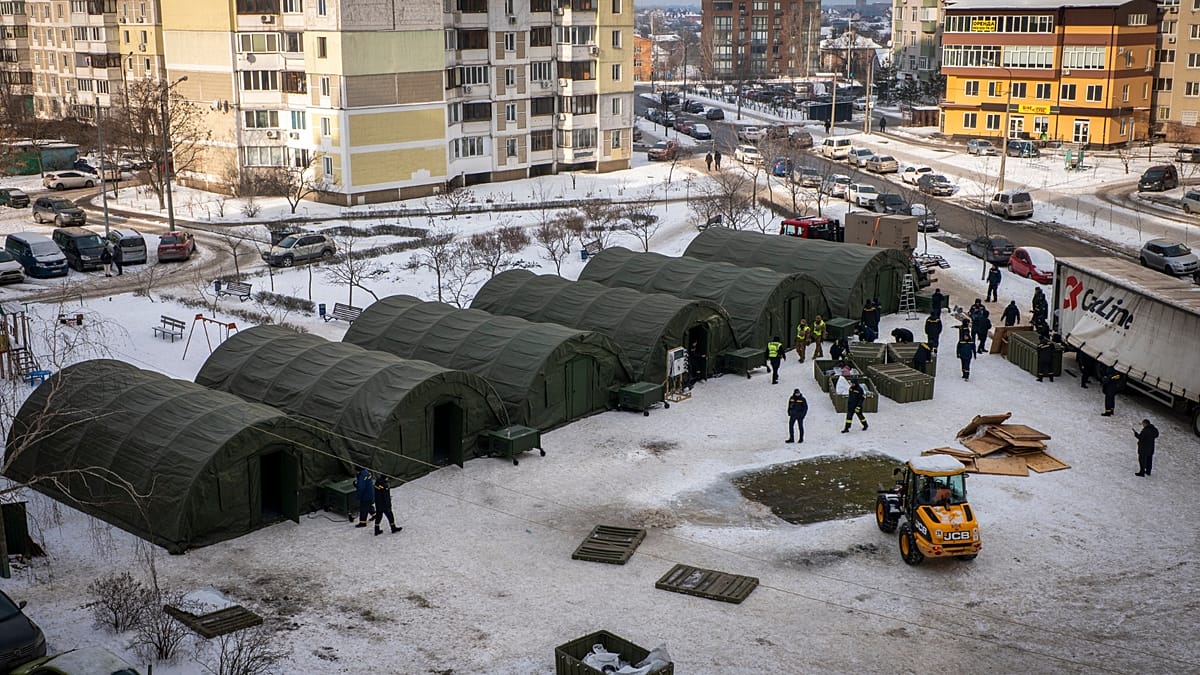
Over the past week Ukraine reports Russia launched more than 1,700 attack drones, over 1,380 guided aerial bombs and 69 missiles, striking energy infrastructure and leaving hundreds of high-rise buildings in Kyiv without heating and electricity amid sub-zero temperatures. Kyiv says roughly half a million people have been forced to evacuate and Mayor Klitschko reported 1,676 high-rise apartment buildings without heating after the 24 January attack; President Zelenskyy has called for increased air-defence munitions from Western allies. Continued strikes heighten near-term energy and humanitarian risk and sustain upside pressure on defence-related assets and market volatility, even as Abu Dhabi talks between US, Russian and Ukrainian officials yielded no breakthrough but were described as constructive.
Market structure: Immediate winners are Western defence prime contractors (Lockheed Martin LMT, Raytheon RTX, Northrop Grumman NOC) and specialty suppliers of interceptors, munitions and counter‑drone systems; energy producers (integrated oil majors and LNG exporters) gain from a higher risk premium in European gas and oil. Losers include Ukrainian utilities (operational damage), European grid‑exposed distributors and insurers/reinsurers facing concentrated winter claims; expect 5–20% upside pressure on defence orderbooks over 6–18 months and near‑term spikes in TTF/Brent if strikes persist.
Risk assessment: Tail risks include escalation to broader NATO involvement or major pipeline disruption (low prob, high impact) that could send oil above $110/bbl and TTF >> €150/MWh within weeks; sovereign spillovers could widen EU bank spreads by 50–150bps. Immediate horizon (days): risk‑off flows into Treasuries and gold; short term (weeks–months): commodity volatility and defence re‑procurement; long term (quarters): structural rise in EU/NATO defence budgets and reconstruction demand.
Trades & cross‑assets: Expect higher implied vols for energy and defence equities, steeper credit spreads for Ukrainian sovereign and regional corporates, and currency pressure on the hryvnia—safe‑haven flows into USD. Options skew will favor upside calls for oil and defence names and puts on regional banks/utilities; consider tactical volatility buys and pair trades to capture relative repricing.
Contrarian/second‑order: The market may already price a defence rally; mid‑cap suppliers and ISR/satellite firms (e.g., MAXR) may be underowned relative to primes and should outperform once supply chains re‑rate. Reconstruction demand will lift copper, steel and cement over 12–36 months but political risk can delay cash flows—avoid levered credit to regional contractors until firm contracts are visible.
AI-powered research, real-time alerts, and portfolio analytics for institutional investors.
Request DemoOverall Sentiment
strongly negative
Sentiment Score
-0.70
