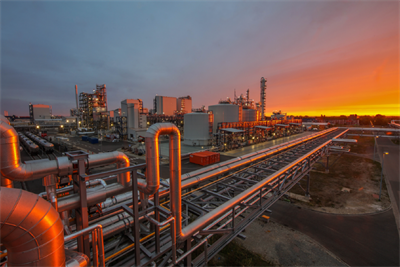
UPM has commenced commercial production of wood-based industrial sugars at its Leuna biorefinery in Germany and reached stable operation in separating lignin and sugars, a prerequisite for converting sugars to renewable glycols and lignin to renewable functional fillers. The facility — described as the largest industrial-scale biochemicals investment in Europe — will target annual output of 220,000 tonnes of advanced biochemicals when fully operational and UPM expects additional commercial products from Leuna in H1 2026, underpinning the company’s push into bio-based materials and potential long-term revenue diversification.
Market structure: UPM (UPM.HE) becomes a near-term winner along with downstream users of renewable glycols (PET/textile brands) and rubber/plastics makers seeking carbon-black/silica alternatives. The Leuna plant’s 220,000 tpa capacity equals roughly 0.7–1.0% of the global ethylene/glycol market — small globally but strategically large in Europe, enough to seize regional share and force niche price competition and premium capture for “verified-renewable” grades.
Risk assessment: Key tail risks are operational ramp failure, a >15–25% spike in hardwood prices (feedstock squeeze), or slow technical adoption of lignin RFF in automotive/rubber specs; any of these could delay profitable volumes by 12–36 months. Near-term (days/weeks) market moves will be muted; watch H1 2026 for first commercial sales and 3–5 years for material demand response and margin realization.
Trade implications: Direct ideas include establishing a 2–3% long position in UPM.HE within 4–8 weeks ahead of H1 2026 commercialization, funded by trimming 1–3% exposure to petrochemical glycol names (DOW on NYSE or BASF.DE). Consider a relative-value pair: long UPM.HE (2%) / short Cabot Corp (CBT, 1.5%) to express lignin displacing carbon black over 12–36 months; complement with a 9–15 month UPM call spread (ATM to +20%) to limit premium.
Contrarian angles: Consensus underestimates feedstock/standardization friction — bio-chemical adoption historically takes 3–7 years (bio-PET parallels). The market may be underpricing a scenario where rapid scale-up triggers wood-price inflation and ESG pushback; monitor hardwood price moves >15%, two signed offtakes >50k tpa, and ISCC/EuCert certifications as binary triggers.
AI-powered research, real-time alerts, and portfolio analytics for institutional investors.
Request DemoOverall Sentiment
moderately positive
Sentiment Score
0.45
