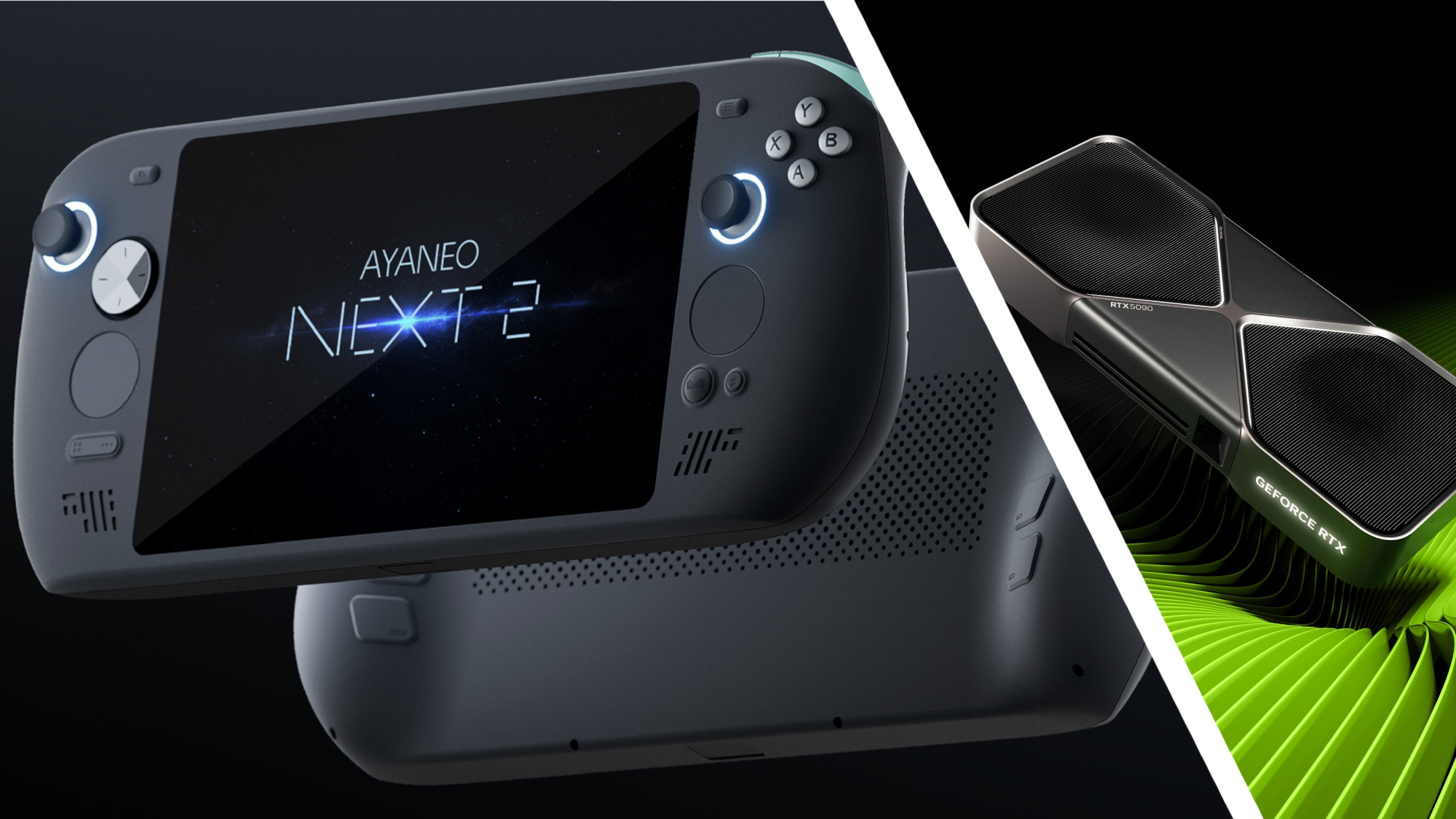
Ayaneo has priced its Next 2 handheld up to $4,299 for a 128GB RAM / 2TB model (early-bird Indiegogo price $3,499), with a base model at $1,999 (Ryzen AI Max 385, 32GB RAM) and a 64GB/Max+ 395 configuration at $2,699. The company and the article attribute the steep pricing to an ongoing RAM supply/price crisis, which is inflating component costs, encouraging oversized memory configurations, and risks suppressing consumer demand and forcing higher retail prices across PC hardware segments.
Market structure: The immediate beneficiaries are DRAM suppliers (Micron MU, Samsung SSNLF, SK Hynix 000660.KS) which gain pricing power if RAM remains tight; losers include consumer GPU retail demand and specialty retailers (Best Buy BBY) as higher component costs push buyers toward desktops or integrated APUs. Competitive dynamics favor integrated-APU vendors (AMD) for portable and mid-range systems while discrete-GPU makers (NVDA) risk softer retail sell-through in the consumer segment; expect margin compression at OEMs if RAM remains +double-digit% vs prior-year.
Risk assessment: Tail risks include export controls or a rapid capex-led DRAM oversupply that collapses prices within 12–18 months, and a demand shock if desktop/gaming refreshes delay by one cycle; immediate (days) risk is sentiment-driven share moves, short-term (weeks–months) is inventory/order adjustments, long-term (quarters) is structural share shift to APUs. Hidden dependencies: console/PC refresh schedules and OEM inventory amplification can flip prices quickly; catalysts to monitor are weekly DRAM spot indices, MU quarterly results (next 30–60 days), and NVDA consumer vs data-center guidance.
Trade implications: Tactical plays favor long DRAM exposure (MU) and selectively short consumer retail / GPU-sensitive names (BBY, short-dated NVDA consumer exposure). Option strategies: 3-month MU call spreads ahead of earnings if DRAM spot up >10% m/m; protective puts on short BBY to cap tail risk. Rotate portfolio to overweight semiconductors and underweight consumer electronics retail for 1–6 month horizons; size initial positions small (1–3% portfolio) and use 10–25% profit targets or triggers below.
Contrarian angles: The market may be overstating permanent harm to NVDA — data-center AI demand remains intact — so a full short NVDA is crowded and risky. Memory cycles historically revert (example 2016–2019); an oversupply in 12–18 months could produce >30% downside in DRAM suppliers, making time-limited option trades preferable. Also consider AMD (AMD) as an asymmetric long: modest allocation (1–2%) captures potential share gains from integrated APUs without full exposure to GPU cyclicality.
AI-powered research, real-time alerts, and portfolio analytics for institutional investors.
Request DemoOverall Sentiment
moderately negative
Sentiment Score
-0.45
Ticker Sentiment
