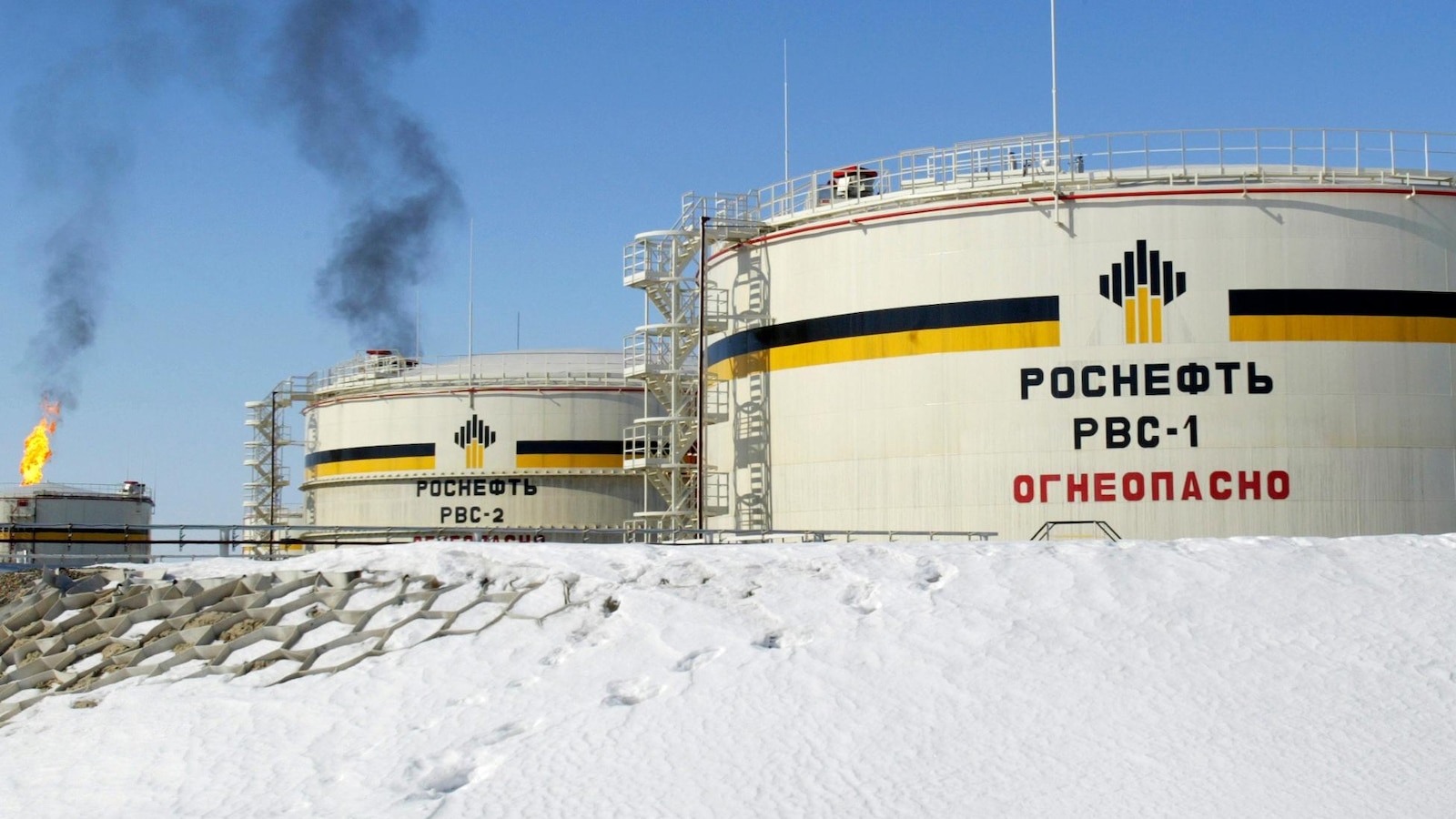
Russian state revenues from oil and gas taxation plunged to 393 billion rubles ($5.1bn) in January from 587 billion ($7.6bn) in December and 1.12 trillion ($14.5bn) in January 2025 as a wave of U.S. and EU sanctions (including an EU ban on fuels from Russian crude and U.S. sanctions on Rosneft and Lukoil), tariff moves affecting India, and crackdown on a ‘‘shadow fleet’’ depressed Urals crude to below $38/bbl (roughly $25/bbl below Brent). Shipments to India fell from ~2.0m bpd in October to ~1.3m bpd in December, ~125m barrels are estimated stranded in tankers, VLCC rates hit ~$125k/day, and Russia is compensating with higher VAT (20%→22%), increased levies, and domestic bank borrowing; GDP growth has slowed (Q3 +0.1%, forecasts 0.6–0.9%) while inflation sits at 5.6% with policy rates ~16%. These dynamics heighten fiscal strain and downside risks to growth, with potential knock-on effects for global energy flows and investor positioning in energy and EM credit.
Market structure: Sanctions shift value from commodity producers to logistics and non-Russian suppliers. Urals traded ~ $25/bbl discount (Urals <$38 vs Brent $62.5) and ~125m barrels are parked at sea; VLCC rates spiked to ~$125k/day — clear winners: tanker owners/operators and intermediaries that enable non‑G7 flows. Losers: Russian fiscal receipts (tax revenues down to 393b rubles in Jan), shadow-fleet customers facing seizure/insurance risk, and European refiners dependent on Russian crude.
Risk assessment: Tail risks include rapid escalation (EU full shipping ban or US secondary sanctions targeting Indian buyers) that removes 1–2m bpd of effective global supply, or conversely a Russia workaround (expanded shadow fleet/China purchases) that reflows barrels and crushes tanker rallies. Immediate (days): tanker rates and Urals discount volatility; short (1–3 months): rerouting and inventory drawdown/increase; long (6–18 months): Russian fiscal stress, potential slowing of war intensity. Hidden dependencies: insurance markets, secondary sanctions enforcement, and India/China policy shifts are the real control points.
Trade implications: Tactical trades should favor transport/insurance beneficiaries and selective energy producers while hedging geopolitical policy risk. Expect elevated volatility in Brent/Urals spreads, tanker equities, and RUB; fixed income exposed to EM risk premia and EU industrials/refiners may underperform.
Contrarian angles: Consensus assumes permanent decoupling of Russian oil; history (Iran, Venezuela) shows buyers and shadow logistics can re-emerge within months, so tanker equity rallies can be mean-reverting if seizures/insurance enforcement fade. The market may be over-pricing a sustained global supply shock — price-action dependent trades with explicit unwind thresholds are critical.
AI-powered research, real-time alerts, and portfolio analytics for institutional investors.
Request DemoOverall Sentiment
strongly negative
Sentiment Score
-0.60
