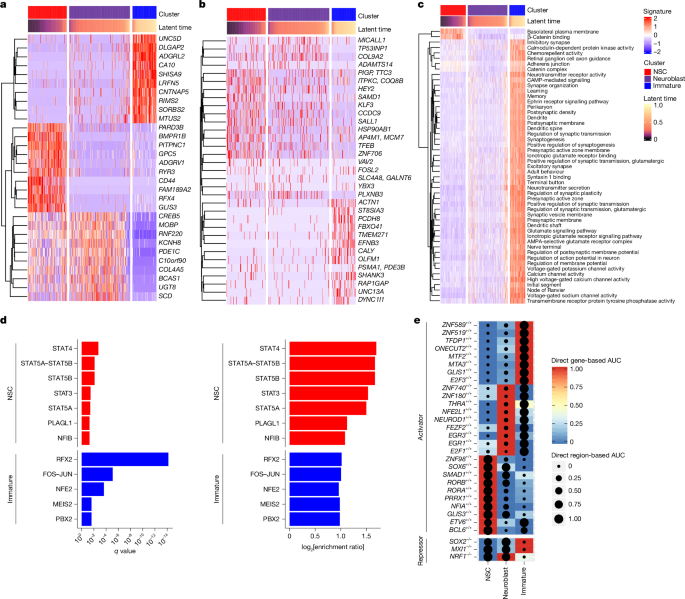
A multiomic single‑cell study profiled 355,997 nuclei from human hippocampus samples across five cohorts (young adults, healthy agers, preclinical intermediate pathology, Alzheimer’s disease and SuperAgers), identifying neural stem cells, neuroblasts and immature granule neurons and mapping enhancer‑driven gene regulatory networks. Key findings show that chromatin accessibility (DARs) alterations—particularly in neuroblasts and immature neurons—precede mRNA changes in preclinical AD, while SuperAgers exhibit a distinct ‘resilience’ epigenetic signature with increased immature neuron-associated DARs and eRegulons; CA1 neurons and astrocyte regulatory changes are linked to cognitive outcome. Implication: epigenetic regulatory elements and specific transcriptional networks represent early biomarkers and potential therapeutic targets for cognitive decline and Alzheimer’s disease, relevant for biotech R&D direction but not immediately market moving.
Market structure: Adoption of single‑nucleus multiomic workflows (multiome snRNA/snATAC) directly benefits sequencing and single‑cell platform vendors (10x Genomics/TXG), core sequencers and consumables (Illumina/ILMN), and sample‑prep/instrument suppliers (Agilent/A). Expect >10% incremental addressable market growth for multiomic consumables over 12–36 months if translational/diagnostic use emerges; winners gain pricing power on reagent kits and informatics pipelines, while incumbent single‑assay tool vendors see slower growth.
Risk assessment: Key tail risks are scientific non‑replication and regulatory/ethical constraints on human brain tissue data that could delay clinical translation — high impact, low probability but material over 12–36 months. Near term (days–weeks) market moves will be muted; medium term (3–12 months) depends on validation papers and licensing deals; long term (1–4 years) is adoption into pharma R&D and diagnostics, tied to reimbursement and IP.
Trade implications: Direct equity exposure to TXG (platform adoption) and ILMN (sequencer/consumables) offers asymmetric upside; consider defined‑risk options for leverage. Relative trades: overweight tools/instruments vs underweight broad biotech (IBB) to capture secular shift from therapeutic beta to enabling infrastructure. Catalysts to act on: replicative cohort publications, large pharma collaborations or licensing announcements within 90 days and FY earnings guidance revisions.
AI-powered research, real-time alerts, and portfolio analytics for institutional investors.
Request DemoOverall Sentiment
neutral
Sentiment Score
0.00
Ticker Sentiment
Contrarian angles: Consensus may underweight persistent demand for epigenetics/ATAC assays — single‑cell epigenomics could become a discrete multi‑billion dollar submarket in 3–5 years. Conversely near‑term euphoria is likely overdone given small N and sample variability; a prudent entry waits for commercialization signals (commercial kit launches or distributor deals) or 20%+ pullbacks to improve risk/reward.
