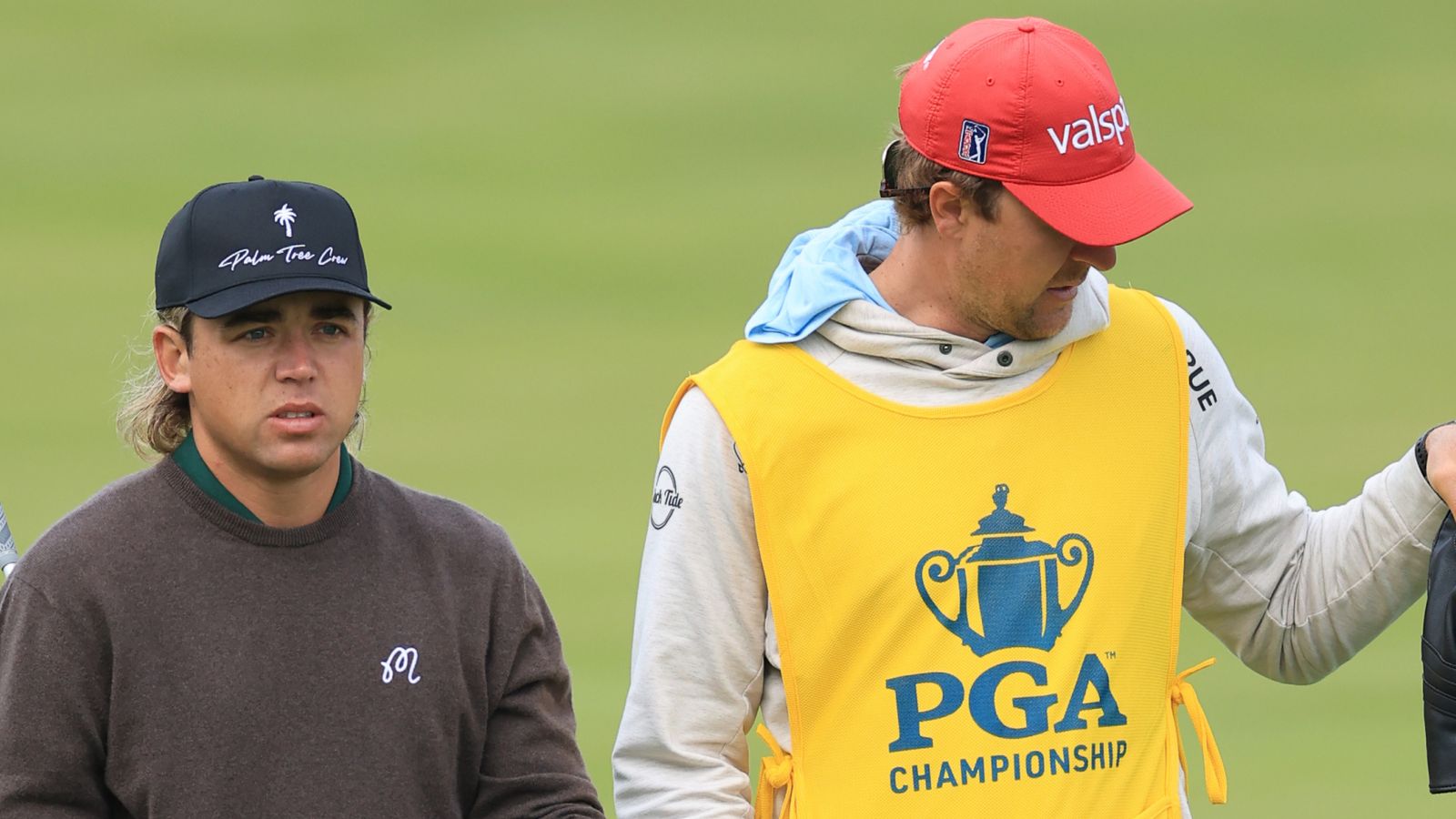
Garrick Higgo was hit with a two-shot penalty after arriving at his tee time but not being in the designated starting area, turning a potential share of the PGA Championship lead into a first-round 69. The penalty converted his par on the opening hole into a double-bogey 6, and he said the ruling cost him a chance to sit atop the leaderboard. The incident is a rules enforcement issue with no material broader market impact.
This is a small sporting error with a surprisingly asymmetric media outcome. The economic winner is not the player but the event ecosystem: controversy increases dwell time, social clips, and live-audience urgency for a broadcast product that monetizes attention more than score quality. In an environment where golf competes with streaming and short-form highlights, an easily legible rules dispute is better for near-term engagement than a clean first round. The second-order loser is the tournament’s institutional brand. When a penalty is perceived as overly technical, casual viewers read it as bureaucracy, while serious fans read it as fairness upheld — that split is actually useful for broadcasters but slightly corrosive for organizer goodwill. The practical implication is that governing bodies may face more pressure to clarify tee-time enforcement with more visible digital check-in processes, which is a modest procurement and vendor opportunity over the next 12-24 months for timing, scoring, and event-ops software. The contrarian point: the market should not overstate reputational damage to the player. In elite golf, “casual” behavior is not a trading-edge handicap; it is usually narrative noise unless it repeats. The more relevant catalyst is whether this becomes a pattern in other players’ pre-round routines, because one visible enforcement case often tightens compliance league-wide within weeks, reducing future officiating variance rather than increasing it. For media owners, the highest-value read-through is that rule-driven controversy is additive to live sports stickiness, especially in morning windows where inventory is fragile. If there is any tradeable implication, it is a small positive for rights-holders and sports broadcasters over the next few sessions, not for the golfer or the tournament operator in isolation.
AI-powered research, real-time alerts, and portfolio analytics for institutional investors.
Request DemoOverall Sentiment
mildly negative
Sentiment Score
-0.15
